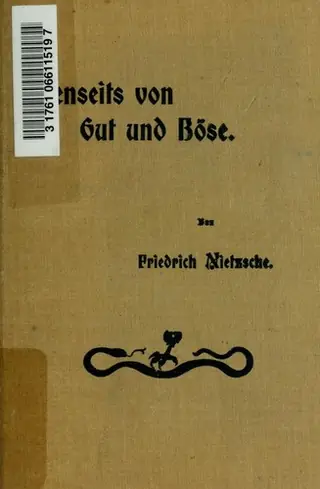
善恶的彼岸
Jenseits von Gut und Böse
Friedrich Nietzsche · 初版 1885 年
3位读者提及
3次提及
自法国大革命以来,欧洲女性的影响力伴随着其权利与要求的增加而呈比例地下降;因此,“女性解放”只要是由女性自身(而不仅仅是肤浅的男性)所渴望和要求的,便被证明是女性最本真本能日益衰弱与麻木的一个显著征兆。
Hacker News 上怎么说
正在加载完整评论……
Jenseits von Gut und Böse
Friedrich Nietzsche · 初版 1885 年
自法国大革命以来,欧洲女性的影响力伴随着其权利与要求的增加而呈比例地下降;因此,“女性解放”只要是由女性自身(而不仅仅是肤浅的男性)所渴望和要求的,便被证明是女性最本真本能日益衰弱与麻木的一个显著征兆。
正在加载完整评论……
把尼采的这句引言[0]放进他作品的语境里:“Jenseits von Gut und Böse (Viertes Hauptstück; Sprüche und Zwischenspiele, 146)”[《善恶的彼岸》第四部;警句与插曲;146],你的解读似乎更贴合原书的本意。 在对抗怪物的过程中孕育/成为怪物等等,就如同与深渊对视,直到深渊也正在注视着你
Taking the Nietzsche quote[0] into the context of his work: "Jenseits von Gut und Böse (Viertes Hauptstück; Sprüche und Zwischenspiele, 146)" [Beyond Good and Evil; Fourth main part; Proverbs and interludes; 146]] your interpretation seems more in line with the book. The birthing/becoming of a Monster by fighting a Monster etc. is akin to staring into the abyss until the abyss is staring into you
那么跟《规训与惩罚》相比,《查拉图斯特拉如是说》到底表达了什么观点呢?我觉得这两位作者都出版了涉猎广泛的著作,从“通俗、理性”到“云里雾里”应有尽有。两人也都很容易被人断章取义地摘抄抓人眼球的名句。 “与怪物战斗的人要当心,免得自己也变成怪物。如果你凝视
So what point does "Zarathustra" make, say, in comparison with "Discipline and Punish"? I think both authors have published a broad spectrum of works, ranging from "accessible, rational" to "confusing". Both are suitable for having catchy citations ripped out of their context. "He who does battle with monsters needs to watch out lest he in the process become a monster himself. And if you stare to
原文:“Nicht dass du mich belogst, sondern dass ich dir nicht mehr glaube, hat mich erschüttert.”(《善恶的彼岸》,1886)“使我感到震惊的,不是你欺骗了我,而是我再也无法相信你了。”(《Beyond Good and Evil》,1886)
Original: "Nicht dass du mich belogst, sondern dass ich dir nicht mehr glaube, hat mich erschüttert." (Jenseits von Gut und Bose, 1886) "Not that you lied to me, it's that I don't believe you anymore that have shocked me." (Beyond Good and Evil, 1886)