…exchange containing within it the operation of the Law of Value. Almost all goods continue to be produced for the purpose of exchange value maximisation. Another is the removal of money, as Engels said in Anti-Duhring, "Money is already contained in embryo in the concept of value; it is value, only in developed form." This has not happened nor has there been any effort toward it. A possible replacement for money is…
马克思和恩格斯绝对没把“结果均等”当成共产主义的基石,恰恰相反。想想马克思在《哥达纲领批判》(Critique of the Gotha Program)里说的“各尽所能,按需分配”就知道了。显而易见,按需分配产品与结果均等是截然对立的。
马克思/恩格斯认为,广义上的平等只是被
Marx and Engels most certainly did not think equality of outcome was a cornerstone of communism, on the contrary. Just think about "From each according to his ability, to each according to his needs" from Marx Critique of the Gotha Program. Clearly administering goods according to need is antithetical to equality of outcome.
Marx/Engels thought that equality in general, was a concept used by the
>What's the practical difference between 'society-wide public ownership' and government ownership? The government is supposed to represent the people.
Typically, socialists (and even market socialists) contend that the current democratic establishment does not represent the people, usually going off Lenin's conception of "bourgeois democracy". This is also behind the most common Marxist rejection
There's no need to imagine anything, here's the discussion Engels was having: https://www.marxists.org/archive/marx/works/1888/letters/88_...
He's replying to an aspiring author who sees Engels as an authority on the matter, and he's giving an account of the structure of a new genre of literature (realism) and using its greatest representative (Balzac) to do so. Presumably she takes Engels to be
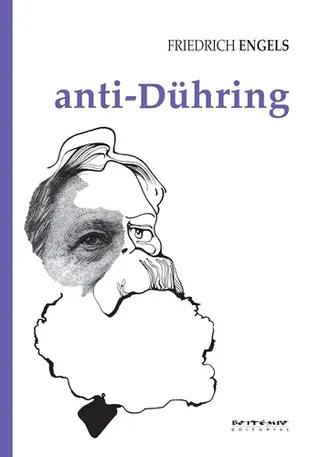
……交换本身内含价值规律的运行。几乎所有商品仍然是为了追求交换价值最大化而生产的。另一点则是废除货币,正如恩格斯在《反杜林论》(Anti-Duhring)中所说:“货币的胚胎已经包含在价值概念中;它不过是发展了的价值。”这一点并没有实现,甚至没有任何朝这个方向的努力。一种可能的货币替代方案是……
…exchange containing within it the operation of the Law of Value. Almost all goods continue to be produced for the purpose of exchange value maximisation. Another is the removal of money, as Engels said in Anti-Duhring, "Money is already contained in embryo in the concept of value; it is value, only in developed form." This has not happened nor has there been any effort toward it. A possible replacement for money is…
马克思和恩格斯绝对没把“结果均等”当成共产主义的基石,恰恰相反。想想马克思在《哥达纲领批判》(Critique of the Gotha Program)里说的“各尽所能,按需分配”就知道了。显而易见,按需分配产品与结果均等是截然对立的。 马克思/恩格斯认为,广义上的平等只是被
Marx and Engels most certainly did not think equality of outcome was a cornerstone of communism, on the contrary. Just think about "From each according to his ability, to each according to his needs" from Marx Critique of the Gotha Program. Clearly administering goods according to need is antithetical to equality of outcome. Marx/Engels thought that equality in general, was a concept used by the
>“全社会公有制”和政府公有在实际层面有什么区别?政府本就应该代表人民。 通常来说,社会主义者(甚至市场社会主义者)认为现有的民主体制并不能代表人民,这往往源自列宁关于“资产阶级民主”(bourgeois democracy)的概念。这也是大多数马克思主义者反对
>What's the practical difference between 'society-wide public ownership' and government ownership? The government is supposed to represent the people. Typically, socialists (and even market socialists) contend that the current democratic establishment does not represent the people, usually going off Lenin's conception of "bourgeois democracy". This is also behind the most common Marxist rejection
用不着去瞎猜,恩格斯当年的讨论就在这儿:https://www.marxists.org/archive/marx/works/1888/letters/88_... 他是在回复一位把恩格斯视为该领域权威的文学青年,他在信中剖析了一种全新文学流派(现实主义)的结构,并拿其最伟大的代表(巴尔扎克)为例。想必她是把恩格斯当成了
There's no need to imagine anything, here's the discussion Engels was having: https://www.marxists.org/archive/marx/works/1888/letters/88_... He's replying to an aspiring author who sees Engels as an authority on the matter, and he's giving an account of the structure of a new genre of literature (realism) and using its greatest representative (Balzac) to do so. Presumably she takes Engels to be