…0313232008 and ISBN-13: 978-0313232008, but way too expensive (I thought the one I read was paperback). Wikipedia describes it at: http://en.wikipedia.org/wiki/Trachtenberg_system which also mentions "Vedic mathematics," http://en.wikipedia.org/wiki/Swami_Bharati_Krishna_Tirtha%27...
…contents) treat π as (9785/5568)2 ≈ 3.088. In 150 BC, or perhaps earlier, Indian sources treat π as sqrt(10) ≈ 3.1622." Anyway, the source the linked article cites is http://www.vedicsciences.net/articles/vedic-mathematics.html which notes It must be pointed out that these sutras given by Tirtha Maharaja are created by the author himself, as stated in the introduction to his book, "Vedic Mathematics" (published posthumously)…
The verse 'gopi bhagya' basically follows Katapayadi system[0]. Earliest known usage of Katapayadi system was in 683 AD. That verse is from a 1965 book called "Vedic Mathematics" by Bharati Krishna Tirtha Maharaja[1]. The Quora blog you linked has issues with terminologies and timelines of this specific "Vedic Mathematics" book - such as calling these mental calculation techniques…
Yes, indeed. It is mentioned in the wikipedia link ("गोपीभाग्यमधुव्रात..."). I first read it in the "Vedic Mathematics" book by HH Bharati Krishna Tirtha Swamiji. Since he didn't give any attribution, I suppose he was the first one to reveal it.
…a carry (write the "carry" digit as a superscript on the left): 6 × 7 = 4̅ × 3̅ = 7̅¹2 = 3¹2 = 42. (I think I first saw this convention with the "vinculum" in Swami Bharatikrishna Tirtha's book Vedic Mathematics which is simultaneously a work of fraud and genius: the book contains several such dazzling tricks that are convenient in special cases, which the Swami must have collected/invented and mapped to a small…
This is quite a long read, but I read the first part "Introduction to Vedic Mathematics", and as blown away at the methods of recitation used in ancient Indian to preserve sacred hymns. From what little I've read about Vedic Mathematics, it seems like a powerful way of simplify arithmetic…
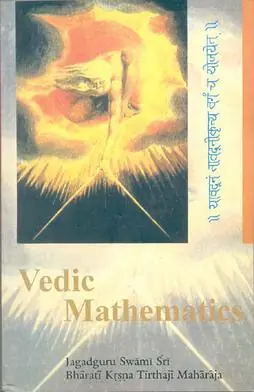
……0313232008 和 ISBN-13: 978-0313232008,但是太贵了(我记得我读的那本是平装本)。维基百科在这里有介绍:http://en.wikipedia.org/wiki/Trachtenberg_system 里面也提到了“吠陀数学”,http://en.wikipedia.org/wiki/Swami_Bharati_Krishna_Tirtha%27...
…0313232008 and ISBN-13: 978-0313232008, but way too expensive (I thought the one I read was paperback). Wikipedia describes it at: http://en.wikipedia.org/wiki/Trachtenberg_system which also mentions "Vedic mathematics," http://en.wikipedia.org/wiki/Swami_Bharati_Krishna_Tirtha%27...
……内容)把 π 视为 (9785/5568)2 ≈ 3.088。在公元前150年,或者可能更早,印度的文献把 π 视为 sqrt(10) ≈ 3.1622。”不管怎样,链接文章引用的来源是 http://www.vedicsciences.net/articles/vedic-mathematics.html,其中指出必须说明的是,Tirtha Maharaja 给出的这些经文(sutras)是由作者本人创作的,正如他在其死后出版的书《Vedic Mathematics》引言中所述……
…contents) treat π as (9785/5568)2 ≈ 3.088. In 150 BC, or perhaps earlier, Indian sources treat π as sqrt(10) ≈ 3.1622." Anyway, the source the linked article cites is http://www.vedicsciences.net/articles/vedic-mathematics.html which notes It must be pointed out that these sutras given by Tirtha Maharaja are created by the author himself, as stated in the introduction to his book, "Vedic Mathematics" (published posthumously)…
那首‘gopi bhagya’诗基本上遵循了 Katapayadi 系统[0]。已知最早使用 Katapayadi 系统是在公元683年。那首诗出自 Bharati Krishna Tirtha Maharaja 在1965年写的一本叫《Vedic Mathematics》的书[1]。你链接的那个 Quora 博客对这本特定的《Vedic Mathematics》书中的术语和时间线搞得有点乱——比如把这些心算技巧称为……
The verse 'gopi bhagya' basically follows Katapayadi system[0]. Earliest known usage of Katapayadi system was in 683 AD. That verse is from a 1965 book called "Vedic Mathematics" by Bharati Krishna Tirtha Maharaja[1]. The Quora blog you linked has issues with terminologies and timelines of this specific "Vedic Mathematics" book - such as calling these mental calculation techniques…
是的,确实如此。维基百科的链接里提到了(“गोपीभाग्यमधुव्रात...”)。我最早是在尊敬的 Bharati Krishna Tirtha Swamiji 写的《Vedic Mathematics》一书里读到的。既然他没有注明出处,我猜他应该是第一个公布它的人。
Yes, indeed. It is mentioned in the wikipedia link ("गोपीभाग्यमधुव्रात..."). I first read it in the "Vedic Mathematics" book by HH Bharati Krishna Tirtha Swamiji. Since he didn't give any attribution, I suppose he was the first one to reveal it.
……进位(把“进位”数字作为上标写在左边):6 × 7 = 4̅ × 3̅ = 7̅¹2 = 3¹2 = 42。(我想我最早是在 Swami Bharatikrishna Tirtha 的《Vedic Mathematics》一书里看到这种带“vinculum”(顶线)的表示法的,这本书既是骗局也是天才之作:书中包含了若干在特殊情况下非常方便的耀眼技巧,这些肯定是这位尊者收集/发明并归纳成一套……
…a carry (write the "carry" digit as a superscript on the left): 6 × 7 = 4̅ × 3̅ = 7̅¹2 = 3¹2 = 42. (I think I first saw this convention with the "vinculum" in Swami Bharatikrishna Tirtha's book Vedic Mathematics which is simultaneously a work of fraud and genius: the book contains several such dazzling tricks that are convenient in special cases, which the Swami must have collected/invented and mapped to a small…
这篇内容挺长的,但我读了第一部分“吠陀数学导论”,古印度用来保存神圣赞美诗的背诵方法彻底震撼了我。从我对吠陀数学(Vedic Mathematics)仅有的一点了解来看,它似乎是一种简化算术的强大工具……
This is quite a long read, but I read the first part "Introduction to Vedic Mathematics", and as blown away at the methods of recitation used in ancient Indian to preserve sacred hymns. From what little I've read about Vedic Mathematics, it seems like a powerful way of simplify arithmetic…