我是教育学在读研究生:抽个两三天读一读卢梭的经典名著《爱弥儿:论教育》(Emile; or On Education)或许很值得。对于成年人如何与自己管教的孩子建立良好的关系,它提供了极其深刻的见解。https://en.wikipedia.org/wiki/Emile%2C_or_On_Education 卢梭……
In training academic Pedagogist here: It may be worthwhile to take a two or day three reading of Rousseau's classic, "Emile; or On Education." It gives tremendous insight into how it is that adults can have positive relationships with the children that they might be governing. https://en.wikipedia.org/wiki/Emile%2C_or_On_Education Rousseau…
Not the OP, and it's a rather old book, relatively speaking, but you might also give Jean-Jacques Rousseau's Emile, or On Education a chance. It's got nothing pedagogically scientific in it, at least compared to today's standards, but were I to have a kid I'd base my trying to teach him about things in life on what this book has…
Destroying a child's social life in the name of bringing them up to a standard of state defined literacy is worse than the illiteracy. Consider Rousseau's, "Emile; or On Education." I was called a, "failing student" in school because I was sneaking off to the library to read Kant and Hegel as a teenager. I once got suspended for asking my math teacher about Godel's Completeness…
Some of the points about children learning naturally by themselves remind me somewhat of Rousseau's "Emile, or On Education" However, I don't know if anyone had been able to actually pull this off in real life. I think one downside could be for things that you have to learn to function well in society but have no natural interest…
There's a Romantic (Rousseau was a major perpetrator) view of education that seems to be based mostly on just whistful thinking and novels. But I think there is a grain of truth to it. Emile, or On Education (by Rousseau) proposes an idealistic goal in which a boy is educated by a tutor (a class size of) without being 'denatured' (losing the innocence and good moral quantities that the romantics think small…
It is an over simplification but Rousseau does paint this picture of humanity's natural goodness corrupted by society, or what the author calls circumstance. This idea is a cornerstone of the Discourse on Inequality and Émile.
Discourse on the Origin and Foundations of Inequality among Men (1755) - “Nothing is more gentle than man in his primitive state… he is restrained by natural pity from doin
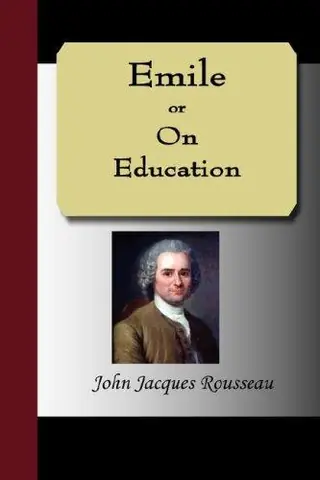
我是教育学在读研究生:抽个两三天读一读卢梭的经典名著《爱弥儿:论教育》(Emile; or On Education)或许很值得。对于成年人如何与自己管教的孩子建立良好的关系,它提供了极其深刻的见解。https://en.wikipedia.org/wiki/Emile%2C_or_On_Education 卢梭……
In training academic Pedagogist here: It may be worthwhile to take a two or day three reading of Rousseau's classic, "Emile; or On Education." It gives tremendous insight into how it is that adults can have positive relationships with the children that they might be governing. https://en.wikipedia.org/wiki/Emile%2C_or_On_Education Rousseau…
我不是楼主,相对而言虽然这是一本老书了,但你也可以考虑给让-雅克·卢梭的《爱弥儿:论教育》一个机会。至少以今天的标准来看,里面没什么科学的教育学内容,但如果我有孩子的话,我想教他生活中的各种道理时,大概会以这本书里讲的内容为依据……
Not the OP, and it's a rather old book, relatively speaking, but you might also give Jean-Jacques Rousseau's Emile, or On Education a chance. It's got nothing pedagogically scientific in it, at least compared to today's standards, but were I to have a kid I'd base my trying to teach him about things in life on what this book has…
为了让孩子达到国家规定的识字标准而毁掉他们的社交生活,这比文盲还要糟糕。不妨想想卢梭的《爱弥儿:论教育》。我十几岁时因为偷偷溜去图书馆读康德和黑格尔,在学校里被当成“差生”。有一次我还因为向数学老师请教哥德尔完备性定理而被停学……
Destroying a child's social life in the name of bringing them up to a standard of state defined literacy is worse than the illiteracy. Consider Rousseau's, "Emile; or On Education." I was called a, "failing student" in school because I was sneaking off to the library to read Kant and Hegel as a teenager. I once got suspended for asking my math teacher about Godel's Completeness…
关于孩子自然自主学习的几点看法,在某种程度上让我想起了卢梭的《爱弥儿:论教育》。不过我不知道现实生活中到底有没有人真正做成功过。我觉得可能存在的一个缺点在于,有些东西你必须学会才能在社会中良好立足,但你可能对其完全没有自发的兴趣……
Some of the points about children learning naturally by themselves remind me somewhat of Rousseau's "Emile, or On Education" However, I don't know if anyone had been able to actually pull this off in real life. I think one downside could be for things that you have to learn to function well in society but have no natural interest…
有一种浪漫主义(卢梭就是主要的始作俑者)的教育观,似乎主要建立在一厢情愿的幻想和小说的基础上。但我认为其中确实有一丝真理。《爱弥儿:论教育》(卢梭著)提出了一个理想化的目标:让一个男孩接受家庭教师的单独教育(班级规模只有一个人),而不会被“异化”(丧失浪漫主义者认为小孩子所具备的纯真与优良道德品性……
There's a Romantic (Rousseau was a major perpetrator) view of education that seems to be based mostly on just whistful thinking and novels. But I think there is a grain of truth to it. Emile, or On Education (by Rousseau) proposes an idealistic goal in which a boy is educated by a tutor (a class size of) without being 'denatured' (losing the innocence and good moral quantities that the romantics think small…
虽然说这样有点以偏概全,但卢梭确实描绘了这样一幅图景:人性本善,只是被社会(或者说作者所称的环境)所腐蚀。这个观点是《论不平等》和《爱弥儿》的核心基石。 《论人类不平等的起源与基础》(1755)——“处于原始状态的人是最温良的……天生的同情心抑制着他,不让他去做”
It is an over simplification but Rousseau does paint this picture of humanity's natural goodness corrupted by society, or what the author calls circumstance. This idea is a cornerstone of the Discourse on Inequality and Émile. Discourse on the Origin and Foundations of Inequality among Men (1755) - “Nothing is more gentle than man in his primitive state… he is restrained by natural pity from doin