…我先是读了兰斯·A·利文撒尔(Lance A. Leventhal)的《6502 汇编语言编程》(1979)[1]以及唐·因曼和库尔特·因曼(Don Inman & Kurt Inman)的《Apple 机器语言》(1981)[2]来学习汇编;至于机器的‘内部构造’,我用的是威廉·F·卢伯特(William F. Luebbert)写的《What's Where in the Apple: A Complete Guide to the Apple Computer》(1985)amazon:[3] [1] https://archive.org/details/6502-assembly-language-programmi... [2] https://archive.org/details/a2-ml [3] https://www.amazon.de/Whats-Where-Apple-Complete-Computer/dp...
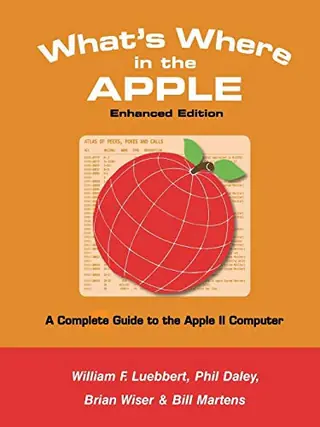
…assembler) in general with "6502 assembly language programming by Lance A. Leventhal" (1979) [1] and "Apple Machine Language by Don Inman & Kurt Inman" (1981) [2] For the 'internals' of the machine, I had "What's Where in the Apple: A Complete Guide to the Apple Computer by William F. Luebbert" (1985) amazon:[3] [1] https://archive.org/details/6502-assembly-language-programmi... [2] https://archive.org/details/a2-ml [3] https://www.amazon.de/Whats-Where-Apple-Complete-Computer/dp...
《What's Where in the Apple》。https://libgen.is/book/index.php?md5=67D333F6D1B0AA52E261459... 我也有过那种经历,能够快速直观地理解现代系统,很大程度上归功于早年对老系统的深入摸索。
what’s where in the apple. https://libgen.is/book/index.php?md5=67D333F6D1B0AA52E261459... I also had that experience and credit the deep understanding of an early system with intuition in rapidly understanding modern systems.
> 打印出来连1英寸厚的纸都不到(还记得带绿条纹的折叠连续打印纸吗?)我以前有本书,极其好用,叫《What's Where in the Apple II》,里面包含了带完整注释的 ROM 反汇编代码,列出了所有已知的入口点、输入参数是什么以及输出保存在哪里。印出来大概有2英寸厚。我那本(当然…
> it would be less than 1" of paper (remember green lined fanfold?) I had a book, an extremely useful one, "What's Where in the Apple II" which contained a full commented ROM disassembly with all known entry points, what their inputs were and where they stored their output. It was about 2 inches thick when printed. My copy (of course…
强烈推荐《What's Where in the Apple》:https://archive.org/details/whatswhereinappl0000lueb 当年我超爱这本书。具体的、可直接寻址的内存地址被映射到系统设备上,那种方式跟现在比起来相当陌生而且…
I strongly recommend "What's Where in the Apple": https://archive.org/details/whatswhereinappl0000lueb I loved that book back in the day. Specific, directly addressable memory locations are mapped to system devices in a way that is quite foreign and…
我承认我有点作弊了。我当时是用威廉·F·卢伯特的《What's Where in the Apple II》去 ROM 里找契合我需求的例程。大家可以在这儿下载:http://apple2scans.net/apple-ii/whats-where-in-the-apple/
I confess I kind of cheated. I used William F. Luebbert's "What's Where in the Apple II" to find routines in ROM suitable to what I wanted to do. You can grab yours at http://apple2scans.net/apple-ii/whats-where-in-the-apple/
…][ 是个封闭设计,大家就开始直接往 ROM 和 RAM 地址里 poke,比如直接修改系统变量,甚至直接跳转到 ROM 子程序的中间执行。一本叫《What's Where in the Apple II》的书几乎记录了所有已知的 hook。我妈当年就有那本书。她是我的黑客榜样。正因为软件是以这种方式交互的,导致苹果后来几乎不可能去升级 ROM…
…][ was a locked design, folks started poking directly into ROM and RAM locations, for instance directly manipulating system variables, or even jumping into the middle of ROM subroutines. A book called "What's Where in the Apple II" documented almost every known hook. My mom had that book. She's my hacker role model. As a result of the way that software interacted, it became virtually impossible for Apple to update the ROMs…
…我先是读了兰斯·A·利文撒尔(Lance A. Leventhal)的《6502 汇编语言编程》(1979)[1]以及唐·因曼和库尔特·因曼(Don Inman & Kurt Inman)的《Apple 机器语言》(1981)[2]来学习汇编;至于机器的‘内部构造’,我用的是威廉·F·卢伯特(William F. Luebbert)写的《What's Where in the Apple: A Complete Guide to the Apple Computer》(1985)amazon:[3] [1] https://archive.org/details/6502-assembly-language-programmi... [2] https://archive.org/details/a2-ml [3] https://www.amazon.de/Whats-Where-Apple-Complete-Computer/dp...
…assembler) in general with "6502 assembly language programming by Lance A. Leventhal" (1979) [1] and "Apple Machine Language by Don Inman & Kurt Inman" (1981) [2] For the 'internals' of the machine, I had "What's Where in the Apple: A Complete Guide to the Apple Computer by William F. Luebbert" (1985) amazon:[3] [1] https://archive.org/details/6502-assembly-language-programmi... [2] https://archive.org/details/a2-ml [3] https://www.amazon.de/Whats-Where-Apple-Complete-Computer/dp...
《What's Where in the Apple》。https://libgen.is/book/index.php?md5=67D333F6D1B0AA52E261459... 我也有过那种经历,能够快速直观地理解现代系统,很大程度上归功于早年对老系统的深入摸索。
what’s where in the apple. https://libgen.is/book/index.php?md5=67D333F6D1B0AA52E261459... I also had that experience and credit the deep understanding of an early system with intuition in rapidly understanding modern systems.
> 打印出来连1英寸厚的纸都不到(还记得带绿条纹的折叠连续打印纸吗?)我以前有本书,极其好用,叫《What's Where in the Apple II》,里面包含了带完整注释的 ROM 反汇编代码,列出了所有已知的入口点、输入参数是什么以及输出保存在哪里。印出来大概有2英寸厚。我那本(当然…
> it would be less than 1" of paper (remember green lined fanfold?) I had a book, an extremely useful one, "What's Where in the Apple II" which contained a full commented ROM disassembly with all known entry points, what their inputs were and where they stored their output. It was about 2 inches thick when printed. My copy (of course…
强烈推荐《What's Where in the Apple》:https://archive.org/details/whatswhereinappl0000lueb 当年我超爱这本书。具体的、可直接寻址的内存地址被映射到系统设备上,那种方式跟现在比起来相当陌生而且…
I strongly recommend "What's Where in the Apple": https://archive.org/details/whatswhereinappl0000lueb I loved that book back in the day. Specific, directly addressable memory locations are mapped to system devices in a way that is quite foreign and…
我承认我有点作弊了。我当时是用威廉·F·卢伯特的《What's Where in the Apple II》去 ROM 里找契合我需求的例程。大家可以在这儿下载:http://apple2scans.net/apple-ii/whats-where-in-the-apple/
I confess I kind of cheated. I used William F. Luebbert's "What's Where in the Apple II" to find routines in ROM suitable to what I wanted to do. You can grab yours at http://apple2scans.net/apple-ii/whats-where-in-the-apple/
…][ 是个封闭设计,大家就开始直接往 ROM 和 RAM 地址里 poke,比如直接修改系统变量,甚至直接跳转到 ROM 子程序的中间执行。一本叫《What's Where in the Apple II》的书几乎记录了所有已知的 hook。我妈当年就有那本书。她是我的黑客榜样。正因为软件是以这种方式交互的,导致苹果后来几乎不可能去升级 ROM…
…][ was a locked design, folks started poking directly into ROM and RAM locations, for instance directly manipulating system variables, or even jumping into the middle of ROM subroutines. A book called "What's Where in the Apple II" documented almost every known hook. My mom had that book. She's my hacker role model. As a result of the way that software interacted, it became virtually impossible for Apple to update the ROMs…