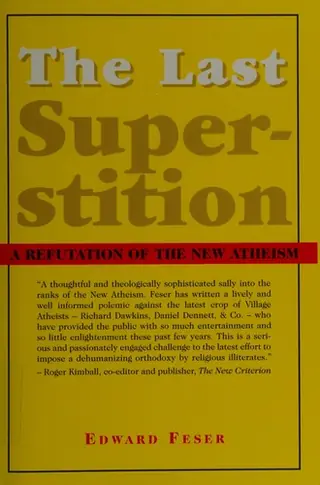
最后的迷信
The last superstition
Edward Feser · 初版 2008 年
3人推荐
3位读者提及
9次提及
但正如 Edward Feser 在 The Last Superstition 中所指出的,科学与宗教之间从来就没有过任何冲突。相反,冲突存在于两种完全不同的哲学世界观之间:一种是 Plato、Aristotle、Augustine 和 Aquinas 的经典“目的论视角(teleological vision)”,认为目的或目标导向性就像质量或电荷一样,是物质世界固有的属性;另一种则是 Descartes、Hobbes、Locke 和 Hume 的现代“机械论”视角,认为物理现实不过是由毫无目的、毫无意义的运动粒子所构成的。
Hacker News 上怎么说
正在加载完整评论……
……没能在最高智识层面上、公开且一贯地把论点讲清楚。等我接触到更好的基督教神学和哲学时,我彻底被震撼了。爱德华·费瑟(Edward Feser)的《最后的迷信》(The Last Superstition)帮我打开了这扇大门。我真不知道为什么平均讨论水平会原始到这个地步,我觉得教会领袖一直以来都在系统性地低估大众的智商。
…failure to explain their arguments at the highest intellectual level, publicly, consistently. Once I was exposed to better theology and philosophy of Christianity I was blown away. Edward Feser’s ‘The Last Superstition’ helped open this up. I have no idea why the level of discourse is on average so primitive, I think church leaders have been systematically underestimating the populace.
有很多神学是不依赖神圣启示的。入门的话我推荐爱德华·费瑟的《最后的迷信》。基本上亚里士多德在完全不碰任何宗教文本的情况下,就把整个框架搭建起来了。
There is a lot of non revealed theology. For an intro I would suggest The Last Superstition by Edward Feser. Basically Aristotle lays out the framework without getting anywhere near a religious text.
……但我两样都不是,所以我能做的就是给你推荐本书:去看看爱德华·费瑟的著作,尤其是《阿奎那》(Aquinas)和《五种证明》(Five Proofs)。如果你想看有人用道金斯自己的语气去驳斥他,那就看《最后的迷信》。为了解答你自己的这些疑问,你目前都做过哪些功课?
…But I'm neither, so all I can do is provide you with a book recommendation: check out Edward Feser's work, especially Aquinas and Five Proofs. If you want to see Dawkins refuted in his own tone, see The Last Superstition. What research have you done up to this point to answer your questions?
……如果你对《神学大全》(Summa Theologica)的内容不是很熟悉,读费瑟的文章可能收获不大。这话又不对了。他的文风极其通俗好懂。他的书《最后的迷信》完全是 101 入门级的料。对亚里士多德的一些基本概念有所了解可能有时能加快理解,但也用不着非得是学者才能看懂他写的大部分内容。而且往往……
…If you aren't really familiar with the contents of the Summa Theologica, you probably won't get much out of Feser's essays. Again, not true. He writes in an eminently accessible manner. His book "The Last Superstition" is 101 material. Having some familiarity with basic Aristotelian notions can sometimes expedite understanding, perhaps, but you don't need to be a scholar to grasp much of what he writes. And often,…
……在这一点上占据道德高地。只有对过去两千年的哲学研究一无所知的人,才会觉得道金斯在这方面很厉害。对于你和这里的其他人,我建议从爱德华·费瑟的《最后的迷信:对新无神论的驳斥》[0]开始读起,体会一下他们的思想立场到底有多粗糙、肤浅和自相矛盾。作者写这本书时正值新无神论狂热的高潮……
…high ground here. Only someone ignorant of philosophical work of the last two millenia could find Dawkins impressive here. For you and others here, I would recommend beginning with Edward Feser's "The Last Superstition: A Refutation Of The New Atheism" [0] to begin to grasp how crude, unsophisticated, and incoherent their intellectual positions are. The author wrote this book during the height of the New Atheist craze…
……结论,你就会遇到反唇相讥论证(retorsion argument),也就是怀疑论通常会面临的那种悖论(比如“根本没有真理!”这类的论调)。我推荐几本爱德华·费瑟关于这个主题的书。《最后的迷信》在这方面读起来比较轻松,但《经院哲学形而上学》(Scholastic Metaphysics)更算是一本正经的指南手册。
…conclusion, and you can face a retorsion argument, a paradox of the sort skepticism generally faces (“there is no truth!” type of stuff). I recommend some of Edward Feser’s books on the subject. “The Last Superstition” is a light read in that respect, but “Scholastic Metaphysics” is more of a proper manual.