大家好,我是这篇帖子的作者之一。很想听听大家的想法,也乐意回答任何问题 :) 如果你喜欢这篇内容,那我绝对推荐读读 Sam Savage 的《The Flaw of Averages》。它对这些东西的探讨要深入得多,而且文风非常有趣——完全不是你印象中统计学书籍那种枯燥的样子。
Hey folks, I'm one of the authors of the post. Would love to hear people's thoughts, and happy to answer any questions :) If you liked this, then I'd definitely recommend reading "The Flaw of Averages" by Sam Savage. It talks about this stuff in a lot more detail, and the style is very entertaining — not at all what you'd expect from a statistics book.
哇,关于风险的讨论太棒了。对于这个讨论我唯一想补充的是,在你尝试对风险建模之前,应该先读读 Sam Savage 写的《The Flaw of Averages》——http://flawofaverages.com/ 简单来说,任何真正合理的风险模型大概都应该避免给出一个“单一数字”,而应该是一个概率区间。这样才能模拟各种可能性的分布……
Wow, great discussion on risk. The only thing I would add to the discussion is that before you try to model risk, you should read 'The Flaw of Averages', by Sam Savage - http://flawofaverages.com/ Put simply, any real risk model should probably avoid being a 'single number', but a range of probabilities. This models the distribution of possibilities…
……关于拆解平均数据以及因使用平均值而导致的错误这一主题。这是他网站上对这本书的摘要:http://www.stanford.edu/~savage/flaw/ ,这是他那本名为《The Flaw of Averages》的书的链接:http://www.amazon.com/Flaw-Averages-Underestimate-Risk-Uncer...
…topic of disaggregating average data and mistakes made from using averages. Here's a summary of the book on his website: http://www.stanford.edu/~savage/flaw/ and here's a link to his book, titled The Flaw of Averages: http://www.amazon.com/Flaw-Averages-Underestimate-Risk-Uncer...
…Womack, Machine That Changed the World. 8. How to innovate cheaply: Westrum, Sidewinder. 9. How to estimate things properly: Hubbard, How to Measure Anything. Tetlock, Superforecasting. Savage, The Flaw of Averages. 10. How to train people to be experts at things: Hoffman, Accelerated Learning. 11. How people fail at decisions: Kahneman, Thinking, Fast and Slow & Noise. I had to leave out a few about statistics,…
……《Trustworthy Online Controlled Experiments》(关于实验设计可能还有更好的书——我自己一直在关注 Deming 的几本——但这本作为入门书大概不输任何一本)——《The Flaw of Averages》(要想获得更准确的预测,多关注分布和区间,而不是单个数字)——《Toyota Kata》(一种用来建立持续改进文化的套路化方法)——《Making Software: What Really Works》……
…Trustworthy Online Controlled Experiments (there are probably better books on experimental design -- I've been eyeing some of Deming's myself -- but this one is probably as good a primer as any) - The Flaw of Averages (to get more accurate predictions, focus on distributions and ranges, not single numbers) - Toyota Kata (a rote way to build a culture of continuous improvement) - Making Software: What Really Works,…
在这类数学味没那么浓、更偏“科普”的流派里,我记得我挺喜欢 Sam Savage(顺便说一句,他是 Jimmie Savage 的儿子)写的《The Flaw of Averages》,不过我是好多年前读的了,不确定现在还会不会推荐它。
In this less mathematical, more "pop science" vein I remember I enjoyed The Flaw of Averages by Sam Savage (who happens to be the son of Jimmie Savage) but I read it many years ago and I'm not sure I would still recommend it.
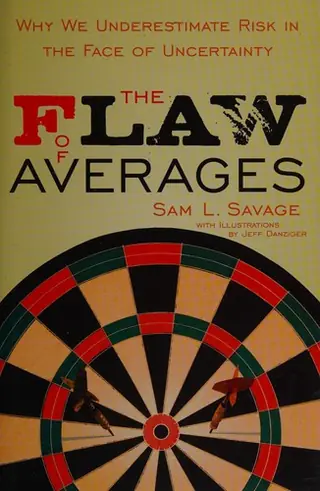
大家好,我是这篇帖子的作者之一。很想听听大家的想法,也乐意回答任何问题 :) 如果你喜欢这篇内容,那我绝对推荐读读 Sam Savage 的《The Flaw of Averages》。它对这些东西的探讨要深入得多,而且文风非常有趣——完全不是你印象中统计学书籍那种枯燥的样子。
Hey folks, I'm one of the authors of the post. Would love to hear people's thoughts, and happy to answer any questions :) If you liked this, then I'd definitely recommend reading "The Flaw of Averages" by Sam Savage. It talks about this stuff in a lot more detail, and the style is very entertaining — not at all what you'd expect from a statistics book.
哇,关于风险的讨论太棒了。对于这个讨论我唯一想补充的是,在你尝试对风险建模之前,应该先读读 Sam Savage 写的《The Flaw of Averages》——http://flawofaverages.com/ 简单来说,任何真正合理的风险模型大概都应该避免给出一个“单一数字”,而应该是一个概率区间。这样才能模拟各种可能性的分布……
Wow, great discussion on risk. The only thing I would add to the discussion is that before you try to model risk, you should read 'The Flaw of Averages', by Sam Savage - http://flawofaverages.com/ Put simply, any real risk model should probably avoid being a 'single number', but a range of probabilities. This models the distribution of possibilities…
……关于拆解平均数据以及因使用平均值而导致的错误这一主题。这是他网站上对这本书的摘要:http://www.stanford.edu/~savage/flaw/ ,这是他那本名为《The Flaw of Averages》的书的链接:http://www.amazon.com/Flaw-Averages-Underestimate-Risk-Uncer...
…topic of disaggregating average data and mistakes made from using averages. Here's a summary of the book on his website: http://www.stanford.edu/~savage/flaw/ and here's a link to his book, titled The Flaw of Averages: http://www.amazon.com/Flaw-Averages-Underestimate-Risk-Uncer...
……Womack 的《改变世界的机器》。8. 如何低成本创新:Westrum 的《响尾蛇》。9. 如何正确做估算:Hubbard 的《点石成金:如何测量世界上的一切》;Tetlock 的《超预测》;Savage 的《The Flaw of Averages》。10. 如何把人培养成某个领域的专家:Hoffman 的《加速学习》。11. 人们是如何做出糟糕决策的:Kahneman 的《思考,快与慢》和《噪声》。我不得不省掉几本关于统计学的……
…Womack, Machine That Changed the World. 8. How to innovate cheaply: Westrum, Sidewinder. 9. How to estimate things properly: Hubbard, How to Measure Anything. Tetlock, Superforecasting. Savage, The Flaw of Averages. 10. How to train people to be experts at things: Hoffman, Accelerated Learning. 11. How people fail at decisions: Kahneman, Thinking, Fast and Slow & Noise. I had to leave out a few about statistics,…
……《Trustworthy Online Controlled Experiments》(关于实验设计可能还有更好的书——我自己一直在关注 Deming 的几本——但这本作为入门书大概不输任何一本)——《The Flaw of Averages》(要想获得更准确的预测,多关注分布和区间,而不是单个数字)——《Toyota Kata》(一种用来建立持续改进文化的套路化方法)——《Making Software: What Really Works》……
…Trustworthy Online Controlled Experiments (there are probably better books on experimental design -- I've been eyeing some of Deming's myself -- but this one is probably as good a primer as any) - The Flaw of Averages (to get more accurate predictions, focus on distributions and ranges, not single numbers) - Toyota Kata (a rote way to build a culture of continuous improvement) - Making Software: What Really Works,…
在这类数学味没那么浓、更偏“科普”的流派里,我记得我挺喜欢 Sam Savage(顺便说一句,他是 Jimmie Savage 的儿子)写的《The Flaw of Averages》,不过我是好多年前读的了,不确定现在还会不会推荐它。
In this less mathematical, more "pop science" vein I remember I enjoyed The Flaw of Averages by Sam Savage (who happens to be the son of Jimmie Savage) but I read it many years ago and I'm not sure I would still recommend it.