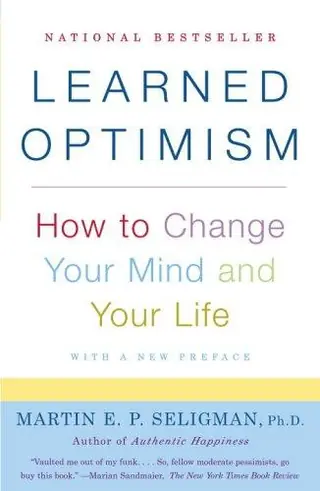
活出最乐观的自己
Learned Optimism
Martin Elias Pete Seligman · 初版 1990 年
56人推荐
75位读者提及
109次提及
为什么值得读
- 颠覆习得性无助,提出乐观可以后天练习掌握
- 依托军校学生与销售员等高压群体实证研究
- 揭示适度外化归因对心理韧性与抗压力的价值
被誉为积极心理学这门新兴科学之父的 Martin E.P. Seligman,结合二十余年的临床研究,阐明了乐观心态如何提升生活品质,以及每个人如何通过学习去践行乐观。Seligman 博士提供了诸多简便易行的技巧,解释了如何破除“我放弃”的惯性思维、建立更具建设性的归因解释风格来诠释自身行为,并体会更积极的内心对话带来的益处。这些技能有助于摆脱抑郁情绪、增强免疫系统、更好地发挥个人潜能,并让你更加幸福。凭借慷慨……
Hacker News 上怎么说
正在加载完整评论……
……想当然地认为这种特质要么天生就有,要么就没有。幸运的是,目前的心理学研究似乎表明,这其实完全可以通过后天习得。给感兴趣的朋友推荐几本指南:马丁·塞利格曼的《活出最乐观的自己》、凯伦·雷维奇和安德鲁·沙特的《抗逆力》、卡罗尔·德韦克的《终身成长》。我甚至想说,这类材料,甚至某些相关培训……
…taken for granted that you either have it or you don't. Fortunately current reseach in psychology seems to suggest that this can actually be learned. Here are a couple guides for anyone interested: Learned Optimism by Martin Seligman The Resilience Factor by Karen Revich and Andrew Shatte Mindset by Carolyn Dweck I would even go so far as to suggest that this kind of material, and perhaps even some training,…
……并告诉你去哪里找曾经帮到过我的资源。因此……我想说,如果帖子里的任何内容让你觉得感同身受、正在困扰你或曾经困扰过你,去读读“习得性乐观”吧,它大致是“习得性无助”的反面:https://en.wikipedia.org/wiki/Learned_optimism 尤其是塞利格曼关于这个主题的自助书:http://amzn.to/1zFQXcr 书里声称“乐观”……
…and tell you where to find the resources that helped me. Thus... I would say that if anything in the post feels like something that is bothering you or has bothered you in the past, go and read about Learned Optimism, the rough opposite of Learned Helplessness: https://en.wikipedia.org/wiki/Learned_optimism And especially Seligman’s self-help book on the subject: http://amzn.to/1zFQXcr The book claims that “optimism”…
研究表明,两者在治疗抑郁症方面的有效率基本相同,都在50%左右。事实证明,把责任推出去对健康其实是有益的。建议去读读塞利格曼的另一本书《活出最乐观的自己》了解更多细节;但在对高压人群(西点军校新生、大都会人寿的电话销售等等)的研究中,最成功的人恰恰是那些擅长外归因(怪罪别人……
Studies have shown the two to have the same effectiveness rate at treating depression, around 50%. It turns out it is actually healthy to pass the blame. I'd suggest reading one of Seligman's other books, Learned Optimism, for more, but in studies of people in high-pressure situations (freshman year at Army, cold call insurance salesman at MetLife, etc), the most successful people are the ones who externalize (blame others…
……抑郁情绪反而连年上升。换句话说,别光凭直觉去判断什么有用,得去看切实的科学研究。塞利格曼的书《活出最乐观的自己》[1]和《教出乐观的孩子》[2]都很有用,虽然现在应该已经有了更新的研究。读读这些书或许能帮你应对攻克这一有趣……
…depression, went up over the years when those school programs were put in place. In other words, don't just rely on intuition about what would be helpful, but look into actual research. Seligman's books Learned Optimism[1] and The Optimistic Child[2] are both helpful, although there should be some even newer research out by now. Reading those books may help you deal with the challenges of working on this interesting…
好吧,如果你正感到抑郁,我只能跟你分享曾经帮过我的一样东西:马丁·塞利格曼博士的书《活出最乐观的自己》。大概一年前我写过一点关于它的读后感:http://github.com/raganwald/homoiconic/blob/master/2009-05-0... 很抱歉这并不是包治百病的万能答案,但如果它……
Well, if you're feeling depressed, I can only tell you about something that helped me: Dr. Martin Seligman's book "Learned Optimism." I wrote a little about my perspective on it about a year ago: http://github.com/raganwald/homoiconic/blob/master/2009-05-0... I'm sorry that isn't a grand, unified answer to everything, but if it…
……很多人倾向于贬低自己的成功,却死盯着自己眼中的缺点或失败不放。CBT(认知行为疗法)领域就是应对这种情况的一种手段。我格外喜欢马丁·塞利格曼的《活出最乐观的自己》,书里讲了我们对自己成败的叙事方式是如何导致快乐/乐观,或者抑郁/悲观的。他还谈到了一些相关的研究……
…some large number of people tend to discount their successes and zero in on whatever they see as their flaws or failures. The field of CBT is one way to work with this. I particularly like the book "Learned Optimism" by Martin Seligman, which talks about how the stories we tell ourselves about success and failure lead to happiness / optimism or depression / pessimism. He also talks about some of the research that's…