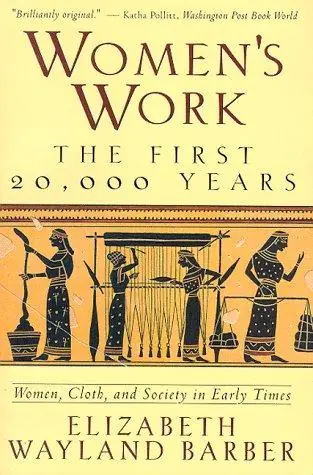
女人的工作:最初的2万年
Women's Work: The First 20,000 Years
Elizabeth Wayland Barber · 初版 1994 年
1人推荐
2位读者提及
6次提及
关于纺织技艺的新发现揭示了女性在古代社会中超乎想象的重要角色。正如 John Noble Wilford 在《New York Times Book Review》中所评价的那样,Barber “将神话、文学、考古学、民族学与翔实的史料编织成了一幅绚丽的织锦”。内含照片与手绘插图。附有作者讲座信息。
Hacker News 上怎么说
正在加载完整评论……
我最近读了《妇女的劳动:最初两万年》(Women's Work: The First 20,000 Years),强烈推荐!它从深层视角剖析了纺织品制造的实践及其参与者,以及背后的社会和现实原因。令人着迷的是,在历史上,手工纺线的做法和……
I recently read and can recommend Women's Work: The First 20,000 Years as a deep perspective on the practices and participants in the making of textiles, and their societal and practical reasons. It's fascinating that historically, the practice of hand spinning thread and…
在伊丽莎白·巴伯(Elizabeth Barber)1994 年出版的《妇女的劳动:最初两万年》(Women's Work: the First 20,000 Years)中有一段描写,根据重构的 PIE 词根,她推测了我们相当笃定的原始印欧人晚上围坐在营火旁都在干些啥,其中许多……
In Elizabeth Barber's Women's Work: the First 20,000 Years (1994) there's a passage where, on the basis of reconstructed PIE roots, she posits what we're fairly sure the proto-indo europeans were getting up to in the evenings around their campfires, and many…
参考巴伯(Barber)的《妇女的劳动:最初两万年》(Women's Work: The First 20,000 Years)。她的部分观点是,编织和纺织之所以成为女性的刻板职业,是因为这些活儿可以在同一个地方完成,而且随时可以被打断,非常适合……
cf Barber, "Women's Work: The First 20,000 Years" Part of her thesis is that weaving and textiles have been stereotypical occupations for the distaff gender because they can be done in a single location and are interruptible, making them very suitable…
在巴伯的《妇女的劳动:最初两万年》(Women's Work: The First 20,000 Years)中,她提到原始印欧语(PIE)构拟学者非常确定,除了一般的动物和天气词汇之外,还存在一个表示“嗑嗨了”的 PIE 词根。我猜识字能力……
In Barber's Women's Work: The First 20,000 Years she mentions that proto-Indo-European language reconstructors are pretty sure that besides the usual set of animals and weather conditions, there was a PIE word root for "getting high". I'm guessing literacy…
《妇女的劳动:最初两万年》(Women's Work: The First 20,000 Years)里有一段插曲,讲的是通过词汇来重构早期社会,运用了构拟出来的乌拉尔语词根:“因此我们可以想象,他们在傍晚较大的群体中围坐在篝火旁,一边制作一边……
There was an interlude in Women's Work: The First 20,000 Years about reconstruction of early societies by their vocabulary, using reconstructed root words from Uralic: "So we can imagine them sitting around the campfire of an evening in larger groups, making and…
Elizabeth Barber 的《Women's Work: The First 20,000 Years》指出,几个世纪(甚至几千年)以来,纺织工作既有经济价值,又符合照护工作的标准:可以随时中断,也能在家里完成。然后工业革命……
Elizabeth Barber's Women's Work points out that for centuries (millennia even), textile work was both economically valuable and fit the criteria for caregiving: interruptible and capable of being done at home. Then the industrial revolution…