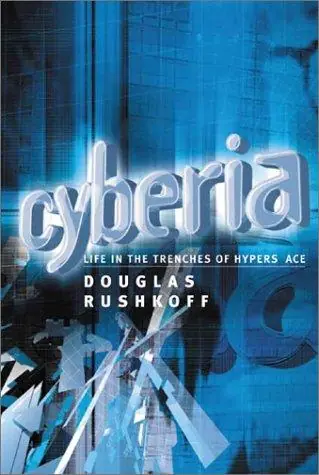
赛博利亚
Cyberia
Douglas Rushkoff · 初版 1994 年
4人推荐
9位读者提及
10次提及
Cyberia 是一幅令人大开眼界且紧跟时代的美国图景,展现了数字高速公路、通宵狂欢派对、网络文学与迷幻复兴的时代特征——出自一位年轻记者之手,他凭借清新的文笔与非凡的敏锐洞察力,为我们所有人不知何故置身其中的新世界描摹了全貌。两年多来,Douglas Rushkoff 一直生活在打造 Cyberia 并将其传递给我们其他人的弄潮儿之中。Cyberia 正是他生动的一手报道。全书语言通俗易懂,即便是从未体验过迷幻剂或从未通过电脑调制解调器进行过交流的读者也能轻松领会,它是一场通往
Hacker News 上怎么说
正在加载完整评论……
Douglas Rushkoff的《赛博利亚》(Cyberia,1994)里探讨了什么是真正的黑客,以及与之契合的“好奇心”性格原型。我是十多年前读的它,当时引起了我强烈的共鸣,所以也许……
Douglas Rushkoff's Cyberia (1994) has some coverage on the idea of a true hacker and the "curious" personality archetype that matches it. It was more than 10 years ago that I read it and it resonated strongly with me, so perhaps…
……不知怎的既回溯过去又通往未来,交织在迷幻剂与迷幻文化之中,却又同时属于比机器古老得多的机器与文化。这是我人生经历中超级重要的一部分。我觉得Rushkoff的《赛博利亚》从人类学角度最贴切地捕捉到了其中的某些碎片。
…somehow back and forward in time at the same time enmeshed in psychedelics and psychedelia but somehow also part of both machines and cultures far older than machines. A super important part of my history. Cyberia by Rushkoff comes closest to capturing parts of it from an anthropology perspective I think.
……Jonathan Taplin《动快破烂》(Move Fast and Break Things)Andrew L. Shapiro《控制革命》(The Control Revolution)Lawrence Lessig《代码与赛博空间的法律》(Code and Other Laws of Cyberspace)David Shenk《数据烟雾》(Data Smog)Douglas Rushkoff《赛博利亚》(Cyberia)Paulina Borsook《赛博自私》(Cyberselfish)。
…Jonathan Taplin Move Fast and Break Things Andrew L. Shapiro The Control Revolution Lawrence Lessig Code and Other Laws of Cyberspace David Shenk Data Smog Douglas Rushkoff Cyberia Paulina Borsook Cyberselfish.
我发现Doug Rushkoff的《赛博利亚》可以很好地弥补没能亲身见证那个时代的遗憾。它的优势在于不是事后回望,而是当时的环顾审视。我现在重新翻阅它时,能感觉到一种历史……
I found Doug Rushkoff's Cyberia to be an effective substitute for having properly witnessed that era. It has the advantage of not being a look back, but a look around. I get the sense, in flipping through it again now, that a historical…
我接触Rushkoff的第一本书是《赛博利亚》[1]。他现在比写《赛博利亚》那会儿温和多了。不过他的观点非常棒。换句话说就是:如果我们已经拥有丰裕,为什么还要为了得到更多而劳作,而不是去把这种丰裕……
My introduction to Rushkoff was Cyberia [1]. He's much more temperate now than he was in Cyberia. He has a great point, though. Restated, it's as follows: If we have abundance, why are we working for more, instead of sending the abundance…
我记得在Douglas Rushkoff的《赛博利亚》里读到过Marc de Groot(这款软件的作者)。可惜他在2004年去世了。https://www.sfgate.com/news/article/DE-GROOT-Marc-2732584.ph...
I remember reading about Marc de Groot (author of this software) in Douglas Rushkoff's Cyberia. Unfortunately he passed away in 2004. https://www.sfgate.com/news/article/DE-GROOT-Marc-2732584.ph...