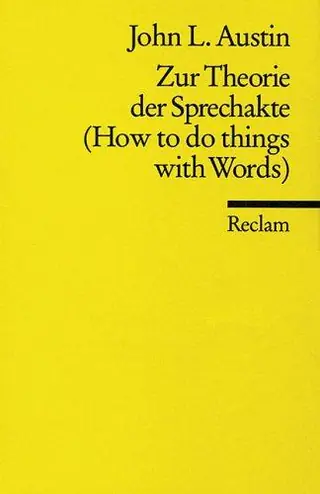
如何以言行事
How to do things with words
J. L. Austin · 初版 1962 年
2人推荐
6位读者提及
6次提及
这部著作呈现了 Austin 在其人生最后至少十年间倾注主要心血的研究领域所取得的结论。Austin 从对自己广为人知的 performative utterances 与 statements 之间区别的详尽审视出发,在此最终放弃了这一区分,取而代之的是一种更为普遍的话语 illocutionary forces 理论,该理论对诸多哲学问题产生了重要影响。
Hacker News 上怎么说
正在加载完整评论……
……我花了出人意料多的时间去读语言哲学,它对我搞AI prompt的启发,恐怕比我读过的大多数“prompt engineering”文章都要多。言语行为理论(Speech Act Theory)、奥斯汀的《如何以言行事》(How to Do Things with Words)以及塞尔的著作彻底改变了我对prompt的看法。我不再问“我应该用什么词?”,而是问“我想执行什么动作?”这是一个请求吗?一个承诺吗?一个宣告吗?还是一个指令?……
…spent a surprising amount of time reading philosophy of language, and it's probably done more for my AI prompting than most of the "prompt engineering" articles I've read. Speech Act Theory, Austin's How to Do Things with Words, and Searle's work changed how I think about prompts. Instead of asking, "What words should I use?", I ask, "What action am I trying to perform?" Is this a request? A commitment? A declaration? An instruction?…
我一直都是奥斯汀的粉丝——《如何以言行事》(How To Do Things With Words)写得太令人惊艳了。
I've long been an Austin fan -- "How To Do Things With Words" is dazzling.
……论点在于,“我保证”是独一无二的,因为说出“我保证”这件事本身就是保证的行为。而“你保证过”并不是保证,而是对(别人做出的)保证行为的描述。[参见《如何以言行事》:http://www.amazon.com/How-Do-Things-Words-Lectures/dp/067441... ]
…argument is that "I promise" is unique because saying "I promise" is the act of promising. "You promised" is not a promise, it is a description of the act of promising (carried out by someone else). [see How to Do Things with Words: http://www.amazon.com/How-Do-Things-Words-Lectures/dp/067441... ]
……如果我提到“椅子”(chair)这个词,它不会在你脑子里留下心理残留(当然,语境和关联分析是适用的,但大体上不会)——但如果你去翻翻J·L·奥斯汀的《如何以言行事》,你肯定得先费劲甩掉像“前绝言大陆主义”(preapopstaticontinentalism)这类词。第一点是说话者说出了这个词,接下来就是决定它是否具有……的判定程序
…If I mention the word "chair", this will not sit with you as mental residue (surely, contextual and relational analysis apply, but on the whole it will not) — but if you take recourse to JL Austin's "How to Do Things With Words" — you will certainly need to shake off words like "preapopstaticontinentalism". The first point is that a speaker has produced the word, then it comes that decision procedure of whether or not it has…
哲学家J·奥斯汀(《如何以言行事》[1]以及书名起得绝妙的《感觉与可感物》[2]的作者)的著作似乎与法学有着更显而易见的关联,我也希望它们能被法学界引用。奥斯汀探讨了“施事话语”(performative utterances)[3],比如“我保证我会……
The works of the philosopher J. Austin, author of _How to Do Things With Words_[1] (and the wonderfully titled _Sense and Sensibilia_[2]), seem eminently more relevant to law, and I hope are cited as well. Austin writes about “performative utterances”[3] such as “I promise I will…
……https://en.wikipedia.org/wiki/The_History_of_Sexuality 《日常生活中的自我呈现》(The Presentation of Self in Everyday Life),欧文·戈夫曼用戏剧的比喻来解释我们如何扮演角色 https://en.wikipedia.org/wiki/The_Presentation_of_Self_in_Ev... 我会推荐J·L·奥斯汀的《如何以言行事》(How to Do Things With Words),它探讨了言语创造事物的力量,但对我来说它讲得实在太细枝末节了。https://en.wikipedia.org/wiki/J._L._Austin#How_to_Do_Things_... 同样地……
…https://en.wikipedia.org/wiki/The_History_of_Sexuality The Presentation of Self in Everyday Life Erving Goffman uses the metaphor of theater to explain how we perform roles https://en.wikipedia.org/wiki/The_Presentation_of_Self_in_Ev... I would say How to Do Things With Words by JL Austin which talks about the power of words to bring things into existence but it really gets into too much detail for me. https://en.wikipedia.org/wiki/J._L._Austin#How_to_Do_Things_... Similarly…