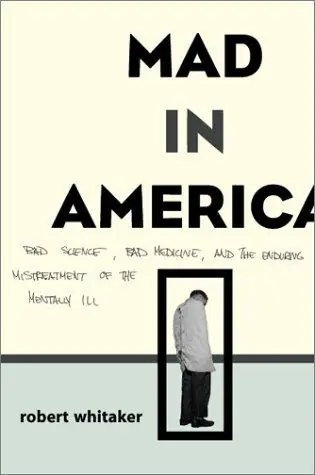
疯狂的美国
Mad in America
Robert Whitaker · 初版 2001 年
3人推荐
9位读者提及
23次提及
在Mad in America一书中,医学记者Robert Whitaker揭示了一个令人震惊的事实:美国精神分裂症患者目前的境遇甚至比世界上最贫穷国家的患者还要糟糕,而且很可能比19世纪初精神病院的患者还要惨。怀着扒粪者的满腔热情,Whitaker指出针对重度精神疾病的现代疗法不过是新瓶装旧酒,而我们整个社会对其疗效抱有极深的妄想。在追溯了三个多世纪针对癫狂的“疗法”后,Whitaker展示了医学治疗手段是如何被用来让患者噤声并……
Hacker News 上怎么说
正在加载完整评论……
我举双手赞同。任何想了解精神病学是如何被药企彻底收买的人,去读读罗伯特·惠特克(Robert Whitaker)的《致命药物》(Mad in America)。他研究了精神分裂症患者长期疗效的对比研究:接受药物治疗与未接受药物治疗的对比。他的发现是,那些从不……的精神分裂症患者
I absolutely agree with this. For anyone curious about how psychiatry is bought and paid for by pharmaceutical companies, read the book "Mad in America" by Robert Whitaker. He looks at studies of the long-term outcomes for schizophrenia patients who are treated with drugs versus those who aren't given drugs. What he finds is that schizophrenics who never…
> 坚决不读记者写的书,除非是写新闻业本身的 查尔斯·曼恩(Charles Mann)的《1491》和《1493》依然是该主题下最好的书。罗伯特·惠特克的《致命药物》(Mad in America)和《流行病解剖学》(Anatomy of an Epidemic)也是如此。
> no books by journalists, unless it’s about journalism Charles Mann's 1491 and 1493 remain the best books on the topic. Robert Whitaker's Mad in America and Anatomy of an Epidemic likewise.
感谢引用。这摘自发表在“Mad in America”基金会网站上的一篇随笔《货物崇拜精神病学》(Cargo Cult Psychiatry):https://www.madinamerica.com/2022/06/cargo-cult-psychiatry/ 我发现罗伯特·惠特克的书在帮我理解心理健康行业的思维方式方面极有价值。《Mad in…
Thanks for the quote. This was part of an essay, Cargo Cult Psychiatry, posted at the Mad in America Foundation's website: https://www.madinamerica.com/2022/06/cargo-cult-psychiatry/ I found Robert Whitaker's books invaluable for helping me understanding the mental health industry's mindset. Mad in…
…https://en.wikipedia.org/wiki/Neuroactive_steroid#Role_in_an... 在《波士顿环球报》2000 年左右的档案里有一些关于百忧解(Prozac)的好文章,比如《重审百忧解》等 [2]。罗伯特·惠特克 [3] 在写出《致命药物》(Mad in America)和《流行病解剖学》(Anatomy of an Epidemic)之前,曾供职于《波士顿环球报》。[2] http://www.narpa.org/prozac.revisited.htm(波士顿环球报的官方存档网站不太好用,但我之前已经核实过这些报道确实存在)[3]…
…https://en.wikipedia.org/wiki/Neuroactive_steroid#Role_in_an... There are some good articles in the Boston Globe's archives about Prozac, circa 2000. "Prozac, Revisited", etc [2]. Robert Whitaker [3] worked for the Boston Globe, before he wrote Mad in America and Anatomy of an Epidemic. [2] http://www.narpa.org/prozac.revisited.htm (the boston globe's official archives site is not so easy to use, but I've previously verified that these stories exist) [3]…
……在大学时被诊断为 ADHD。这根本不是什么生理问题,纯粹是我对课程不感兴趣。兴奋剂类药物或许能帮我更好地集中注意力,但是……图啥呢?《致命药物》(Mad in America)和《流行病解剖学》的作者罗伯特·惠特克 [1] 深入研究过这些问题,并得出结论:药物会让患者的病情变得更糟。[1] http://www.madinamerica.com/
…been diagnosed as ADHD in college. This was not a biological problem, but that I didn't care about my classes. Stimulants might have helped me focus better, but ... why? Robert Whitaker [1], author of Mad in America and Anatomy of an Epidemic, has looked into these matters, and concluded that the medications make people's conditions worse. [1] http://www.madinamerica.com/
> 《致命药物》(Mad in America)和《流行病解剖学》的作者罗伯特·惠特克 [1] 深入研究过这些问题,并得出结论:药物会让患者的病情变得更糟。 确实,我也认同学术体制没能改善现状,但到处宣泄情绪……
> Robert Whitaker [1], author of Mad in America and Anatomy of an Epidemic, has looked into these matters, and concluded that the medications make people's conditions worse. Sure, I agree that the school isn't making it any better but lashing out…