…two unrelated Eckerts in early computing. Wallace Eckert was an astronomer at Columbia who figured out crazy ways to use punch card accounting machines to do scientific computation, and wrote the book "Punched Card Methods in Scientific Computation". Presper Eckert, who was unrelated to Wallace Eckert, is the better-known co-designer of the groundbreaking ENIAC computer (along with Mauchly). They then designed the UNIVAC I, basically the first…
…calculations from the early twentieth century, back when computer was a job title and job runtime was measured in weeks... ===Update=== Couldn't find the one I was looking for, but I did dig up Eckert, Punched Card Methods in Scientific Computation (1940). From Chapter VII "The Multiplication of Series": p.68 "By a continuation of this process we obtain about 100 groups of cards each with its rate card. Since the capacity of the multiplier is…
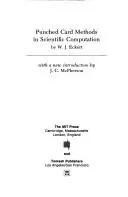
……早期计算机领域有两个完全没有亲戚关系的 Eckert。Wallace Eckert 是哥伦比亚大学的天文学家,他琢磨出了极其疯狂的方法,利用打孔卡会计机来进行科学计算,并写了《Punched Card Methods in Scientific Computation》这本书。而 Presper Eckert 和 Wallace Eckert 没有任何关系,是开创性计算机 ENIAC 更广为人知的联合设计者(与 Mauchly 合作)。后来他们又设计了 UNIVAC I,基本上算是第一台……
…two unrelated Eckerts in early computing. Wallace Eckert was an astronomer at Columbia who figured out crazy ways to use punch card accounting machines to do scientific computation, and wrote the book "Punched Card Methods in Scientific Computation". Presper Eckert, who was unrelated to Wallace Eckert, is the better-known co-designer of the groundbreaking ENIAC computer (along with Mauchly). They then designed the UNIVAC I, basically the first…
……二十世纪早期的计算,那时候 computer(计算机)还是个职位头衔,任务运行时间得按周来算…… ===更新=== 没找到我原来想找的那本,不过我把 Eckert 的《Punched Card Methods in Scientific Computation》(1940)翻出来了。引自第七章“级数的乘法”:第 68 页“通过继续这一过程,我们获得了大约 100 组卡片,每组都附有费率卡。鉴于乘法器的容量是……
…calculations from the early twentieth century, back when computer was a job title and job runtime was measured in weeks... ===Update=== Couldn't find the one I was looking for, but I did dig up Eckert, Punched Card Methods in Scientific Computation (1940). From Chapter VII "The Multiplication of Series": p.68 "By a continuation of this process we obtain about 100 groups of cards each with its rate card. Since the capacity of the multiplier is…