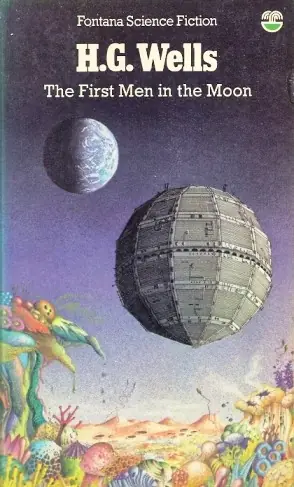
月球上的第一批人
The First Men in the Moon
H. G. Wells · 初版 1900 年
3位读者提及
3次提及
当身无分文的商人贝德福德先生退居肯特海岸写剧本时,他偶然遇见了才华横溢的凯沃博士——一位心不在焉的科学家,即将研制出一种能阻断重力的材料。凯沃很快实验成功,却告诉惊愕的贝德福德,这项发明使人类最古老的梦想之一成为可能:月球之旅。贝德福德为金钱所驱动,凯沃则出于求知的渴望,两人踏上了这次远征。但他们都未料到会发现什么——一个寒夜灼昼、潜藏险恶外星生命的世界,在那里……
Hacker News 上怎么说
正在加载完整评论……
> 我希望全是真菌,而且我希望它能吃。这让我想起 H.G. 威尔斯《The First Men In The Moon》中的一段,叙述者主角饿得不行,忍不住咬了一口某种类似真菌的月球植物,还说动同事 Cavor 也来尝尝……但那些真菌结果……
> I hope it's all fungi and I hope it's edible. That reminds me of a passage from H.G. Wells's «The First Men In The Moon», where the narrator protagonist is so hungry that he can't help but take a bite out of some fungi-like lunar vegetation, and convinces his colleague Cavor to indulge in it as well... but the fungi happens…
……0.0337 m/s²,大了好几个数量级(差不多能感觉到一种轻轻向上飘的趋势)。(和你那颗红石子类似的例子是 H. G. 威尔斯小说《The first men in the moon》里的“Cavorite”,它也能抵消引力,让物体猛烈向上飞射。不过给出的解释是浮力,我觉得这更有道理些。)
…0.0337 m/s², several orders of magnitude larger (and just about perceptible as a gentle tendency to float up). (A similar example to your red pebble would be "Cavorite" from the H. G. Wells story "The first men in the moon", which also negated gravity causing objects to shoot violently upwards. The explanation given however was buoyancy, which makes more sense I suppose.)
H.G. 威尔斯和 C.S. 刘易斯不止一处有交集;在《Out of the Silent Planet》中,有个角色提到了威尔斯的《The First Men in the Moon》(1900),而且当火星居民(在刘易斯作品中)发现地球居民的暴力本性时,两部作品的情节也彼此呼应。
H.G. Wells and C.S. Lewis intersect in more ways than one; in Out of the Silent Planet, one of the characters references Wells's The First Men in the Moon (1900), and the plot of the two parallel each other when the inhabitants of Mars (in Lewis's work) find out about the violent nature of Earth's inhabitants.