His book The Principles of Art from 1938 is probably the best example. He offers a definition of art arrived at through ordinary language philosophy, and, along the way, also develops a theory of imagination, language, and anti-copyright.
……阅读诗歌所产生的情感,好让受众在读完时心理负担不再那么沉重。我特别喜欢 R. G. 柯林伍德在《艺术原理》(1938 年出版)中对他们辩论的历史评注,他在书中谈到了我们对娱乐的沉迷以及陷入恶性循环(“再看一集”)的状态。
…emotions generated by reading the poem, so that the audience feels less emotionally burdened by the time it ends. I particularly like R. G. Collingwood's historical commentary on their debate in The Principles of Art (published 1938), where he talks about our addiction to entertainment and being trapped in a vicious cycle ("one more episode").
……时刻带着反方论点去思考。我不会推荐科普书来做这种训练,因为它们的论证和文笔往往相当松散。我反倒会推荐像 R. G. 柯林伍德的《艺术原理》这样的书,它是用相对平实的英语写就的优秀哲学典范:https://archive.org/details/in.ernet.dli.2015.188470/page/n1... 你肯定会不同意他的观点。关键在于理解他是如何以及……
…with counter-arguments in mind. I would not recommend pop-sci books for this, because their arguments and writing tends to be quite flabby. I'd actually recommend something like RG Collingwood's "The Principles of Art" which is a relatively plain English example of well written philosophy: https://archive.org/details/in.ernet.dli.2015.188470/page/n1... You will disagree with him. The point is to understand how and…
> 我觉得观众和剧作家之间是一种共生关系;他们互相服务,并且在这件事上都承担着责任。你可能会喜欢读读 R. G. 柯林伍德的《艺术原理》。这里有一段相关摘录:“其次,关于表演艺术,即一个人构思了艺术作品,而另一个人或一群人去执行它。罗斯金(他并非总是错的)坚持认为……
> I would say both the audience and the playwright operate in a symbiosis; they serve one another, and they both have responsibilities in the matter. You may enjoy reading R. G. Collingwood’s The Principles of Art. Here is a relevant excerpt: “ Next, with regard to the arts of performance, where one man designs a work of art and another, or a group of others, executes it. Ruskin (who was not always wrong) insisted…
Refreshing. Where can I find more -- do you know who the author is and title of this work? Edit: Found it. The Principles of Art by Robin George Collingwood
……受限于文化背景。这其实也是不对的。这种观点主要源自浪漫主义时期。现代的各种翻版往往其实只是引述了一个叫 R. G. 柯林伍德的人在 1930 年代写的一本叫《艺术原理》的书。这是一种非常晚近的艺术观。在历史上,艺术是与宗教绑定的,因此人们认为它的价值在于普适性而非个人表达……
…bound to a cultural context. This is also not true. This idea mostly comes from the Romantic period. Modern day versions of it are often really just referencing a single book from the 1930s called The Principles of Art by a guy named R.G. Collingwood. It’s a very recent way of seeing art. Historically, art was connected to religion, and therefore thought to be valuable because it was universal rather than individualistic…
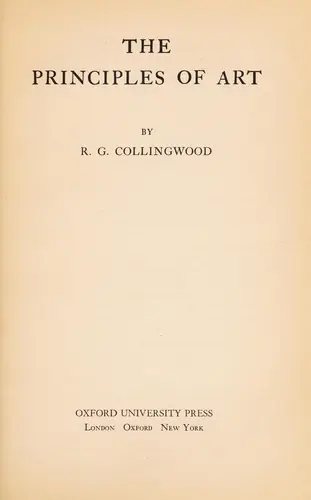
他 1938 年出版的《艺术原理》大概是最好的例子。他通过日常语言哲学给出了艺术的定义,并顺带构建了一套关于想象力、语言以及反版权的理论。
His book The Principles of Art from 1938 is probably the best example. He offers a definition of art arrived at through ordinary language philosophy, and, along the way, also develops a theory of imagination, language, and anti-copyright.
……阅读诗歌所产生的情感,好让受众在读完时心理负担不再那么沉重。我特别喜欢 R. G. 柯林伍德在《艺术原理》(1938 年出版)中对他们辩论的历史评注,他在书中谈到了我们对娱乐的沉迷以及陷入恶性循环(“再看一集”)的状态。
…emotions generated by reading the poem, so that the audience feels less emotionally burdened by the time it ends. I particularly like R. G. Collingwood's historical commentary on their debate in The Principles of Art (published 1938), where he talks about our addiction to entertainment and being trapped in a vicious cycle ("one more episode").
……时刻带着反方论点去思考。我不会推荐科普书来做这种训练,因为它们的论证和文笔往往相当松散。我反倒会推荐像 R. G. 柯林伍德的《艺术原理》这样的书,它是用相对平实的英语写就的优秀哲学典范:https://archive.org/details/in.ernet.dli.2015.188470/page/n1... 你肯定会不同意他的观点。关键在于理解他是如何以及……
…with counter-arguments in mind. I would not recommend pop-sci books for this, because their arguments and writing tends to be quite flabby. I'd actually recommend something like RG Collingwood's "The Principles of Art" which is a relatively plain English example of well written philosophy: https://archive.org/details/in.ernet.dli.2015.188470/page/n1... You will disagree with him. The point is to understand how and…
> 我觉得观众和剧作家之间是一种共生关系;他们互相服务,并且在这件事上都承担着责任。你可能会喜欢读读 R. G. 柯林伍德的《艺术原理》。这里有一段相关摘录:“其次,关于表演艺术,即一个人构思了艺术作品,而另一个人或一群人去执行它。罗斯金(他并非总是错的)坚持认为……
> I would say both the audience and the playwright operate in a symbiosis; they serve one another, and they both have responsibilities in the matter. You may enjoy reading R. G. Collingwood’s The Principles of Art. Here is a relevant excerpt: “ Next, with regard to the arts of performance, where one man designs a work of art and another, or a group of others, executes it. Ruskin (who was not always wrong) insisted…
耳目一新。在哪能找到更多内容——有人知道作者是谁、这书叫什么名字吗?编辑:找到了。罗宾·乔治·柯林伍德的《艺术原理》
Refreshing. Where can I find more -- do you know who the author is and title of this work? Edit: Found it. The Principles of Art by Robin George Collingwood
……受限于文化背景。这其实也是不对的。这种观点主要源自浪漫主义时期。现代的各种翻版往往其实只是引述了一个叫 R. G. 柯林伍德的人在 1930 年代写的一本叫《艺术原理》的书。这是一种非常晚近的艺术观。在历史上,艺术是与宗教绑定的,因此人们认为它的价值在于普适性而非个人表达……
…bound to a cultural context. This is also not true. This idea mostly comes from the Romantic period. Modern day versions of it are often really just referencing a single book from the 1930s called The Principles of Art by a guy named R.G. Collingwood. It’s a very recent way of seeing art. Historically, art was connected to religion, and therefore thought to be valuable because it was universal rather than individualistic…