…关于写出清晰、不啰嗦的英文的两本不可或缺的指南,一短一长:* 乔治·奥威尔的随笔《Politics and the English Language》(政治与英语)[0],其中包括他的六条写作法则;* 欧内斯特·高尔斯爵士的《The Complete Plain Words》(简明行文指南)[1],最初是为臭名昭著的冗长罗嗦的英国公务员系统写的风格指南,他在书中把古埃及财政部的这篇备忘录奉为典范:> 阿波罗尼乌斯致芝诺:问候。…
…invaluable guides to clear, unfussy English, one short and one long: * George Orwell's essay 'Politics and the English Language' [0], which includes his six rules for writing * Sir Ernest Gowers' The Complete Plain Words [1], originally a style guide for the notoriously prolix British Civil Service, in which he offers this memo from the ancient Egyptian ministry of finance as a paragon: > Appollonius to Zeno, greeting.…
On the topic of clear writing, a longer work to follow on from this article is The Complete Plain Words by Sir Ernest Gowers. I heartily recommend it, and find its recommendations on reducing officialese quite useful for increasing clarity in technical documentation.
Two usages that Ernest Gowers bemoaned in The Complete Plain Words, written c. 1950, but which seem unexceptional today: "phenomenal" to mean "prodigious" (rather than simply "perceptible to the senses"), and "meticulous" to mean "scrupulous" (rather than "overly and…
欧内斯特·高尔斯爵士在世纪中叶曾对福勒的《Modern English Usage》(现代英语用法)进行过修订,他自己也写过一本书叫《The Complete Plain Words》(简明行文指南),并且点评过:在法律中表面上看起来吹毛求疵的地方,实际上是必不可少的明确澄清。高尔斯曾担任过法官。
Sir Ernest Gowers, who did a mid-century revision of Fowler's Modern English Usage, wrote a book on his own, The Complete Plain Words, and remarked on ways that what in law appears to be nit-picking is necessary clarification. Gowers was a judge.
…由关系从句本身决定,而不是由关系从句在整个句子中所充当的角色决定。参见:- H. W. Fowler 著《A Dictionary of Modern English Usage》(现代英语用法词典)- Eric Partridge 著《Usage and Abusage》(用法与误用)- Ernest Gowers 著《The Complete Plain Words》(简明行文指南),他们在这个观点上完全一致。
…relative clause, not by the role of the relative clause in the sentence as a whole. See: - H. W. Fowler, A Dictionary of Modern English Usage - Eric Partridge, Usage and Abusage - Ernest Gowers, The Complete Plain Words who are unanimous on this point.
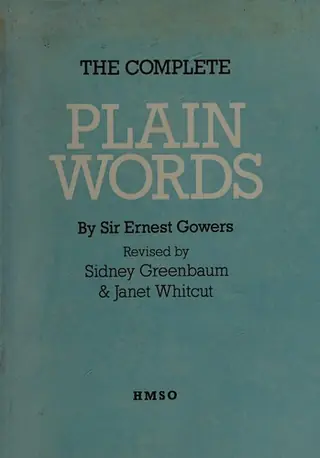
…关于写出清晰、不啰嗦的英文的两本不可或缺的指南,一短一长:* 乔治·奥威尔的随笔《Politics and the English Language》(政治与英语)[0],其中包括他的六条写作法则;* 欧内斯特·高尔斯爵士的《The Complete Plain Words》(简明行文指南)[1],最初是为臭名昭著的冗长罗嗦的英国公务员系统写的风格指南,他在书中把古埃及财政部的这篇备忘录奉为典范:> 阿波罗尼乌斯致芝诺:问候。…
…invaluable guides to clear, unfussy English, one short and one long: * George Orwell's essay 'Politics and the English Language' [0], which includes his six rules for writing * Sir Ernest Gowers' The Complete Plain Words [1], originally a style guide for the notoriously prolix British Civil Service, in which he offers this memo from the ancient Egyptian ministry of finance as a paragon: > Appollonius to Zeno, greeting.…
关于清晰写作这个话题,顺着这篇文章进一步延伸可以读一读欧内斯特·高尔斯爵士写的《The Complete Plain Words》(简明行文指南)。我由衷推荐它,发现它在减少官腔公文套话方面的建议,对于提升技术文档的清晰度非常有用。
On the topic of clear writing, a longer work to follow on from this article is The Complete Plain Words by Sir Ernest Gowers. I heartily recommend it, and find its recommendations on reducing officialese quite useful for increasing clarity in technical documentation.
欧内斯特·高尔斯在1950年左右写成的《The Complete Plain Words》(简明行文指南)中曾抱怨过两种用法,但它们在今天看来却再正常不过了:一是把“phenomenal”当成“prodigious”(惊人的/巨大的)来用(而不是单纯表示“感官可察觉的”),二是把“meticulous”当成“scrupulous”(严谨的/一丝不苟的)来用(而不是“过分且…
Two usages that Ernest Gowers bemoaned in The Complete Plain Words, written c. 1950, but which seem unexceptional today: "phenomenal" to mean "prodigious" (rather than simply "perceptible to the senses"), and "meticulous" to mean "scrupulous" (rather than "overly and…
欧内斯特·高尔斯爵士在世纪中叶曾对福勒的《Modern English Usage》(现代英语用法)进行过修订,他自己也写过一本书叫《The Complete Plain Words》(简明行文指南),并且点评过:在法律中表面上看起来吹毛求疵的地方,实际上是必不可少的明确澄清。高尔斯曾担任过法官。
Sir Ernest Gowers, who did a mid-century revision of Fowler's Modern English Usage, wrote a book on his own, The Complete Plain Words, and remarked on ways that what in law appears to be nit-picking is necessary clarification. Gowers was a judge.
…由关系从句本身决定,而不是由关系从句在整个句子中所充当的角色决定。参见:- H. W. Fowler 著《A Dictionary of Modern English Usage》(现代英语用法词典)- Eric Partridge 著《Usage and Abusage》(用法与误用)- Ernest Gowers 著《The Complete Plain Words》(简明行文指南),他们在这个观点上完全一致。
…relative clause, not by the role of the relative clause in the sentence as a whole. See: - H. W. Fowler, A Dictionary of Modern English Usage - Eric Partridge, Usage and Abusage - Ernest Gowers, The Complete Plain Words who are unanimous on this point.