哈哈,多谢,卡弗·米德(Carver Mead)——距离我读他的书《模拟 VLSI 与神经系统》(Analog VLSI and Neural Systems)已经过去很久了。他真的很神、很厉害。如果有人感兴趣的话,这是他的个人网站:http://carvermead.caltech.edu/index.html
Ha ha, thanks, Carver Mead- been awhile since I read his book, Analog VLSI and Neural Systems. He is really brilliant and awesome. Here's his website if anyone is interested: http://carvermead.caltech.edu/index.html
Carver Mead's "Analog VLSI and Neural Systems" for where neuromorphic computing started. Intel's Loihi papers (Mike Davies et al.) for where it is now. Our paper takes a different path — constraints instead of neurons.
神经形态工程这个领域相当大。它始于卡弗·米德的书《模拟 VLSI 与神经系统》(Addison-Wesley 出版社,马萨诸塞州雷丁,1989年),以及马霍瓦尔德和道格拉斯(Mahowald and Douglas)一篇极酷的论文《硅神经元》(http://www.nature.com/nature/journal/v354/n6354/abs/354515a0... ,发表于《自然》第354期,……
The field of neuromorphic engineering is rather big. Started off with Carver Mead's book "Analog VLSI and Neural Systems" (Addison-Wesley, Reading, Massachusetts, 1989), and a very cool paper titled "A Silicon Neuron" by Mahowald and Douglas (http://www.nature.com/nature/journal/v354/n6354/abs/354515a0... , Nature 354,…
…Faggin and Carver Mead founded Synaptics with an idea to make neuromorphic chips which would be fast and power efficient by harnessing analog computation. Carver Mead published a book on that in 1989: "Analog VLSI and Neural Systems", but making working chips turned to be too hard, and Synaptics successfully pivoted to touchpads and later many other types of hardware. Of course, the concept can be traced to an even older and still…
模拟神经网络这个概念很有吸引力。我在1989年买了《模拟 VLSI 与神经系统》(Analog VLSI and Neural Systems),到现在它还像战利品一样摆在我的书架上。我的直觉告诉我,总有一天模拟神经网络会成为主流,哪怕仅仅是因为它功耗要低得多。我并不是说……
The idea of analog neural networks is appealing. I bought Analog VLSI and Neural Systems in 1989 and still have it as a trophy on my bookshelves. My gut feeling says one day analog neural networks will be a thing, if only for the reason of considerable lower power consumption. I’m not saying…
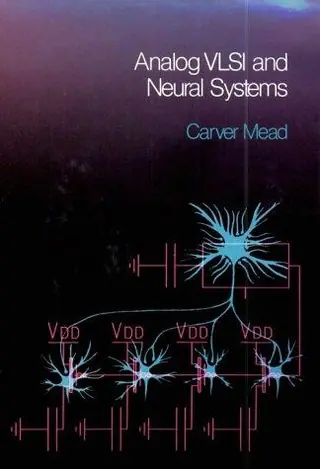
哈哈,多谢,卡弗·米德(Carver Mead)——距离我读他的书《模拟 VLSI 与神经系统》(Analog VLSI and Neural Systems)已经过去很久了。他真的很神、很厉害。如果有人感兴趣的话,这是他的个人网站:http://carvermead.caltech.edu/index.html
Ha ha, thanks, Carver Mead- been awhile since I read his book, Analog VLSI and Neural Systems. He is really brilliant and awesome. Here's his website if anyone is interested: http://carvermead.caltech.edu/index.html
想要了解神经形态计算从何而起,看卡弗·米德(Carver Mead)的《模拟 VLSI 与神经系统》(Analog VLSI and Neural Systems)。想知道目前发展到什么阶段,看英特尔关于 Loihi 的论文(Mike Davies 等人)。我们的论文走了一条不同的路线——采用约束机制而非神经元。
Carver Mead's "Analog VLSI and Neural Systems" for where neuromorphic computing started. Intel's Loihi papers (Mike Davies et al.) for where it is now. Our paper takes a different path — constraints instead of neurons.
神经形态工程这个领域相当大。它始于卡弗·米德的书《模拟 VLSI 与神经系统》(Addison-Wesley 出版社,马萨诸塞州雷丁,1989年),以及马霍瓦尔德和道格拉斯(Mahowald and Douglas)一篇极酷的论文《硅神经元》(http://www.nature.com/nature/journal/v354/n6354/abs/354515a0... ,发表于《自然》第354期,……
The field of neuromorphic engineering is rather big. Started off with Carver Mead's book "Analog VLSI and Neural Systems" (Addison-Wesley, Reading, Massachusetts, 1989), and a very cool paper titled "A Silicon Neuron" by Mahowald and Douglas (http://www.nature.com/nature/journal/v354/n6354/abs/354515a0... , Nature 354,…
……法金(Faggin)和卡弗·米德(Carver Mead)创立了 Synaptics,当时的想法是利用模拟计算来制造兼具高速度和低功耗的神经形态芯片。卡弗·米德在1989年出版了一本相关的书:《模拟 VLSI 与神经系统》(Analog VLSI and Neural Systems),但事实证明造出能正常工作的芯片实在太难了,后来 Synaptics 成功转型做触控板,再后来又拓展到了许多其他类型的硬件。当然,这个概念甚至可以追溯到更早并且至今依然……
…Faggin and Carver Mead founded Synaptics with an idea to make neuromorphic chips which would be fast and power efficient by harnessing analog computation. Carver Mead published a book on that in 1989: "Analog VLSI and Neural Systems", but making working chips turned to be too hard, and Synaptics successfully pivoted to touchpads and later many other types of hardware. Of course, the concept can be traced to an even older and still…
模拟神经网络这个概念很有吸引力。我在1989年买了《模拟 VLSI 与神经系统》(Analog VLSI and Neural Systems),到现在它还像战利品一样摆在我的书架上。我的直觉告诉我,总有一天模拟神经网络会成为主流,哪怕仅仅是因为它功耗要低得多。我并不是说……
The idea of analog neural networks is appealing. I bought Analog VLSI and Neural Systems in 1989 and still have it as a trophy on my bookshelves. My gut feeling says one day analog neural networks will be a thing, if only for the reason of considerable lower power consumption. I’m not saying…