……对我来说这比我之前的误解更讲得通——我原以为你的意思是他从头把整个计算跑了70遍。在那点上我妄下结论了,抱歉。Julian Barbour 的《动理学的发现》(The Discovery of Dynamics)详细解释了开普勒的研究(这不是全书的全部内容,但占了很大一部分)。一本好书——读它之前我并没有真正领会开普勒的伟大之处。既才华横溢,又极具人性。
…more sense to me than my misunderstanding that you were saying he ran through the whole calculation from the start 70 times. I jumped to a conclusion about that part, and I'm sorry. Julian Barbour's The Discovery of Dynamics explains what Kepler did in detail (it's not the whole topic of the book, but a big chunk of it). A great book -- I didn't really appreciate Kepler before reading it. Both brilliant and very human.
Julian Barbour 的《动理学的发现》(The Discovery of Dynamics)非常详尽地探讨了爱因斯坦之前“绝对与相对”的概念。他的《时间的终结》(The End of Time)则以更通俗的角度回顾了这些思想,并将故事延续到了20世纪。
Julian Barbour's The Discovery of Dynamics goes into great detail on absolute vs. relative pre-Einstein. His The End of Time reviews the ideas at a more popular level and continues the story into the 20th C.
Julian Barbour 的《动理学的发现》(The Discovery of Dynamics)用充足的技术细节和历史背景解释了开普勒在火星问题上的工作,让我忍不住感叹:卧槽,开普勒真是个天才,或者说他在某些灵感上运气实在太好了,比如……
The Discovery of Dynamics by Julian Barbour explains Kepler's work on Mars with enough technical detail and historical context that it made me think: holy crap, Kepler was a genius, or very lucky in some of his inspirations, like…
……科普书《时间的终结》(The End of Time)[1999] 以及他的网站 http://platonia.com/。又及:郑重声明,Barbour 绝不是什么跳梁小丑,而是一个严肃厉害的狠角色(serious cat)——他也是写出《绝对还是相对运动 / 动理学的发现》(Absolute or Relative Motion / the Discovery of Dynamics)的人,那是物理学中关于马赫主义思想的奠基之作
…pop-sci book "The End of Time" [1999] and his website http://platonia.com/ p.s. for the record, Barbour is no clown, but a serious cat -- he is also the guy that wrote "Absolute or Relative Motion / the Discovery of Dynamics" which is a bedrock treatise on Machian ideas in physics
…: 1) Lightman's description of his hallucinationish experience at the age of nine, wherein he perceived all time in one instant [or had the sensation of doing so], reminds me of Julian Barbour ["The Discovery of Dynamics"] and his hypothesis that all spacetime exists simultaneously -- not in a Minkowski-eque 'loaf,' but in a static collection of mathematical configuration spaces, each of which represent a "now" [which…
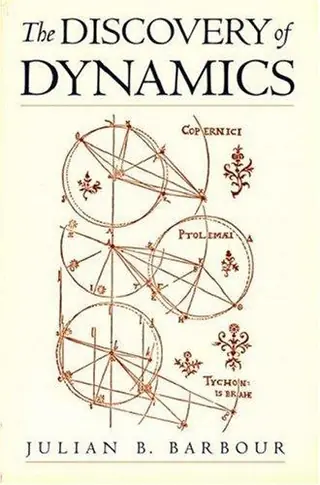
……对我来说这比我之前的误解更讲得通——我原以为你的意思是他从头把整个计算跑了70遍。在那点上我妄下结论了,抱歉。Julian Barbour 的《动理学的发现》(The Discovery of Dynamics)详细解释了开普勒的研究(这不是全书的全部内容,但占了很大一部分)。一本好书——读它之前我并没有真正领会开普勒的伟大之处。既才华横溢,又极具人性。
…more sense to me than my misunderstanding that you were saying he ran through the whole calculation from the start 70 times. I jumped to a conclusion about that part, and I'm sorry. Julian Barbour's The Discovery of Dynamics explains what Kepler did in detail (it's not the whole topic of the book, but a big chunk of it). A great book -- I didn't really appreciate Kepler before reading it. Both brilliant and very human.
Julian Barbour 的《动理学的发现》(The Discovery of Dynamics)非常详尽地探讨了爱因斯坦之前“绝对与相对”的概念。他的《时间的终结》(The End of Time)则以更通俗的角度回顾了这些思想,并将故事延续到了20世纪。
Julian Barbour's The Discovery of Dynamics goes into great detail on absolute vs. relative pre-Einstein. His The End of Time reviews the ideas at a more popular level and continues the story into the 20th C.
Julian Barbour 的《动理学的发现》(The Discovery of Dynamics)用充足的技术细节和历史背景解释了开普勒在火星问题上的工作,让我忍不住感叹:卧槽,开普勒真是个天才,或者说他在某些灵感上运气实在太好了,比如……
The Discovery of Dynamics by Julian Barbour explains Kepler's work on Mars with enough technical detail and historical context that it made me think: holy crap, Kepler was a genius, or very lucky in some of his inspirations, like…
……科普书《时间的终结》(The End of Time)[1999] 以及他的网站 http://platonia.com/。又及:郑重声明,Barbour 绝不是什么跳梁小丑,而是一个严肃厉害的狠角色(serious cat)——他也是写出《绝对还是相对运动 / 动理学的发现》(Absolute or Relative Motion / the Discovery of Dynamics)的人,那是物理学中关于马赫主义思想的奠基之作
…pop-sci book "The End of Time" [1999] and his website http://platonia.com/ p.s. for the record, Barbour is no clown, but a serious cat -- he is also the guy that wrote "Absolute or Relative Motion / the Discovery of Dynamics" which is a bedrock treatise on Machian ideas in physics
……:1)Lightman 描述了他在九岁时那种近乎幻觉的经历,在那一刻他感知到了所有时间汇于一瞬[或者有那种感觉],这让我想起了 Julian Barbour[《动理学的发现》]以及他的假说:所有时空都是同时存在的——不是闵可夫斯基式的‘面包块’,而是一个由数学构型空间(configuration spaces)组成的静态集合,每一个构型空间都代表一个“当下”[而这……
…: 1) Lightman's description of his hallucinationish experience at the age of nine, wherein he perceived all time in one instant [or had the sensation of doing so], reminds me of Julian Barbour ["The Discovery of Dynamics"] and his hypothesis that all spacetime exists simultaneously -- not in a Minkowski-eque 'loaf,' but in a static collection of mathematical configuration spaces, each of which represent a "now" [which…