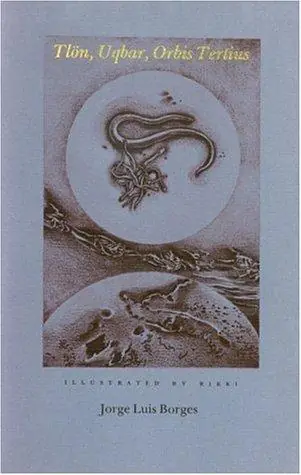
特隆、乌克巴尔、奥比斯·特蒂乌斯
Tlön, Uqbar, Orbis Tertius
Jorge Luis Borges · 初版 1940 年
15人推荐
34位读者提及
39次提及
为什么值得读
- 短小精悍却蕴含极高密度的思想张力
- 展现虚构语言中无名词只有动词的奇特构想
- 具有惊人预见性并带来持续持久的心智震撼
《Tlön, Uqbar, Orbis Tertius》是20世纪阿根廷作家 Jorge Luis Borges 创作的短篇小说。该故事于1940年5月首次发表在阿根廷杂志《Sur》上。其中标注为1947年的“后记”故意打破时间顺序,设定在七年后的未来。该故事的首个英文译本于1961年出版。小说采用第一人称叙事,重点讲述了作者发现神秘且可能是虚构的国家 Uqbar 及其关于 Tlön 的传说——这是一个虚构的世界,其居民信奉一种主观唯心主义,否定客观现实的真实性……
Hacker News 上怎么说
正在加载完整评论……
值得一提的是,博尔赫斯对理工科背景(STEM)的人来说是个绝妙的作家。除了是一位泰斗级的文学评论家,他还写短篇小说。他把写短篇当成作诗一样来对待——用最少的文字压缩进最多的故事。它们简练、精干,却力量十足。 尤其是《巴比伦彩票》和《巴别塔图书馆》,简直就是组合数学式的恐怖故事。它们将简单的概念
It's worth mentioning that Borges is a great author for STEM types. Apart from being a towering critic of literature, he wrote short stories. He treated these as a poetry problem -- compressing the most story into the least number of words. They are spare, lean, but powerful. The Lottery in Babylon and The Library of Babel, in particular, are combinatorial horror stories. They take simple concept
关于此事的虚构化呈现,可以看看《特隆、乌克巴尔、奥比斯·特蒂乌斯》。 关于博尔赫斯这层联系的元评论:我一直对他作品的前瞻性感到震惊。《特隆、乌克巴尔、奥比斯·特蒂乌斯》出版于 1940 年,所以我猜他在阿根廷有可能听说了纽约的这起官司,但我表示怀疑。 其他例子: 《小径分岔的花园》:定性地预示了多世界
See "Tlön, Uqbar, Orbis Tertius" for a fictional take on this. Meta-comment about the Borges connection: I'm continually astounded by how prescient his work was. "Tlön, Uqbar, Orbis Tertius" was published in 1940, so I suppose it's possible he, in Argentina, heard about this court case in New York, but I doubt it. Other examples: The Garden of Forking Paths: qualitative pre-figuring of the many
如今学西班牙语的理由不多了,但读博尔赫斯绝对是一个极具说服力的理由。像《皮埃尔·梅纳尔》、《小径分岔的花园》或《特隆、乌克巴尔、奥比斯·特蒂乌斯》这样的故事,会从好几个不同维度震撼你的大脑,并在你的心智上留下永恒的烙印。 幸运的是,他的两位英译者水平都极高。
There are few reasons to learn Spanish today, but reading Borges is an extremely strong one. Stories such as "Pierre Ménard", "The garden of forking paths" or "Tlön, Uqbar, Orbis Tertius" blow your mind in several different ways and leave a perennial impression on your intellect. Fortunately, both of his English translators are excellent.
这让我想起了豪尔赫·路易斯·博尔赫斯那篇极佳的短篇小说《特隆、乌克巴尔、奥比斯·特蒂乌斯》:> 特隆推测的原初语言(Ursprache)中没有名词,如今的“现代”语言和方言皆源于此:它只有非人称动词,由单音节后缀修饰……
This reminded me the superb short story “Tlon, Uqbar, Orbis Tertius” by Jorge Luis Borges: > There are no nouns in Tlön's conjectural Ursprache, from which the "present" languages and the dialects are derived: there are impersonal verbs, modified by monosyllabic suffixes…
豪尔赫·路易斯·博尔赫斯短篇小说集。尤其是:《巴别塔图书馆》、《特隆、乌克巴尔、奥比斯·特蒂乌斯》和《不朽》 伊塔洛·卡尔维诺的《如果在冬夜,一个旅人》 梅尔维尔的《白鲸》(我不觉得这是本好书,但它影响深远) 考麦克·麦卡锡的《血色子午线》 这些作品放在一起,揭露了传统知识分子主义的虚妄,即
The collected short stories of Jorge Luis Borges. Particularly: "The Library of Babel", "Tlön, Uqbar, Orbis Tertius" and "The Immortal". Italo Calvino's, "If on a Winter's Night a Traveller". Melville's "Moby Dick" (I do not think this is a good book but it had a significant impact.) Cormac McCarthy's, "Blood Meridian". Together these works revealed a vanity in traditional intellectualism that
许多 LLM 在利用具体知名作者(而非仅仅参考示例文本)来唤起某种风格方面表现得惊人地好,所以你可以试试“模仿豪尔赫·路易斯·博尔赫斯的风格”或者“……道格拉斯·亚当斯”或者“……罗伯特·安东·威尔逊”——他们那种超现实/荒诞/奇幻的风格会是极好的种子。 (如果不熟悉博尔赫斯,一定要去看看他的《特隆、乌克巴尔、奥比斯·特蒂乌斯》和《巴别塔图书馆》作为灵
Many LLMs are surprisingly good at using specific named authors (rather than just example texts) to evoke a style, so you could try "in the style of Jorge Luis Borges" or "…Douglas Adams" or "…Robert Anton Wilson" – whose surreal/absurd/fantastic styles could be fertile seeds. (If not already familiar with Borges, definitely check out his 'Tlön, Uqbar, Orbis Tertius' and 'Library of Babel' as ins