感谢分享。Jupyter notebook(以及 GitHub 内置支持它们这一点)确实很能帮助说明这些概念。我目前用来学习的书是 Michael J. Evans 和 Jeffrey S. Rosenthal 的《Probability and Statistics: The Science of Uncertainty》。这本书已经不再出版了,有免费的 PDF 版。
Thanks for posting this. The Jupyter notebooks (and the fact Github has built-in support for them) really help illustrating the concepts. The book I've used so far to study is "Probability and Statistics: The Science of Uncertainty", by Michael J. Evans and Jeffrey S. Rosenthal. This book is not being published anymore and is free in PDF form.
学习概率论以打好机器学习的基础。我跟着的书是 Sheldon Ross 的《First course in probability》和 Michael J. Evans 与 Je¤rey S. Rosenthal 的《Probability and Statistics》。这是我第一次按主题而不是按教学大纲来学习。我想理解协方差,用来计算……之间的相似兴趣。
Learning probability for strong foundation in ML. The books i am following are "First course in probability by Sheldon Ross" and "Probability and Statistics" Michael J. Evans and Je¤rey S. Rosenthal This is the first time i am studying based on the topics rather than following syllabus. I wanted to understand covariance for calculating similar interest b/w…
感谢分享。Jupyter notebook(以及 GitHub 内置支持它们这一点)确实很能帮助说明这些概念。我目前用来学习的书是 Michael J. Evans 和 Jeffrey S. Rosenthal 的《Probability and Statistics: The Science of Uncertainty》。这本书已经不再出版了,有免费的 PDF 版。
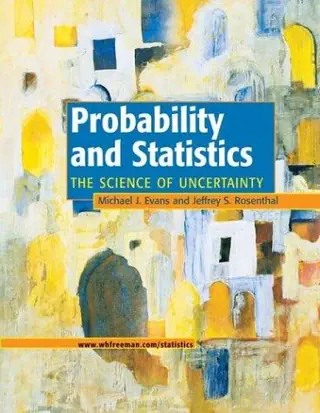
Thanks for posting this. The Jupyter notebooks (and the fact Github has built-in support for them) really help illustrating the concepts. The book I've used so far to study is "Probability and Statistics: The Science of Uncertainty", by Michael J. Evans and Jeffrey S. Rosenthal. This book is not being published anymore and is free in PDF form.
学习概率论以打好机器学习的基础。我跟着的书是 Sheldon Ross 的《First course in probability》和 Michael J. Evans 与 Je¤rey S. Rosenthal 的《Probability and Statistics》。这是我第一次按主题而不是按教学大纲来学习。我想理解协方差,用来计算……之间的相似兴趣。
Learning probability for strong foundation in ML. The books i am following are "First course in probability by Sheldon Ross" and "Probability and Statistics" Michael J. Evans and Je¤rey S. Rosenthal This is the first time i am studying based on the topics rather than following syllabus. I wanted to understand covariance for calculating similar interest b/w…