…and increasing your interest in the topic, much akin to Feynman, in his works which disentangle the works of previous philosophers: Nietzsche and Philosophy (1962), Kant's Critical Philosophy (1963), Proust and Signs (1964), Bergsonism (1966), Spinoza: Practical Philosophy (1981), Foucault (1986), The Fold: Leibniz and the Baroque (1988). The aforementioned, What Is Philosophy? is also extremely clearly written, and…
…edited. It's a whole thing. Regardless, IMHO it's a good take. Reasonable people may disagree. In order, they're "Empiricism and Subjectivity," "Nietzsche and Philosophy," "Kant’s Critical Philosophy," "Proust and Signs," "Bergsonism," "Spinoza: Practical Philosophy," "Kafka: Toward a Minor Literature," "Francis Bacon: Logic of Sensation," and "Foucault." That is... a lot. IMHO, Nietzche, Spinoza, Foucault, and Kafka…
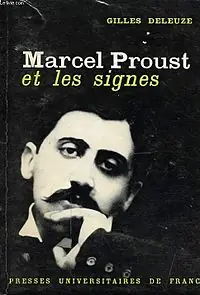
……还能激发你对这个话题的兴趣,很像费曼的风格。他在剖析前人哲学家思想的著作里也是如此:《尼采与哲学》(1962)、《康德的批判哲学》(1963)、《普鲁斯特与符号》(1964)、《柏格森主义》(1966)、《斯宾诺莎的实践哲学》(1981)、《福柯》(1986)、《褶子:莱布尼茨与巴洛克风格》(1988)。前面提到的《什么是哲学?》写得也极其透彻,而且……
…and increasing your interest in the topic, much akin to Feynman, in his works which disentangle the works of previous philosophers: Nietzsche and Philosophy (1962), Kant's Critical Philosophy (1963), Proust and Signs (1964), Bergsonism (1966), Spinoza: Practical Philosophy (1981), Foucault (1986), The Fold: Leibniz and the Baroque (1988). The aforementioned, What Is Philosophy? is also extremely clearly written, and…
……被编辑过了。挺复杂的一档子事。不管怎么说,IMHO 这是一个很棒的切入角度。见仁见智吧。按顺序分别是《经验主义与主体性》、《尼采与哲学》、《康德的批判哲学》、《普鲁斯特与符号》、《柏格森主义》、《斯宾诺莎的实践哲学》、《卡夫卡:走向少数文学》、《弗朗西斯·培根:感觉的逻辑》和《福柯》。信息量……相当大。IMHO,尼采、斯宾诺莎、福柯和卡夫卡……
…edited. It's a whole thing. Regardless, IMHO it's a good take. Reasonable people may disagree. In order, they're "Empiricism and Subjectivity," "Nietzsche and Philosophy," "Kant’s Critical Philosophy," "Proust and Signs," "Bergsonism," "Spinoza: Practical Philosophy," "Kafka: Toward a Minor Literature," "Francis Bacon: Logic of Sensation," and "Foucault." That is... a lot. IMHO, Nietzche, Spinoza, Foucault, and Kafka…