…"Essential Books Mostly from the 20th Century". Which is good and well, but there's thousands of years of great literature to draw from. And I've read far too little of it. As for Shakespeare, I prefer Henry IV and King Lear. Edit: Three books about Theodore Roosevelt? He was Norris-like, but history furnishes a great many awesome badasses. I quite admire Gaius Julius Caesar personally.
I never enjoyed Shakespeare until I began reading King Henry IV on a mobile WAP site on my Nokia about 12 years ago while guarding some railroad tracks.
Just a couple of examples I happened to come across while researching for another comment: In Julius Caesar, Shakespeare makes a pun which only works if "Rome" is pronounced like "room". Also, in Henry IV, Part One, there's a pun resting on the similarity of "reason" and "raisin".
Shakespeare wrote about Julius Caesar, Titus Andronicus, Richard III, Henry IV, and so on. How did he learn about these people if there was nothing to read?
…grips with who they are" a large theme in Western literature? (And I suppose, but can't cite, other literatures also.) The Odyssey kicks off with Athena inspiring Telemachus to independence. Shakespeare's Henry IV plays are all about Prince Hal becoming Henry V. War and Peace follows three men from adolescence to maturity, and one of them, Prince Andrei, to a couple of levels. And I think one could find examples…
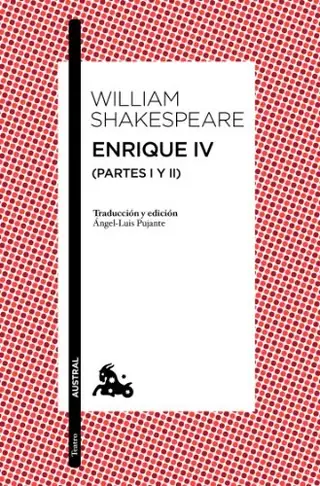
…national, and historical identity. For example, the Henry V that impressed itself on the English imagination was not so much the real, historical Henry V, but rather the hero of Shakespeare's "Henriad": Henry IV, Parts I and II, and Henry V. (Cf. the St. Crispin's Day speech: "We few, we happy few, we band of brothers," etc.) Dr. Tombs is the Professor of French at Cambridge. Ironically, after devoting a lifetime…
…“基本上出自20世纪的必读书目”。这倒也无可厚非,但历史上可是有数千年的伟大文学宝库可供汲取啊。而我读过的实在太少了。至于莎士比亚,我更偏爱《亨利四世》和《李尔王》。补充一下:居然有三本讲西奥多·罗斯福的书?他确实像查克·诺里斯(Norris)一样硬核,但历史上牛逼的狠角色比比皆是。我个人就非常崇拜盖乌斯·尤利乌斯·恺撒。
…"Essential Books Mostly from the 20th Century". Which is good and well, but there's thousands of years of great literature to draw from. And I've read far too little of it. As for Shakespeare, I prefer Henry IV and King Lear. Edit: Three books about Theodore Roosevelt? He was Norris-like, but history furnishes a great many awesome badasses. I quite admire Gaius Julius Caesar personally.
我以前从来欣赏不来莎士比亚,直到大约 12 年前,我在给几段铁轨看大门时,用诺基亚手机在 WAP 网页上读起了《亨利四世》,才终于体会到了妙处。
I never enjoyed Shakespeare until I began reading King Henry IV on a mobile WAP site on my Nokia about 12 years ago while guarding some railroad tracks.
正好分享两个我在给另一条评论查资料时偶然看到的例子:在《尤利乌斯·恺撒》里,莎士比亚玩了一个谐音梗,只有当“Rome”(罗马)的发音跟“room”(房间)一样时这个双关才成立。另外,在《亨利四世(上篇)》里,还有一个基于“reason”(理由)和“raisin”(葡萄干)发音相似的谐音梗。
Just a couple of examples I happened to come across while researching for another comment: In Julius Caesar, Shakespeare makes a pun which only works if "Rome" is pronounced like "room". Also, in Henry IV, Part One, there's a pun resting on the similarity of "reason" and "raisin".
莎士比亚写过尤利乌斯·恺撒、泰特斯·安特洛尼克斯、理查三世、亨利四世等等。如果当时根本没书可读,他是怎么了解这些人物的?
Shakespeare wrote about Julius Caesar, Titus Andronicus, Richard III, Henry IV, and so on. How did he learn about these people if there was nothing to read?
…“直面认清自我”不是西方文学中的一大母题吗?(我推测其他文学体系也是如此,只是举不出具体出处。)《奥德赛》一开篇就是雅典娜激励忒勒玛科斯走向独立。莎士比亚的《亨利四世》系列历史剧,通篇讲的都是哈尔王子如何蜕变为亨利五世。《战争与和平》追踪了三个男人从青春期到走向成熟的过程,其中安德烈公爵更是经历了多重蜕变。我觉得大家还能找到很多…
…grips with who they are" a large theme in Western literature? (And I suppose, but can't cite, other literatures also.) The Odyssey kicks off with Athena inspiring Telemachus to independence. Shakespeare's Henry IV plays are all about Prince Hal becoming Henry V. War and Peace follows three men from adolescence to maturity, and one of them, Prince Andrei, to a couple of levels. And I think one could find examples…
……民族的、历史的认同感。比如,真正印入英国人想象里的亨利五世,与其说是历史上真实的亨利五世,不如说是莎士比亚「亨利四世、五世系列」中的英雄:《亨利四世》(Henry IV)上、下篇,以及《亨利五世》。(参看圣克里斯宾节演讲:「我们少数人,我们幸运的少数人,我们兄弟连。」等等。)Tombs 博士是剑桥大学法语教授。讽刺的是,在投入了一辈子……
…national, and historical identity. For example, the Henry V that impressed itself on the English imagination was not so much the real, historical Henry V, but rather the hero of Shakespeare's "Henriad": Henry IV, Parts I and II, and Henry V. (Cf. the St. Crispin's Day speech: "We few, we happy few, we band of brothers," etc.) Dr. Tombs is the Professor of French at Cambridge. Ironically, after devoting a lifetime…