……然而,看看《基于物理的渲染》(Physically Based Rendering,http://www.pbrt.org/)。它拿了奥斯卡奖,依我看它还应该拿个普利策奖。所有实际的源代码都在书里,而且书的可读性非常强。或者看看《Lisp in Small Pieces》(https://pages.lip6.fr/Christian.Queinnec/WWW/LiSP.html)。在里面你能找到一个完整的 Lisp 系统,配有启发性的正文讲解。你的困惑源于 1970 年代的编码限制。我的……
…However, look at Physically Based Rendering (http://www.pbrt.org/). It won an Academy Award. It should win a Pulitzer. All of the actual source code is in the book and the book is quite readable. Or look at Lisp in Small Pieces (https://pages.lip6.fr/Christian.Queinnec/WWW/LiSP.html). There you will find a complete lisp system surrounded by enlightening text. Your confusion stems from the coding constraints of the 1970s. My…
……觉得那样挺让人满意的。不过话又说回来,也许那太丑陋了以至于根本不用考虑。:-) 除了大家推荐的其他一些书籍和网站(SICP、MaL 等等……),我认为如果你想更进一步,克里斯蒂安·凯内克(Christian Queinnec)的《Lisp in Small Pieces》真是一本好书。[0] https://wiki.c2.com/?EvalApply
…think that would feel satisfying. Then again, maybe that's too ugly to consider. :-) In addition to some of the other book and web site recommendations people have made (SICP, MaL, etc...), I think "Lisp in Small Pieces" by Christian Queinnec is really good if you want to take it further. [0] https://wiki.c2.com/?EvalApply
……一本关于逻辑编程的绝佳书籍,使用 Prolog 做习题。(CTM 也涉及了 Prolog,但这本书要深入得多。)* The Lambda papers - http://library.readscheme.org/page1.html * 克里斯蒂安·凯内克的《Lisp in Small Pieces》(LiSP)。讲 Lisp 的实现,强烈偏向 Scheme。* 彼得·诺维格(Peter Norvig)的《人工智能编程范式》(Paradigms of Artificial Intelligence Programming,PAIP)。AI、问题求解技巧、Lisp……
…excellent book on logic programming, using Prolog for exercises. (CTM also touches on Prolog, but this book goes quite a bit deeper.) * The Lambda papers - http://library.readscheme.org/page1.html * _Lisp in Small Pieces_ by Christian Queinnec ("LiSP"). On implementing Lisp, strongly skewed towards Scheme. * Paradigms of Artificial Intelligence Programming by Peter Norvig ("PAIP"). AI, problem solving techniques, Lisp…
关于他们使用 Cheney Trampoline 的文章写得很赞。每当有这类讨论时,我总会提到面向 Scheme 实现者的这三本好书:*《Lisp in Small Pieces》,作者 Christian Queinnec *《Compiling with Continuations》,作者 Andrew Appel *《Anatomy of Lisp》,作者 John Allen
Nice writeup on their use of the Cheney Trampoline. As is always the case in such discussions, I'll mention these three fine books for Scheme implementers: * Lisp in small pieces, by Christian Queinnec * Compiling with continuations, by Andrew Appel * Anatomy of Lisp, by John Allen
你可能会喜欢《Lisp in Small Pieces》。这是我最喜欢的书之一。全书分为两部分。第一部分从一个简单的求值函数讲起,并逐步为其扩充多命名空间、continuation 以及副作用,并配有带注释的变体……
You might enjoy Lisp in Small Pieces. Is one of my favorite books The book is in two parts. The first starts from a simple evaluation function and enriches it with multiple name spaces, continuations and side-effects with commented variants,…
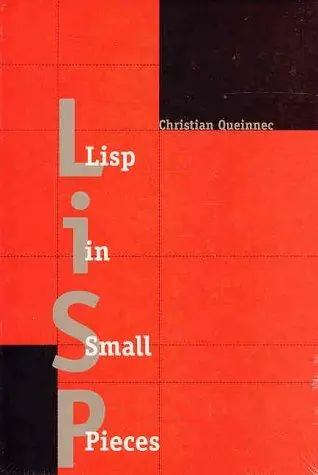
……然而,看看《基于物理的渲染》(Physically Based Rendering,http://www.pbrt.org/)。它拿了奥斯卡奖,依我看它还应该拿个普利策奖。所有实际的源代码都在书里,而且书的可读性非常强。或者看看《Lisp in Small Pieces》(https://pages.lip6.fr/Christian.Queinnec/WWW/LiSP.html)。在里面你能找到一个完整的 Lisp 系统,配有启发性的正文讲解。你的困惑源于 1970 年代的编码限制。我的……
…However, look at Physically Based Rendering (http://www.pbrt.org/). It won an Academy Award. It should win a Pulitzer. All of the actual source code is in the book and the book is quite readable. Or look at Lisp in Small Pieces (https://pages.lip6.fr/Christian.Queinnec/WWW/LiSP.html). There you will find a complete lisp system surrounded by enlightening text. Your confusion stems from the coding constraints of the 1970s. My…
如果你真想学怎么构建 Lisp,请务必搜搜《Lisp in Small Pieces》http://www.amazon.com/Lisp-Small-Pieces-Christian-Queinnec/d...
if you really want to learn to build lisp, please lookup "lisp in small pieces" http://www.amazon.com/Lisp-Small-Pieces-Christian-Queinnec/d...
……觉得那样挺让人满意的。不过话又说回来,也许那太丑陋了以至于根本不用考虑。:-) 除了大家推荐的其他一些书籍和网站(SICP、MaL 等等……),我认为如果你想更进一步,克里斯蒂安·凯内克(Christian Queinnec)的《Lisp in Small Pieces》真是一本好书。[0] https://wiki.c2.com/?EvalApply
…think that would feel satisfying. Then again, maybe that's too ugly to consider. :-) In addition to some of the other book and web site recommendations people have made (SICP, MaL, etc...), I think "Lisp in Small Pieces" by Christian Queinnec is really good if you want to take it further. [0] https://wiki.c2.com/?EvalApply
……一本关于逻辑编程的绝佳书籍,使用 Prolog 做习题。(CTM 也涉及了 Prolog,但这本书要深入得多。)* The Lambda papers - http://library.readscheme.org/page1.html * 克里斯蒂安·凯内克的《Lisp in Small Pieces》(LiSP)。讲 Lisp 的实现,强烈偏向 Scheme。* 彼得·诺维格(Peter Norvig)的《人工智能编程范式》(Paradigms of Artificial Intelligence Programming,PAIP)。AI、问题求解技巧、Lisp……
…excellent book on logic programming, using Prolog for exercises. (CTM also touches on Prolog, but this book goes quite a bit deeper.) * The Lambda papers - http://library.readscheme.org/page1.html * _Lisp in Small Pieces_ by Christian Queinnec ("LiSP"). On implementing Lisp, strongly skewed towards Scheme. * Paradigms of Artificial Intelligence Programming by Peter Norvig ("PAIP"). AI, problem solving techniques, Lisp…
关于他们使用 Cheney Trampoline 的文章写得很赞。每当有这类讨论时,我总会提到面向 Scheme 实现者的这三本好书:*《Lisp in Small Pieces》,作者 Christian Queinnec *《Compiling with Continuations》,作者 Andrew Appel *《Anatomy of Lisp》,作者 John Allen
Nice writeup on their use of the Cheney Trampoline. As is always the case in such discussions, I'll mention these three fine books for Scheme implementers: * Lisp in small pieces, by Christian Queinnec * Compiling with continuations, by Andrew Appel * Anatomy of Lisp, by John Allen
你可能会喜欢《Lisp in Small Pieces》。这是我最喜欢的书之一。全书分为两部分。第一部分从一个简单的求值函数讲起,并逐步为其扩充多命名空间、continuation 以及副作用,并配有带注释的变体……
You might enjoy Lisp in Small Pieces. Is one of my favorite books The book is in two parts. The first starts from a simple evaluation function and enriches it with multiple name spaces, continuations and side-effects with commented variants,…