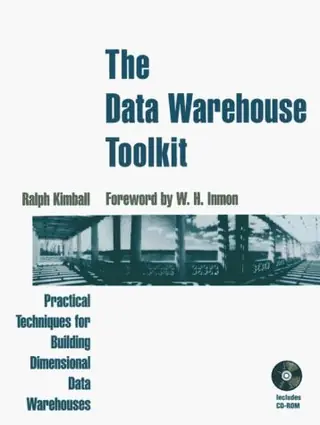
数据仓库工具箱
The data warehouse toolkit
Ralph Kimball、Margy Ross · 初版 1996 年
23人推荐
27位读者提及
32次提及
为什么值得读
- 厘清事实表与维度表分离的核心设计理念
- 讲解适用于复杂切片与聚合查询的星型模式
- 阐述代理键及第二类渐变维等实用概念
Hacker News 上怎么说
正在加载完整评论……
The data warehouse toolkit
Ralph Kimball、Margy Ross · 初版 1996 年
正在加载完整评论……
……乍一听这种做法挺离谱的,但实际上从90年代起各大公司就一直是这么干的:搞扁平化的只读报表数据库。如果你想这么做,应该读读 Ralph Kimball 的《Data Warehouse Toolkit》找找灵感和指导。你肯定不想让客户直接访问你的 OLTP 数据库。除了那里的安全和性能问题外,如果你的核心数据库变成公开的……
…first this approach sounds crazy, but really it is what companies have been doing since the 90s: creating flattened read-only reporting databases. If you want to do this, you should read Ralph Kimball's _Data Warehouse Toolkit_ for some inspiration and guidance. Of course you don't want to give customers access to your OLTP database. Besides the security and performance problems there, if your core database becomes a public…
……生成器)。那我反而会推荐什么呢?市面上有不少多维数据库或 ETL 工具,能规范地把你的事务数据放进分析型的数仓里。去读读 Kimball 的《Data Warehouse Toolkit》[1](别介意纸质有点破烂——内容是真货)。核心在于反规范化(denormalize)到星型模式(star schema),但把你的 facts 和 dimensions 分开(这些在 DWT 里都能学到)。还有……
…generator). So what would I recommend instead? There are multi-dimensional databases or ETL tools that will properly put your transactional data in an analytical style data warehouse. Read Kimball's Data Warehouse Toolkit [1] (ignore the kinda ratty paper quality—the content is good). The key thing is to denormalize down to a star schema, but keep your facts and dimensions separate (things you'll learn in DWT). There's…
你读过 Kimball 的《Data Warehouse Toolkit》吗?我个人偏爱第一版(1996年)。里面大部分是概念性的东西:设计原理、OLTP vs OLAP、fact vs dimension、type II SCD(非常重要)、surrogate keys、aggregate navigation 等等。大部分……
Have your read Kimball's Data Warehouse Toolkit? I'm partial to the first edition (1996). It's mostly conceptual stuff: design rationale, OLTP vs OLAP, fact vs dimension, type II SCDs (very important), surrogate keys, aggregate navigation etc. Most…
建议:提供一个维度建模(dimensionally-modelled)的报表 schema,查询起来会轻松得多。Kimball 的《The Data Warehouse Toolkit》是这个领域最权威的教程了。
Suggestion: provide a dimensionally-modelled reporting schema, it will be much easier to query. Kimball's The Data Warehouse Toolkit is the definitive tutorial on the subject.
……除了纠错之外不进行 delete。那种情况下你可以用关系型数据库实现基础的星型模式(star schema),或者如果需要更快的话用类似 BigTable 的东西。如果你还不懂这种模型,读读 Kimball 的书(《The Data Warehouse Toolkit》)。基本上它就是针对 aggregation(聚合)优化的——sum/average/count 随你怎么切片切块(slice and dice)和做透视。在星型模式的正中间是一个大大的“fact”……
…deletes except to correct errors. In that case you might go with a basic star schema implemented in a relational database, or something like BigTable if you need it faster. Read the Kimball book (The Data Warehouse Toolkit) if you don't know the model. Basically it's optimized for aggregation -- sums/averages/counts sliced and diced and pivoted any way you want to see them. At the middle of the star schema is a big "fact"…
看看《Data Warehouse Toolkit》吧。你可能需要了解一下 natural vs surrogate keys。https://www.amazon.com/Data-Warehouse-Toolkit-Complete-Dimen...
Check out the Data Warehouse Toolkit. You might want to look into natural vs surrogate keys. https://www.amazon.com/Data-Warehouse-Toolkit-Complete-Dimen...