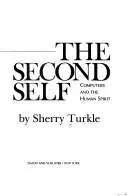
第二自我
The second self
Sherry Turkle · 初版 1984 年
3人推荐
6位读者提及
6次提及
探讨了新兴“计算机文化”对儿童与成人的影响,并提出理论认为计算机引发了新一波机械决定论的抬头,以及神秘主义与灵性的复兴。
Hacker News 上怎么说
正在加载完整评论……
The second self
Sherry Turkle · 初版 1984 年
探讨了新兴“计算机文化”对儿童与成人的影响,并提出理论认为计算机引发了新一波机械决定论的抬头,以及神秘主义与灵性的复兴。
正在加载完整评论……
……觉得它改变了一切,其他人则没那么兴奋。列表里的其他书我没读过,所以无意贬低,只是没有一手体验罢了。我还要补充这几本:Sherry Turkle 的《第二自我》(The Second Self);Geoffrey Miller 的《跨越鸿沟》(Crossing the Chasm)和《龙卷风风暴》(Inside the Tornado,跟原单子里的 Geoffrey Miller 不是同一个人 :));Rita McGrath 和 Ian MacMillan 的《创业心智》(The Entrepreneurial Mindset)。
…it transformational, others aren't so excited. I haven't read the others on the list so don't mean to be dissing them, just don't have any first-hand experience. I'd also add - Sherry Turkle's The Second Self - Geoffrey Miller's Crossing the Chasm and Inside the Tornado (a different Geoffrey Miller than the one in the original list :) ) - Rita McGrath and Ian MacMillan, The Entrepreneurial Mindset
关于这个话题的一些好书有 Tracy Kidder 的《新机器的灵魂》(The Soul of a New Machine),或者 Sherry Turkle 的《第二自我:计算机与人类精神》(The Second Self: Computers and the Human Spirit)。播客方面,我听过对 Richard Haynes 的“The Bits from Bytes History of Computing Podcast”的不少好评。
Some good books on the topic are "The Soul of a New Machine" by Tracy Kidder or "The Second Self: Computers and the Human Spirit" by Sherry Turkle. As for the podcast, I’ve heard good things on "The Bits from Bytes History of Computing Podcast" by Richard Haynes.
……用 w3m 看新闻是另一种。你可以用 UserLand 之类的工具在手机上跑 w3m,那个终端程序相当流畅。我一直在 open library 上读一些关于早期计算机的书,比如 Sherry Turkle 在 1984 年写的《第二自我:计算机与人类精神》(The Second Self: Computers and the Human Spirit),看到当年人们提出的那些问题,感觉太有意思了。到目前为止我最喜欢里面的一句引用是:“那个问题是……
…w3m to read news is another. You can use something like UserLand to run w3m on a phone, and the terminal program is pretty slick. I've been reading older books on computing on open library, like "The Second Self: Computers and the Human Spirit" written in 1984 by Sherry Turkle and it's fascinating to see the questions people were asking back them. My favorite quote from that so far is this: "That question is…
这差不多就是 Sherry Turkle 最近那本《群体性孤独》(Alone Together)的论点,你可能会觉得很有意思。有意思的点还在于,Turkle 在 80 年代其实相当推崇技术乐观主义;《第二自我》(1984)对计算机(以及当时刚兴起的 BBS 圈子之类的事物)在人际关系中的作用要积极正面得多。
That's more or less the thesis of Sherry Turkle's recent book Alone Together, which you might find interesting. It's also interesting because Turkle was quite techo-optimist in the '80s; The Second Self (1984) was much more positive on the role of computers (and things like the then-new BBS scene) for interpersonal relationships.
这并不是最近才有的现象。甚至在 80 年代它就带有贬义,我认为这主要是 Sherry Turkle 的《第二自我》(The Second Self)推波助澜的结果(不知道有多少年轻黑客知道这本臭名昭著的书),书里黑客文化被描绘成大男子主义、受虐倾向且封闭排外的,参见 Sex/Machine(http://books.google.com/books?id=vo5b6XA2F30C&lpg=PA369&...)……
This is not a recent phenomenon. Even in the 80s it had a negative connotation, fueled mostly, I think, by Sherry Turkle's The Second Self (I wonder how many young hackers are aware of that infamous book) where the hacker culture was shown to be macho, masochistic, and closed, see Sex/Machine (http://books.google.com/books?id=vo5b6XA2F30C&lpg=PA369&...)…
在她的《第二自我》(The Second Self)一书中,Sherry Turkle 写道:MIT AI 实验室的黑客们是“永不独处的独行侠”。
In her book The Second Self, Sherry Turkle wrote that the MIT AI Lab hackers were "loners who are never alone".