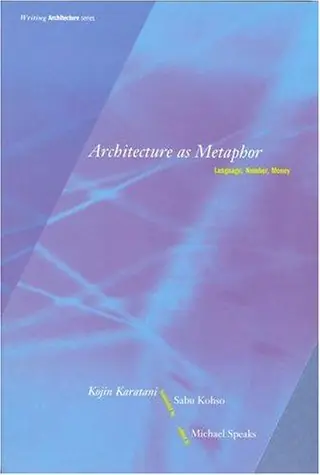
作为隐喻的建筑
Architecture as metaphor
Karatani, Kōjin · 初版 1995 年
1人推荐
2位读者提及
3次提及
“在 Architecture as Metaphor 中,柄谷行人觉察到一种反复出现的‘建筑意志’,他认为这是所有西方思想的根基,横跨建筑、哲学、文学、语言学、城市规划、人类学、政治经济学、精神分析和数学。在全书的三部分中,他剖析了建构与解构之间错综复杂的纽带,从而指明了一种‘世俗批评’的另类范式,但这一范式立足于哲学领域,而非文学或文化批评。”“正如柄谷行人在导言中所断言的那样,由于建筑意志
Hacker News 上怎么说
正在加载完整评论……
柄谷行人的《作为隐喻的建筑:语言·数·货币》(Architecture as Metaphor: Language, Number, Money)。极佳的跨学科著作,让我这个哲学和文学背景出身的人读懂了一些数学。
Architecture as Metaphor: Language, Number, Money by Kojin Karatani. Awesome interdisciplinary work that let me understand some mathematics (coming from a background in Philosophy and Literature).
柄谷行人的《作为隐喻的建筑》(Architecture as Metaphor)。
Architecture as Metaphor by Kojin Karatani.
……那些自称建筑师的人,即便真建过房子也少得可怜。相反,他们专注于建筑“理论”,其范围涵盖了从空间现象学方法(加斯东·巴什拉 Gaston Bachelard),到“作为隐喻的建筑”(参见批判理论家柄谷行人的同名著作),见鬼,甚至还包括理论小说(本杰明·布拉顿 Benjamin H. Bratton)。整整一代(或许两代、三代?)理论家耗费了大量时间去搞学术空谈……
…self-described architects who rarely, if ever, had buildings created. They instead focused on architectural 'theory', which meant anything from phenomenological approaches to space (Gaston Bachelard), to 'Architecture as Metaphor' (see book with same title by Kojin_Karatani, a critical theorist), hell, even theory-fiction (Benjamin H. Bratton). A whole generation (or two, three?) of theorists have spent lots of time intellectualizing…