没毛病。在《道德情操论》(A Theory of Moral Sentiments)以及他死后出版的讲天文学的书《哲学问题论文集》(Essays on Philosophical Subjects)中也各提过一次。结合语境很清楚能看出,这两处里的“看不见的手”指的是某种未知的机制,根本不是一种解释,而是表达一种无知。“上帝那只看不见的手”大概就是……
Correct. It's also mentioned once in A Theory of Moral Sentiments, and in the posthumously published Essays on Philosophical Subjects, a book on astronomy. In both it's clear from context that the "invisible hand" is some unknown mechanism, and not an explanation, but a statement of ignorance. "The invisible hand of God" would be…
…Sentiments is a 1759 book by Adam Smith.[1][2][3] It provided the ethical, philosophical, psychological, and methodological underpinnings to Smith's later works, including The Wealth of Nations (1776), Essays on Philosophical Subjects (1795), and Lectures on Justice, Police, Revenue, and Arms (1763) (first published in 1896).”
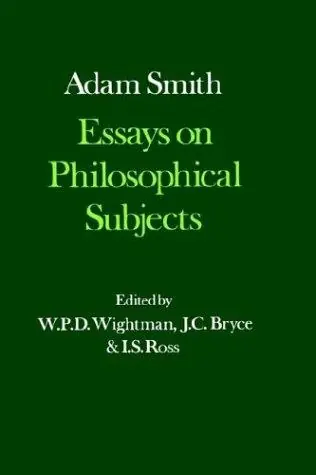
没毛病。在《道德情操论》(A Theory of Moral Sentiments)以及他死后出版的讲天文学的书《哲学问题论文集》(Essays on Philosophical Subjects)中也各提过一次。结合语境很清楚能看出,这两处里的“看不见的手”指的是某种未知的机制,根本不是一种解释,而是表达一种无知。“上帝那只看不见的手”大概就是……
Correct. It's also mentioned once in A Theory of Moral Sentiments, and in the posthumously published Essays on Philosophical Subjects, a book on astronomy. In both it's clear from context that the "invisible hand" is some unknown mechanism, and not an explanation, but a statement of ignorance. "The invisible hand of God" would be…
……情操论》(Sentiments)是亚当·斯密于 1759 年出版的著作。[1][2][3] 它为斯密后来的作品奠定了伦理学、哲学、心理学和方法论基础,包括《国富论》(1776)、《哲学问题论文集》(1795)以及《法律、警察、岁入及军备讲义》(1763,首次出版于 1896 年)。”
…Sentiments is a 1759 book by Adam Smith.[1][2][3] It provided the ethical, philosophical, psychological, and methodological underpinnings to Smith's later works, including The Wealth of Nations (1776), Essays on Philosophical Subjects (1795), and Lectures on Justice, Police, Revenue, and Arms (1763) (first published in 1896).”