…author. - "A Concise History of Mathematics" by Dirk Struik, - "A History of Mathematics" by Boyer - And of course, the internet. 3. Read a few "big picture" books side-by-side. A few suggestions: - "Foundations and Fundamental Concepts of Mathematics" by Howard Eves - "Concepts of Modern Mathematics" by Ian Stewart 4. IMHO - and this is just my preference - study application of Mathematics to Physics and Engineering. Physics especially was an inspiration…
……写得极为紧凑,确实是废话极少、全是干货。如果你想学数学,这里有两本你可能会想了解的书:吉布森的《Facts on File 数学词典》,以及霍华德·埃夫斯的《数学的基础与基本概念》,后者采用了历史视角,但本身并不是一本纯历史书。更像是“这是希腊人搞出来的东西,在那个时期微积分的应用相当粗放,再看看这个方程……
…wonderfully tight, indeed very little noise and a whole lot of signal. Here's two books if you want to learn about math you might want to learn about: The Facts on File Dictionary on Mathematics by Gibson, and Foundations and Fundamental Concepts of Mathematics by Howard Eves, which takes a historical approach, but is not a history per se. More like "this is what the Greeks did, in this period the use of calculus was pretty loose and look at this equation that…
In that vein I highly recommend Foundations and Fundamental Concepts of Mathematics by Howard Eves. I think it might be a little dated, but it gives an amazing overview of the most important developments in mathematics that were relevant at the time. It's less focused on practice (though…
…(rigorous (for practitioners) and comprehensive. Starts from nothing, with sets, then teaches you fractions, then quadratic equations until you're doing vector analysis and Laplace transformations) - Foundations and Fundamental Concepts of Mathematics by Howard Eves (wide overview of the man developments in mathematics, up to its publication)
According to Howard Eves in Foundations and Fundamental Concepts of Mathematics (pages 176-7), this and much of Euler's work was achieved purely by formal manipulation. He had great intuition, although that sometimes led him to "absurdities" in e.g. limits.
……作者。- 迪尔克·斯特鲁伊克的《数学简史》;- 博耶的《数学史》;- 当然还有互联网。3. 对照着读几本宏观大局观的书。几个建议:- 霍华德·埃夫斯的《数学的基础与基本概念》;- 伊恩·斯图尔特的《现代数学概念》。4. 依我看(这也只是我的个人偏好),去研究数学在物理和工程中的应用。尤其是物理学,一直是……的灵感来源。
…author. - "A Concise History of Mathematics" by Dirk Struik, - "A History of Mathematics" by Boyer - And of course, the internet. 3. Read a few "big picture" books side-by-side. A few suggestions: - "Foundations and Fundamental Concepts of Mathematics" by Howard Eves - "Concepts of Modern Mathematics" by Ian Stewart 4. IMHO - and this is just my preference - study application of Mathematics to Physics and Engineering. Physics especially was an inspiration…
……写得极为紧凑,确实是废话极少、全是干货。如果你想学数学,这里有两本你可能会想了解的书:吉布森的《Facts on File 数学词典》,以及霍华德·埃夫斯的《数学的基础与基本概念》,后者采用了历史视角,但本身并不是一本纯历史书。更像是“这是希腊人搞出来的东西,在那个时期微积分的应用相当粗放,再看看这个方程……
…wonderfully tight, indeed very little noise and a whole lot of signal. Here's two books if you want to learn about math you might want to learn about: The Facts on File Dictionary on Mathematics by Gibson, and Foundations and Fundamental Concepts of Mathematics by Howard Eves, which takes a historical approach, but is not a history per se. More like "this is what the Greeks did, in this period the use of calculus was pretty loose and look at this equation that…
顺着这个思路,我强烈推荐霍华德·埃夫斯的《数学的基础与基本概念》。我觉得这本书可能有点过时了,但它对当时最为重要的数学发展脉络做了一次极其出色的梳理。它不太偏重实操练习(虽然……
In that vein I highly recommend Foundations and Fundamental Concepts of Mathematics by Howard Eves. I think it might be a little dated, but it gives an amazing overview of the most important developments in mathematics that were relevant at the time. It's less focused on practice (though…
……(对从业者来说很严谨且内容全面。从零起步,先讲集合,再教分数,然后讲二次方程,一直带你搞到向量分析和拉普拉斯变换)- 霍华德·埃夫斯的《数学的基础与基本概念》(广泛概述了截至出版时数学的主要发展历程)
…(rigorous (for practitioners) and comprehensive. Starts from nothing, with sets, then teaches you fractions, then quadratic equations until you're doing vector analysis and Laplace transformations) - Foundations and Fundamental Concepts of Mathematics by Howard Eves (wide overview of the man developments in mathematics, up to its publication)
霍华德·埃夫斯,《数学的基础与基本概念》
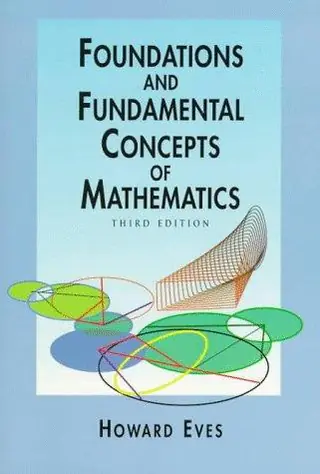
Foundations and Fundamental Concepts of Mathematics, by Howard Eves
根据霍华德·埃夫斯在《数学的基础与基本概念》(第 176-177 页)中的说法,欧拉的这部分工作以及许多成果完全是通过形式推导(formal manipulation)搞出来的。他的直觉惊人,尽管有时这种直觉会导致一些“荒谬结论”,比如在极限问题上。
According to Howard Eves in Foundations and Fundamental Concepts of Mathematics (pages 176-7), this and much of Euler's work was achieved purely by formal manipulation. He had great intuition, although that sometimes led him to "absurdities" in e.g. limits.