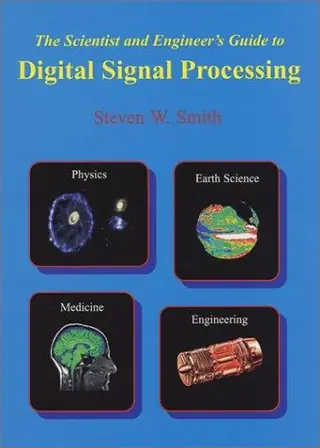
科学家与工程师的数字信号处理指南
The scientist and engineer's guide to digital signal processing
Steven W. Smith · 初版 1997 年
46人推荐
49位读者提及
59次提及
为什么值得读
- 数字信号处理领域不可或缺的基础参考
- 核心概念解释极其透彻,配有丰富示例代码
- 实用性极高,能为相关工程项目提供直接帮助
Hacker News 上怎么说
正在加载完整评论……
The scientist and engineer's guide to digital signal processing
Steven W. Smith · 初版 1997 年
正在加载完整评论……
给推荐 Steven W. Smith 写的《The Scientist and Engineer's Guide to Digital Signal Processing》(科学家与工程师数字信号处理指南)点个赞(+1)。很多年前我和 Steven 聊过,建议他把整本书的 PDF 免费放到网上,从那以后我至少向 5 所大学图书馆建议采购这本书,因为学生们……
+1 for the recommendation for "The Scientist and Engineer's Guide to Digital Signal Processing" by Steven W. Smith. I spoke to Steven many years ago about his putting all of the book PDFs online for free and since then have recommended at least 5 university libraries to buy it because the students…
我觉得这个任务更多涉及的是 DSP,跟 ML 关系非常小,顶多算个贝叶斯分类(我回头再细写)。关于 DSP 我知道的最好的书:《The Scientist and Engineer's Guide to Digital Signal Processing》,作者 Steven W. Smith 博士。
I think this task is lot more about DSP, and very little ML, just Bayes classification (I will write on it later). Best book I know on DSP: The Scientist and Engineer's Guide to Digital Signal Processing By Steven W. Smith, Ph.D.
Halliday 和 Resnick 的教材,60 年代那一版。费曼物理学讲义。Thomas 微积分。还有 Steven W. Smith 博士的《The Scientist and Engineer's Guide to Digital Signal Processing》(一直都免费公开。因为太棒了,我自己还买了本精装实体书)。
Halliday and Resnick, 60’s version. Feynman’s Lectures. Thomas’s Calculus books. The Scientist and Engineer's Guide to Digital Signal Processing Steven W. Smith, Ph.D. (Has always been available free. So good, I bought a hardcover one.)
作为一个纯 CS 出身、讨厌 EE 的人,我现在在一家 EE 公司工作,是唯一一个做大部分基于 PC 的 DSP 工作的程序员,我唯一想推荐的就是这个,http://www.dspguide.com/pdfbook.htm。
As someone who is pure CS who hated EE, I now work in an EE shop as the only programmer performing most of the PC based DSP work, and the only thing I would recommend is this, http://www.dspguide.com/pdfbook.htm.
这是对傅里叶变换的一个合理讲解,但遗憾的是,不是快速傅里叶变换。 对我来说,简单的部分一直是理解:许多不同频率的正弦(和余弦)几乎可以组成任何周期信号,而且时域和频域之间来回映射不会丢失信息。 我仍然没有完全理解的是,FFT 算法到底是怎么……
This was a reasonable explanation of the Fourier Transform, but sadly, not the Fast Fourier Transform. To me the easy part has always been understanding that many sines(and cosines) of different frequencies can make up pretty much any periodic signal and that time and frequency domains map back and forth without losing information. What I still do not fully understand is how exactly FFT algorith
还有《The Scientist and Engineer's Guide to Digital Signal Processing》,也是免费的,而且相当 #swag http://www.dspguide.com
There's also "Scientist and Engineer's Guide to Digital Signal Processing" which free too and is pretty #swag as well http://www.dspguide.com