The one for "LISP" is an idealized Lisp that's just a step above the pure, untyped lambda calculus. See Gregory Chaitin's Algorithmic Information Theory for a slightly more detailed implementation of an ancient but pure Lisp.
我几年前写过一篇 Chaitin 的《Algorithmic Information Theory》的书评。我简要聊了聊他使用 Lisp 的方法。http://blog.fogus.me/2008/12/19/bookpr0n-0-gregory-chaitins-...
I wrote a review of Chaitin's Algorithmic Information Theory a couple of years ago. I talk briefly about his approach in using Lisp. http://blog.fogus.me/2008/12/19/bookpr0n-0-gregory-chaitins-...
……来自 Ming Li 和 Paul Vitányi。这是该领域“不得不读”的经典。Thomas Cover 和 Joy Thomas 的《Elements of Information Theory》(信息论基础)里有一章入门介绍。这个领域叫作“算法信息论”(Algorithmic Information Theory),里面的一些大牛包括:Ray Solomonoff、Gregory Chaitin、Ming Li、Paul Vitányi、Chris Wallace、David Dowe、Markus Hutter、Jürgen Schmidhuber、Jorma Rissanen 等等。所有这些人……
…from Ming Li and Paul Vitányi. It is the "must-go" for the subject. An introductory chapter is available in the "Elements of Information Theory" of Thomas Cover and Joy Thomas. The field is called "Algorithmic Information Theory" and some of the big names in it are: Ray Solomonoff, Gregory Chaitin, Ming Li, Paul Vitányi, Chris Wallace, David Dowe, Markus Hutter, Jürgen Schmidhuber, Jorma Rissanen, among others. All of these guys…
…lambda calculus based BBλ[1] shares most of its properties. > Which immediately reminds me of Chaitin's constant which also tries to encode/talk about the properties of Turing machines, Chaitin's work on Algorithmic Information Theory (aka Kolmogorov Complexity) was actually focussed on custom Lisp languages of his own design rather than Turing Machines. One could be confused though by some of his articles on LISP program-size complexity…
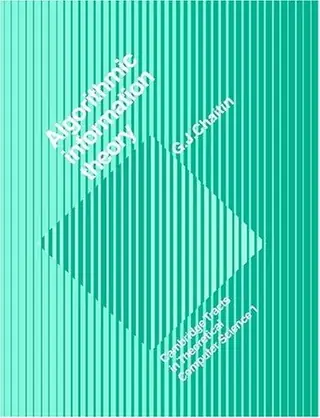
对应“LISP”的那个是一种理想化的 Lisp,仅仅比纯粹的、无类型的 lambda 演算高了一级。可以看看 Gregory Chaitin 的《Algorithmic Information Theory》(算法信息论),里面有一个古老但纯粹的 Lisp 的稍微更详细的实现。
The one for "LISP" is an idealized Lisp that's just a step above the pure, untyped lambda calculus. See Gregory Chaitin's Algorithmic Information Theory for a slightly more detailed implementation of an ancient but pure Lisp.
我几年前写过一篇 Chaitin 的《Algorithmic Information Theory》的书评。我简要聊了聊他使用 Lisp 的方法。http://blog.fogus.me/2008/12/19/bookpr0n-0-gregory-chaitins-...
I wrote a review of Chaitin's Algorithmic Information Theory a couple of years ago. I talk briefly about his approach in using Lisp. http://blog.fogus.me/2008/12/19/bookpr0n-0-gregory-chaitins-...
……来自 Ming Li 和 Paul Vitányi。这是该领域“不得不读”的经典。Thomas Cover 和 Joy Thomas 的《Elements of Information Theory》(信息论基础)里有一章入门介绍。这个领域叫作“算法信息论”(Algorithmic Information Theory),里面的一些大牛包括:Ray Solomonoff、Gregory Chaitin、Ming Li、Paul Vitányi、Chris Wallace、David Dowe、Markus Hutter、Jürgen Schmidhuber、Jorma Rissanen 等等。所有这些人……
…from Ming Li and Paul Vitányi. It is the "must-go" for the subject. An introductory chapter is available in the "Elements of Information Theory" of Thomas Cover and Joy Thomas. The field is called "Algorithmic Information Theory" and some of the big names in it are: Ray Solomonoff, Gregory Chaitin, Ming Li, Paul Vitányi, Chris Wallace, David Dowe, Markus Hutter, Jürgen Schmidhuber, Jorma Rissanen, among others. All of these guys…
……基于 lambda 演算的 BBλ[1] 具备它的大部分性质。 > 这立刻让我想起了 Chaitin 常数,它也试图编码/探讨图灵机的性质, Chaitin 在算法信息论(即 Kolmogorov 复杂度)方面的研究实际上专注于他自己定制设计的 Lisp 语言,而不是图灵机。不过,他写的一些关于 LISP 程序大小复杂度的论文可能会让人产生误解……
…lambda calculus based BBλ[1] shares most of its properties. > Which immediately reminds me of Chaitin's constant which also tries to encode/talk about the properties of Turing machines, Chaitin's work on Algorithmic Information Theory (aka Kolmogorov Complexity) was actually focussed on custom Lisp languages of his own design rather than Turing Machines. One could be confused though by some of his articles on LISP program-size complexity…