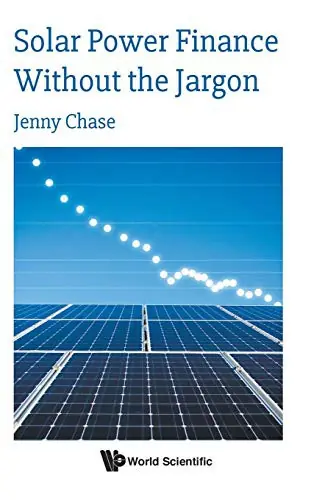
没有行话的太阳能融资
Solar Power Finance Without the Jargon
Jenny Chase · 初版 2019 年
2位读者提及
2次提及
太阳能已成为一门庞大的产业:2018年投资额达1310亿美元,远高于2004年的仅112亿美元,但因单位成本下降而低于2017年的1710亿美元。新增装机容量从2004年的1.1吉瓦增长至2018年的约107吉瓦,随着太阳能发电在成本上开始与化石燃料竞争并在几乎所有国家推广建设,这一增长态势十分稳健。这是一本写给未来太阳能从业者的书,也是一本面向缺乏商业或经济学背景的人群,以及纯粹对世界能源经济正在发生的重大变革感到好奇的人士的商业读物。核心的金融、经济与技术概念在书中得到了深入
Hacker News 上怎么说
正在加载完整评论……
最近《Solar Power Finance Without the Jargon》的作者 Jenny Chase 上了 Energy Transition Show 播客 [0],聊了聊太阳能的增长。讨论深入到了太阳能之所以能如此增长的一些技术原因;而分析师们当时还在……
Recently the author of "Solar Power Finance Without the Jargon" Jenny Chase was on the Energy Transition Show podcast [0] discussing the growth of solar. The discussion got into some of the technical reasons solar was able to grow as it did; while the analysts were…
……任何预算。话虽如此,我认为太阳能完全可以建得便宜得多。目前光是组件价格就在 $0.15B/GW 左右,BoS 做到 $0.5B/GW 应该轻轻松松就能实现。Jenny Chase 在她的书《Solar Power Finance Without the Jargon》[1] 中得出的结论是,核能和“太阳能+储能”最终的度电成本都在 $100/MWh 左右。在能源价格持平的情况下,剩下的问题其实只有两个:1. 速度有多快……
…budget at all. That said I think solar can be built much cheaper. $0.5B/GW BoS should be easily achievable with module prices alone being in the $0.15B/GW range at the moment. Jenny Chase in her book Solar Power Finance Without the Jargon [1] comes to the conclusion that both nuclear and solar+batteries end up at about $100/MWh energy price. With the energy price being equal there are really only two questions left over: 1. How fast…