…by Steven Strogatz "Gödel, Escher, Bach: An Eternal Golden Braid" by Douglas Hofstadtler "The Annotated Gödel: A Reader's Guide to his Classic Paper on Logic and Incompleteness" by Hal Prince "The Language Lover's Puzzle Book : A World Tour of Languages and Alphabets in 100 Amazing Puzzles (Alex Bellos Puzzle Books) " "To Mock a Mockingbird" by Raymond Smullyan
如果你喜欢这类谜题,我建议买一本《爱语言者的谜题书》(The Language Lover’s Puzzle Book),这是一本非常容易上手的 ILO 题目精选集。
If you like these types of puzzles, I'd suggest getting The Language Lover’s Puzzle Book, which is a very accessible curated collection of ILO problems.
I started looking this up after reading this puzzle [0] in The Economist (itself taken from the beginning of Alex Bellos' The Language Lover’s Puzzle Book [1]): > Now consider this problem, derived from these Japanese phrases: boru niko (two balls), tsuna nihon (two ropes), uma nito (two horses), kami nimai (two sheets of paper), ashi gohon (five legs),…
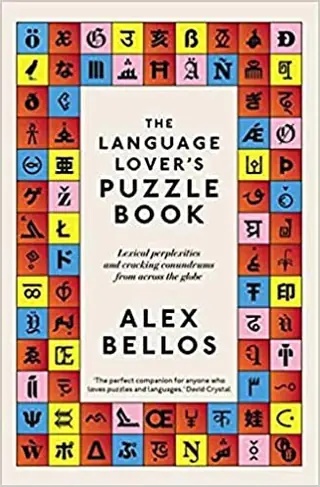
……史蒂文·斯托加茨著 《哥德尔、艾舍尔、巴赫:集异璧之大成》,道格拉斯·侯世达著 《哥德尔论文注释导读:关于逻辑与不完备性经典论文的读者指南》,哈尔·普林斯著 《爱语言者的谜题书:100个绝妙谜题畅游世界语言与字母之林(亚历克斯·贝洛斯谜题书系列)》 《仿声鸟的模仿》,雷蒙德·斯穆里安著
…by Steven Strogatz "Gödel, Escher, Bach: An Eternal Golden Braid" by Douglas Hofstadtler "The Annotated Gödel: A Reader's Guide to his Classic Paper on Logic and Incompleteness" by Hal Prince "The Language Lover's Puzzle Book : A World Tour of Languages and Alphabets in 100 Amazing Puzzles (Alex Bellos Puzzle Books) " "To Mock a Mockingbird" by Raymond Smullyan
如果你喜欢这类谜题,我建议买一本《爱语言者的谜题书》(The Language Lover’s Puzzle Book),这是一本非常容易上手的 ILO 题目精选集。
If you like these types of puzzles, I'd suggest getting The Language Lover’s Puzzle Book, which is a very accessible curated collection of ILO problems.
我是在《经济学人》上看到这个谜题 [0] 后开始查这个的(它本身也是摘自亚历克斯·贝洛斯《爱语言者的谜题书》[1] 的开篇):> 现在思考这个问题,它源自这几个日语短语:boru niko(两颗球),tsuna nihon(两根绳子),uma nito(两匹马),kami nimai(两张纸),ashi gohon(五条腿),……
I started looking this up after reading this puzzle [0] in The Economist (itself taken from the beginning of Alex Bellos' The Language Lover’s Puzzle Book [1]): > Now consider this problem, derived from these Japanese phrases: boru niko (two balls), tsuna nihon (two ropes), uma nito (two horses), kami nimai (two sheets of paper), ashi gohon (five legs),…