……彻底打消你认为《资本论》只是一部自动化制造业分析报告而非真正的政治理论著作的念头,我会由衷推荐 William Clare Roberts 那本通俗易懂且引注详实的《Marx's Inferno》。在我看来,Roberts 真正读懂了《资本论》(也读懂了马克思)——并且极具说服力地论证了一种真正开创先河的文学渊源联系。接着我会推荐……
…yourself of the notion that Capital is an analysis of automated manufacturing, and not a proper work of political theory, I'd wholeheartedly recommend the exceedingly approachable and well-cited book Marx's Inferno by William Clare Roberts. Roberts, in my opinion, gets Capital (and Marx) right--and presents an incredibly compelling argument for a literary connection that really is a first of its kind. Then I'd recommend…
This is definitely a common thought, and has long been considered the proper way to read Marx. You should check out Marx's Inferno for an interesting—and, I've long thought, more accurate—take otherwise.
A PoliSci professor just released a political theory book called "Marx's Inferno" (the thesis is that Marx structured Capital like Dante's journey through hell in The Divine Comedy). It's very coherent with the thoughts you're voicing here. It's also a re-visit of Marx's theories…
It's pretty much just that. I've read some pretty intense thought-provoking books recently, "Marx's Inferno" in particular, which I don't feel comfortable paraphrasing, which make the rabbit hole seem way deeper. However, I was mostly thinking of just that.
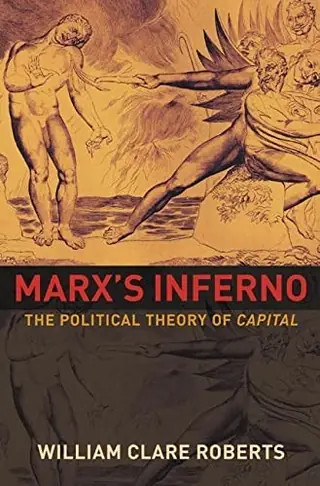
没错,卡尔·马克思。《共产党宣言》和《资本论》都很棒,但我个人觉得 William Clare Roberts 写的《Marx's Inferno》堪称神作。
Yeah, Karl Marx. The Communist Manifesto and Capital are both good, but I personally think Marx's Inferno by William Clare Roberts is great.
……彻底打消你认为《资本论》只是一部自动化制造业分析报告而非真正的政治理论著作的念头,我会由衷推荐 William Clare Roberts 那本通俗易懂且引注详实的《Marx's Inferno》。在我看来,Roberts 真正读懂了《资本论》(也读懂了马克思)——并且极具说服力地论证了一种真正开创先河的文学渊源联系。接着我会推荐……
…yourself of the notion that Capital is an analysis of automated manufacturing, and not a proper work of political theory, I'd wholeheartedly recommend the exceedingly approachable and well-cited book Marx's Inferno by William Clare Roberts. Roberts, in my opinion, gets Capital (and Marx) right--and presents an incredibly compelling argument for a literary connection that really is a first of its kind. Then I'd recommend…
这绝对是一种普遍的想法,长期以来也被视为阅读马克思的正确方式。你应该看看《Marx's Inferno》,它提供了一种有趣——而且我一直认为更加准确——的不同视角。
This is definitely a common thought, and has long been considered the proper way to read Marx. You should check out Marx's Inferno for an interesting—and, I've long thought, more accurate—take otherwise.
一位政治学教授刚出了一本政治理论书叫《Marx's Inferno》(其核心论点是马克思是仿照《神曲》中但丁的地狱之旅来构思《资本论》的框架)。这与你在这里表达的想法非常吻合。它也是对马克思理论的一次重新审视……
A PoliSci professor just released a political theory book called "Marx's Inferno" (the thesis is that Marx structured Capital like Dante's journey through hell in The Divine Comedy). It's very coherent with the thoughts you're voicing here. It's also a re-visit of Marx's theories…
基本就是这么回事。我最近读了几本非常发人深省的书,尤其是《Marx's Inferno》,我甚至觉得单凭自己的概括很难传达其精髓,这些书让整个话题的深度宛如深不见底的兔子洞。不过,我刚才主要想说的也就只是这些。
It's pretty much just that. I've read some pretty intense thought-provoking books recently, "Marx's Inferno" in particular, which I don't feel comfortable paraphrasing, which make the rabbit hole seem way deeper. However, I was mostly thinking of just that.
《Marx's Inferno》+1!绝对值得一读,它精准地将《资本论》定位为一部深思熟虑的政治理论著作。
Marx's Inferno +1 It's absolutely worth reading, and properly positions Capital as a work of intentional political theory.