…Motivation and Personality, 1954 • Toward a Psychology of Being, 1962 He writes with superb clarity, and is an absolute joy to read. If you're really, really short on time, at least read his paper, A Theory of Human Motivation[3]. [1] https://scottbarrykaufman.com/who-created-maslows-iconic-pyr... [2] https://scottbarrykaufman.com/sailboat-metaphor/ [3] http://worrydream.com/refs/Maslow%20-%20A%20Theory%20of%20Hu...
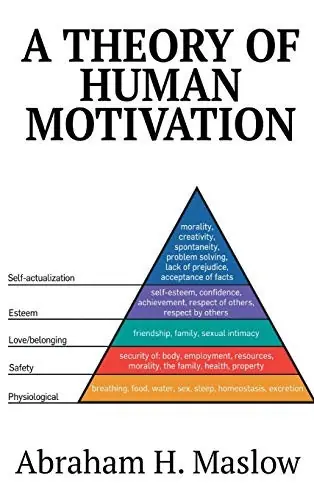
Some motivations last a lifetime, I don't think our desire to feed ourselves is going away anytime soon.. A lot of current thinking on the subject is based on Abraham Maslow's 1947 paper "A Theory of Human Motivation". Your "hard discipline" seems based on the "esteem" part of his "hierarchy of needs" while this might be a sufficient motivator for some, for many it will likely be beneficial to look for other motivators.
> undesirable work > our needs are covered Human desires and human needs don't work the way you're probably thinking. I'd suggest to take into account Maslow's theory of human motivation. http://psychclassics.yorku.ca/Maslow/motivation.htm
References: [1] https://en.wikipedia.org/wiki/Relativity_(M._C._Escher) [2] http://www.npr.org/sections/money/2016/08/03/488611449/episo... [3] Maslow’s hierarchy of needs – by FireflySixtySeven [4] A theory of Human Motivation – http://psychclassics.yorku.ca/Maslow/motivation.htm
Maslow was working with a theory of human motivation, not just survival. I quote the following from his original text https://psychclassics.yorku.ca/Maslow/motivation.htm: > what happens to man's desires when there is plenty of bread and when his belly…
……《动机与人格》(1954年)•《存在心理学探索》(1962年)他的文字极其清晰明了,读起来绝对是一种享受。如果你时间真的非常非常紧,至少读一下他的论文《人类激励理论》[3]。[1] https://scottbarrykaufman.com/who-created-maslows-iconic-pyr... [2] https://scottbarrykaufman.com/sailboat-metaphor/ [3] http://worrydream.com/refs/Maslow%20-%20A%20Theory%20of%20Hu...
…Motivation and Personality, 1954 • Toward a Psychology of Being, 1962 He writes with superb clarity, and is an absolute joy to read. If you're really, really short on time, at least read his paper, A Theory of Human Motivation[3]. [1] https://scottbarrykaufman.com/who-created-maslows-iconic-pyr... [2] https://scottbarrykaufman.com/sailboat-metaphor/ [3] http://worrydream.com/refs/Maslow%20-%20A%20Theory%20of%20Hu...
对马斯洛《人类激励理论》的出色解读[1]。[1] https://en.wikipedia.org/wiki/Maslow%27s_hierarchy_of_needs
Excellent explanation of Maslow's Theory of Human Motivation [1]. [1] https://en.wikipedia.org/wiki/Maslow%27s_hierarchy_of_needs
有些动力会持续一生,我觉得我们吃饱肚子的欲望短期内不会消失……目前关于这个话题的很多思考都基于亚伯拉罕·马斯洛1947年的论文《人类激励理论》。你的“硬性自律”似乎是基于他“需求层次”中的“尊重”部分,尽管对某些人来说这可能足以成为动力,但对很多人而言,寻找其他动力可能会更有益。
Some motivations last a lifetime, I don't think our desire to feed ourselves is going away anytime soon.. A lot of current thinking on the subject is based on Abraham Maslow's 1947 paper "A Theory of Human Motivation". Your "hard discipline" seems based on the "esteem" part of his "hierarchy of needs" while this might be a sufficient motivator for some, for many it will likely be beneficial to look for other motivators.
> 不讨喜的工作 > 我们的需求得到满足 人类的欲望和人类的需求根本不像你想的那样运作。我建议参考一下马斯洛的人类激励理论。http://psychclassics.yorku.ca/Maslow/motivation.htm
> undesirable work > our needs are covered Human desires and human needs don't work the way you're probably thinking. I'd suggest to take into account Maslow's theory of human motivation. http://psychclassics.yorku.ca/Maslow/motivation.htm
参考文献:[1] https://en.wikipedia.org/wiki/Relativity_(M._C._Escher) [2] http://www.npr.org/sections/money/2016/08/03/488611449/episo... [3] 马斯洛需求层次理论 – FireflySixtySeven [4] 人类激励理论 – http://psychclassics.yorku.ca/Maslow/motivation.htm
References: [1] https://en.wikipedia.org/wiki/Relativity_(M._C._Escher) [2] http://www.npr.org/sections/money/2016/08/03/488611449/episo... [3] Maslow’s hierarchy of needs – by FireflySixtySeven [4] A theory of Human Motivation – http://psychclassics.yorku.ca/Maslow/motivation.htm
马斯洛研究的是一套关于人类动机的理论,而不仅仅是生存。我从他的原著中摘录了以下内容 https://psychclassics.yorku.ca/Maslow/motivation.htm:> 当面包充足、肚子填饱时,人的欲望会发生什么变化……
Maslow was working with a theory of human motivation, not just survival. I quote the following from his original text https://psychclassics.yorku.ca/Maslow/motivation.htm: > what happens to man's desires when there is plenty of bread and when his belly…