……是两门不同的 MIT 课程。我觉得 2016 年的那门 [1] 比 2015 年的 [2] 更好。但 2015 年有更好的嘉宾演讲。《扑克经济学》(Poker Economics)和《决策制定》(Decision Making)是必看内容。3. Matthew Janda 的书《无限德州扑克应用》(Applications of No-Limit Hold 'em)和《高阶无限德州扑克》(No-Limit Hold 'em for Advanced Players)都写得极好。它们是用理论方法来拆解这个游戏的。《应用》这本书写于好用的扑克计算软件普及之前。作者讲得非常……
…are two different MIT Courses. I thought that 2016's [1] was better than 2015's [2]. But 2015 has better guest talks. "Poker Economics" and "Decision Making" are must watch. 3. Matthew Janda's books "Applications of No-Limit Hold 'em" and "No-Limit Hold 'em for Advanced Players" are both really good. They take a theoretical approach to the game. Applications was written before good poker computers were common. The author goes very…
Chen 和 Ankenman 写的《扑克数学》(The Mathematics of Poker)——这本不会过时,因为如果你想从底层彻底搞懂原理,它真的很基础。但刚开始看会觉得没那么实用。Matthew Janda 写的《无限德州扑克应用》(Applications of No-Limit Hold 'em)——这本深入讲了在每一条街(street)上该怎么思考、怎么构建良好策略等细节。其中一些细节可能跟最新理论有所出入,因为这本书……
The Mathematics of Poker, by Chen & Ankenman - this one doesn't age because it's really fundamental if you want to understand things from the ground up. But it won't seem that practical at first. Applications of No-Limit Hold 'em, by Matthew Janda - this one goes into specifics about how to think on each street, how to build a good strategy etc. Some of the details will be different from the latest theory because the book was…
……在某些局面下,下注既有一定概率让更好的牌弃牌,又有一定概率让更差的牌跟注——参见《无限德州扑克应用》(Applications of No Limit Hold Em)里的那一章“价值下注与诈唬之间的灰色地带”)
…there being spots where a bet can get better hands to fold with some probability AND get worse hands to call with some probability - see the chapter "The grey area between value betting and bluffing" in Applications of No Limit Hold Em)
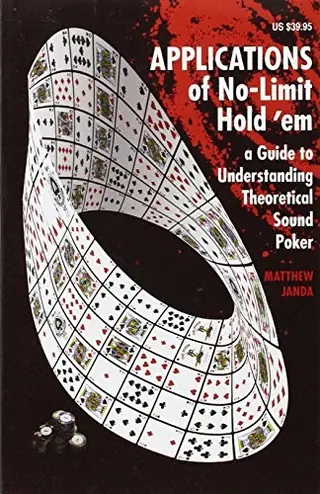
……是两门不同的 MIT 课程。我觉得 2016 年的那门 [1] 比 2015 年的 [2] 更好。但 2015 年有更好的嘉宾演讲。《扑克经济学》(Poker Economics)和《决策制定》(Decision Making)是必看内容。3. Matthew Janda 的书《无限德州扑克应用》(Applications of No-Limit Hold 'em)和《高阶无限德州扑克》(No-Limit Hold 'em for Advanced Players)都写得极好。它们是用理论方法来拆解这个游戏的。《应用》这本书写于好用的扑克计算软件普及之前。作者讲得非常……
…are two different MIT Courses. I thought that 2016's [1] was better than 2015's [2]. But 2015 has better guest talks. "Poker Economics" and "Decision Making" are must watch. 3. Matthew Janda's books "Applications of No-Limit Hold 'em" and "No-Limit Hold 'em for Advanced Players" are both really good. They take a theoretical approach to the game. Applications was written before good poker computers were common. The author goes very…
Chen 和 Ankenman 写的《扑克数学》(The Mathematics of Poker)——这本不会过时,因为如果你想从底层彻底搞懂原理,它真的很基础。但刚开始看会觉得没那么实用。Matthew Janda 写的《无限德州扑克应用》(Applications of No-Limit Hold 'em)——这本深入讲了在每一条街(street)上该怎么思考、怎么构建良好策略等细节。其中一些细节可能跟最新理论有所出入,因为这本书……
The Mathematics of Poker, by Chen & Ankenman - this one doesn't age because it's really fundamental if you want to understand things from the ground up. But it won't seem that practical at first. Applications of No-Limit Hold 'em, by Matthew Janda - this one goes into specifics about how to think on each street, how to build a good strategy etc. Some of the details will be different from the latest theory because the book was…
……在某些局面下,下注既有一定概率让更好的牌弃牌,又有一定概率让更差的牌跟注——参见《无限德州扑克应用》(Applications of No Limit Hold Em)里的那一章“价值下注与诈唬之间的灰色地带”)
…there being spots where a bet can get better hands to fold with some probability AND get worse hands to call with some probability - see the chapter "The grey area between value betting and bluffing" in Applications of No Limit Hold Em)