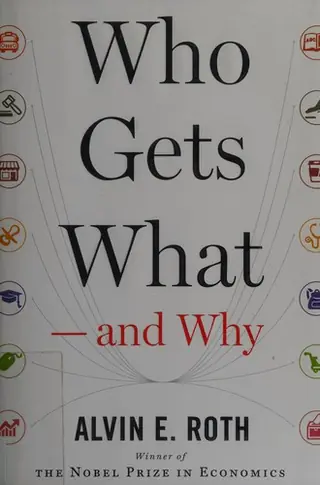
谁得到什么——以及为什么
Who gets what--and why
Alvin E. Roth · 初版 2015 年
6人推荐
6位读者提及
10次提及
“一位诺贝尔奖得主揭示了主导着大量活动(无论平凡还是改变人生)的那些往往令人意想不到的规则,而在这些活动中,金钱可能几乎不起任何作用。如果你曾找过工作或雇佣过员工,申请过大学或指导孩子进入优质幼儿园,约过别人或被人约过,你就已经参与了某种市场。绝大多数经济学研究探讨的是商品市场,在其中商品的价格连接着买卖双方。但对于其他类型的‘商品’呢,例如耶鲁大学新生班的名额或 Google 的职位?这正是
Hacker News 上怎么说
正在加载完整评论……
…其实应该去读读这些获奖经济学家的一些成果——他们中很多人其实对社会做出了极具洞察力且实用的贡献。诺奖得主阿尔文·罗斯(Alvin Roth)的《Who Gets What and Why》我怎么推荐都不为过。除了其他成就,他还创建了世界上第一个成功的肾脏捐赠匹配交换计划。这本书深入浅出地阐述了如何设计出运作良好的市场…
…should actually read up on some of the work of some of these prize winning economists - lots of them actually have very insightful and useful contributions to society. I cannot recommend enough the book "Who Gets What and Why" by Alvin Roth, a former Nobel Prize winner. Among other things, he created the world's first successful Kidney exchange program for donors. The book eloquently lays out how to design functional markets…
…市场/拍卖设计。我发现那些东西极其管用,所以我肯定会深入去钻研 mechanism design。你有没有发现这方面特别好的资源/书籍?FWIW 我超喜欢阿尔文·罗斯的《Who gets what and why》,里面主要讲的就是市场设计。
…market/auction design. I found that stuff to be profoundly useful, so I’ll definitely dive into mechanism design. Have you found any particularly good resources/books on this? FWIW I loved Alvin Roth’s “Who gets what and why” which is about market design mostly.
…这也是我现在对 Substack 上的作者普遍预期的水平了。如果你真对非货币市场中的供求运作机制感兴趣(比如战俘营的例子),我强烈推荐肾脏匹配交换计划之父阿尔文·罗斯写的《Who Gets What and Why》。
…I have come to expect from Substack writers at this point. If you are actually interested in how supply and demand work in non-monetary markets (like the POW camp example), I cannot recommend enough "Who Gets What and Why" by Alvin Roth, the father of Kidney exchange programs.
…诈骗。情况正在变好:要是倒退一代人,像我这样的人早就没命了。不过即使有着真正一流的医生和医保,我们依然有很多可以改进的地方。我很喜欢阿尔文·罗斯的书《Who Gets What and Why》。它讲了如何识别市场失灵以及如何去解决。我们需要全面地看待这些挑战,并在市场上考虑更好的财政/社会工程设计。
…to fraud. Things are improving: someone like me would be long dead a generation ago. Yet even with truly superb doctors and insurance, we have many opportunities to improve. I like Alvin Roth's book, "Who Gets What and Why". It talks about identifying market failures and thinking about how to address them. We need to look at these challenges holistically and think about better fiscal/social engineering of our marketplaces.
…在两个选项之间投票”。吉巴德-萨特斯韦特定理(Gibbard–Satterthwaite)表明了将这种情况推广到更多选项有多难(有点类似阿罗不可能定理那种路数)。关于这方面我读过最好的是阿尔文·罗斯 2015 年的《Who Gets What and Why》[1],无论如何都值得一读。令人反感的市场(Repugnant markets)![0] https://en.wikipedia.org/wiki/Incentive_compatibility [1] https://en.wikipedia.org/wiki/Alvin_E._Roth#Market_design
…vote between two choices". The Gibbard–Satterthwaite shows the difficulty in extending this to more choices (in that Arrow's theorem sort of way). The best thing I've read on this stuff is Alvin Roth's "Who Gets What and Why" (2015) [1] which is worth a read in any case. Repugnant markets! [0] https://en.wikipedia.org/wiki/Incentive_compatibility [1] https://en.wikipedia.org/wiki/Alvin_E._Roth#Market_design
…写下的寓言或例子。不管你赞不赞同,这都是一种理解经典原理的绝佳(虽然往往老套)方式。我想在书单里添上几本:《Why Nations Fail》、《Red Plenty》、《Who Gets What and Why》
…written parables or examples. Disagree or whatever, but it's an excellent and often trite way to understand classic principles. A couple books I would add to the list: Why Nations Fail Red Plenty Who Gets What and Why