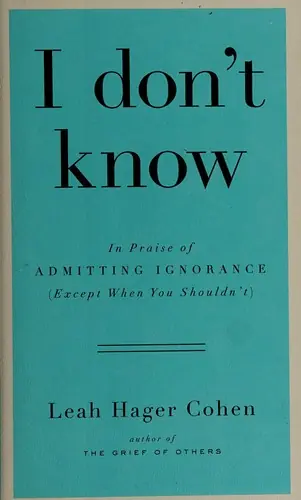
我不知道
I don't know
Leah Hager Cohen · 初版 2013 年
2位读者提及
2次提及
在一篇紧凑而发人深省的叙述中,Leah Hager Cohen 深入探究了为何我们常常极力掩饰自己的无知,以及为何在诸多不同领域坦诚相告反而更有益处。她将风趣轶事报道与令人大开眼界的研究交织在一起,审视了这种司空见惯的习惯在教育、金融、医疗、政治、战争、庭审乃至气候变化等领域的后果与替代方案。但这不仅仅是鼓励读者坦白自己的无知——Cohen 认为,拥抱不确定性能让我们收获颇丰。这三个简短的字眼
Hacker News 上怎么说
正在加载完整评论……
……它们我都经历过。“‘如果你区别对待“男人”和“女人”,那这就是个问题,因为你把他们当成了一个同质化的群体,而不是独立的个体。’”对于我不认识的人,我不会把他们当成独立个体对待。这是进化使然,我们人类是通过模式匹配和把事物归入“大类”来演进的。区别对待具体个体那是很后来的事了。尼采在……里是这么说的:
…them I have. """If you treat "men" one way and "women" a different way, then that is a problem, because you're treating them like a homogenous block, rather than individuals.""" I don't treat people I don't know as individuals. It's an evolutionary thing, we progressed by matching patterns and assigning things to GENERAL categories. Treating things individually comes much later. Here's how Nietchze puts it in…
……很有意思,dred,但你怎么把它转化到线上社区呢?尤其是那些并不像实体机构那样把地域和位置当成核心要素的社区。不过我也说不准……这个问题我琢磨了大概十年了。但这番见解确实启发了一些类似解决方案的轮廓和/或特征:- 老牌论坛的一个关键败笔在于,成员……
…really interesting, dred, but how do you translate that to online communities, especially those for which locality and location are not central elements, as they are for brick-and-mortar institutions. I don't know, though ... I've been pondering just that for a decade or so. The insight does suggest a few solution-shaped objects and/or characteristics, however: - A key failing of venerable fora is that the membership…