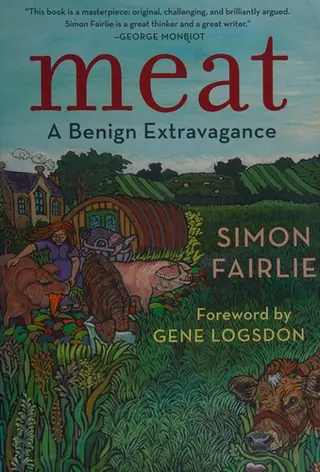
肉
Meat
Simon Fairlie · 初版 2010 年
2人推荐
2位读者提及
4次提及
本书探讨了人类食用动物肉所引发的错综复杂的环境与伦理议题。全球肉类消费量正在急剧增长,这不仅带来了灾难性的环境影响,也对全球各地的社会产生了深远的健康隐患。作者阐述了无论为了地球还是为了人类自身,我们都必须减少肉类摄入量的理由。但他指出,动物饲养之所以变得问题重重,是因为我们在身心上都已经与土地渐行渐远。我们的社会需要
Hacker News 上怎么说
正在加载完整评论……
Meat
Simon Fairlie · 初版 2010 年
本书探讨了人类食用动物肉所引发的错综复杂的环境与伦理议题。全球肉类消费量正在急剧增长,这不仅带来了灾难性的环境影响,也对全球各地的社会产生了深远的健康隐患。作者阐述了无论为了地球还是为了人类自身,我们都必须减少肉类摄入量的理由。但他指出,动物饲养之所以变得问题重重,是因为我们在身心上都已经与土地渐行渐远。我们的社会需要
正在加载完整评论……
哪怕工业化畜牧业效率极低,那些数字也差得太离谱了。你或许可以去读读 Simon Fairlie 写的《Meat: a benign extravagance》:https://www.amazon.com/Meat-Benign-Extravagance-Simon-Fairli...
Those numbers are way off, even if industrial animal husbandry is highly inefficient. You may want to read Meat: a benign extravagance by Simon Fairlie: https://www.amazon.com/Meat-Benign-Extravagance-Simon-Fairli...
……它们短暂的生命显然是应受谴责的。但是 George Monbiot 非常出名地改变了他的立场[0],这也是为了回应 Simon Fairlie 2010 年出版的《Meat, A Benign Extravagance》——既然这是一个聊书的帖子,这也是我最喜欢的关于该主题的作品之一。(我那本还是我参加他举办的割草周末活动时作者亲笔签名的。)[0] https://www.theguardian.com/commentisfree/2010/sep/06/meat-p...
…their short lives is clearly reprehensible. But George Monbiot quite famously adjusted his position[0] in response to - and since this is a thread about books - one of my favourite works on the subject, 'Meat, A Benign Extravagance' by Simon Fairlie (2010). (My copy was signed by the author when I attended one of his scything weekends.) [0] https://www.theguardian.com/commentisfree/2010/sep/06/meat-p...
……那并不必然需要畜牧业的参与或大量能源的投入。我回给你一份调研扎实的研究参考——Simon Fairlie 的《Meat: A Benign Extravagance》http://books.google.com.au/books/about/Meat.html?id=iid8mTmX...
…that does not intrinsically require the involvement of animal husbandry or the input of massive amounts of energy. Let me throw a reference to a properly researched study back at you - Simon Fairlie's 'Meat: A Benign Extravagance' http://books.google.com.au/books/about/Meat.html?id=iid8mTmX...
……利用相对贫瘠的非耕地来放牛,其数据与你单纯去看那些能种植高营养或高热量作物的土地是截然不同的。我建议读读 Simon Fairlie 2010 年那本优秀的著作《Meat - a Benign Extravagance》,里面对这里的逻辑/具体数字进行了更深入的探讨。
…relatively non-arable land to run cattle, the numbers are quite different than if you look only at land that can support nutrient- or calorific- dense crops. I'd suggest Simon Fairlie's excellent 2010 book 'Meat - a Benign Extravagance' for some deeper examination of the logistics / numbers here.