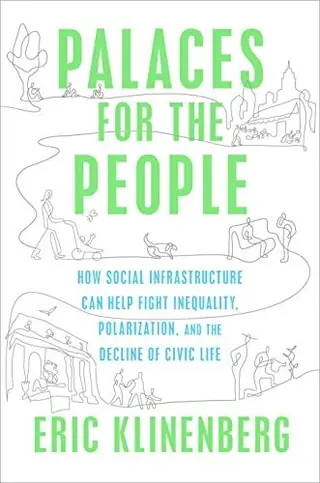
人民的宫殿
Palaces for the people
Eric Klinenberg · 初版 2018 年
3人推荐
3位读者提及
5次提及
“一位杰出的社会学家——也是与 Aziz Ansari 合著 New York Times 畅销榜榜首之作 Modern Romance 的作者——提出了一个发人深省的观点:民主社会的未来不仅取决于共同的价值观,还取决于共享的“社会基础设施”:图书馆、托儿中心、书店、咖啡馆、游泳池和公园,正是这些设施在那些原本可能无法找到共同立场的人们之间,促进了至关重要、有时甚至是生死攸关的联结”——
Hacker News 上怎么说
正在加载完整评论……
Klinenberg 的《Palaces for the People》(人民的宫殿)非常值得(花点时间快速)读一读。书中探讨了城市中物理形式的“社会基础设施”(类似于“第三空间”的概念)的重要性,它们能让人们编织起社区纽带,进而……
Klinenberg's book "Palaces for the People" is very worth a (quick) read. Talks about the importance of physical, "social infrastructure" (similar to the idea of "third places") in cities that enable people to weave communities ties that then…
……在附近,有时候开车甚至要花上一个多小时!如果你感兴趣的话,有不少优秀的书探讨了人造环境如何影响我们的社交生活。它虽然不是专门讲郊区的,但 Eric Klinenberg 的《Palaces for the People》是我最喜欢的作品之一,里面涵盖了大量这类内容。
…nearby, sometimes within upwards of an hour drive! There are a number of good books on how the built environment affects our social life, if you're interested. It's not specifically about suburbs but "Palaces for the People" by Eric Klinenberg is one of my favorites that covers a lot of this sort of thing.
强烈推荐 Klinenberg 的《Palaces for the People》,书名取自卡内基对图书馆的称谓。这是他在《99% Invisible》做的一期访谈:https://99percentinvisible.org/episode/palaces-for-the-peopl...
I highly recommend Klinenberg's Palaces for the People, which he named after Carnegie's phrase for libraries. Here's an interview he did on 99% Invisible: https://99percentinvisible.org/episode/palaces-for-the-peopl...
我们需要每周的活动方案,好在“人民宫殿”式的场所里把不同种族、不同年龄、不同政治派别的人联结起来。读读《Palaces for the People》这本书吧……给社会基础设施投资几十个亿……把整个国家当成一个养老社区来运营。人人受欢迎,人人有价值,我们……
We need weekly activity plans to introduce multi-racial, multi-age, multi-political people to each other in palaces for the people venues. Read the book 'Palaces for the People'... Invest Billions in social infrastructure... and run the country like it was a retirement community. Everyone is welcome, everyone has value and we…
卡内基曾把图书馆称作“人民的宫殿”,正是对全美图书馆的投资为人们创造了“第三空间”,在某些社区,这些空间甚至成了仅存的社交去处。(Klinenberg 在其同名著作中对此进行了探讨。)……
Carnegie called libraries "palaces for the people" and that investment in libraries across the country created Third Places for people that in some communities are the only ones left. (This is something Klinenberg explored in his book by the same name.)…