……这个领域真是“自己扬起一堆灰尘,反倒抱怨什么都看不清”。整套理论最后被搞得太复杂了,根本无法证伪。相比之下,我更喜欢 Robert Drews 在另一本书《The End of the Bronze Age》里的说法。Drews 提出了军事技术层面的解释。这不仅更简洁,而且看起来契合度更高。它还能解释为什么铁器时代的社会组织形态会如此不同于……
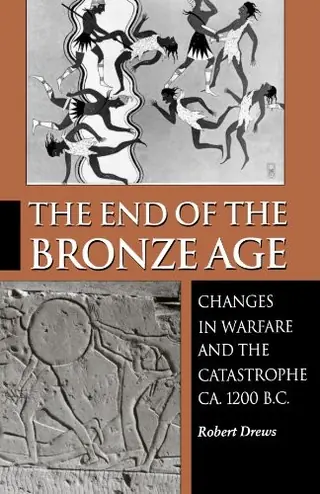
…the field where "one kicks up a lot of dust then complains one can't see anything." It ended up being so complex that it's not falsifiable. I was much happier with the narrative in another book, "The End of the Bronze Age", by Robert Drews. Drews presents the military-technological explanation. It's simpler and it just seems to fit better. It also explains why social organization in the Iron Age was so different from…
在 Robert Drews 1993年的书《The End of the Bronze Age》中,这些剑是其理论的核心。与 Eric Cline 在《1177 B.C.: The Year Civilization Collapsed》中推广的“系统性崩溃”理论不同,Drews 将青铜时代晚期的崩溃归因于军事组织形式的变革……
These swords were central to Robert Drews' theory in his 1993 book "The End of the Bronze Age". Unlike the "systems collapse" theory popularized by Eric Cline in "1177 B.C.: The Year Civilization Collapsed", Drews explains the late Bronze Age collapse as due to changes in military organization…
Alarmingly, one of the biggest breakdowns in ancient times, at the end of the Bronze age, now seems to have given rise to the 'sea people', a band of refugees that roamed and pillaged. There was a chain reaction of famine, revolution, refugees spilling over to neighbors who also had a poor…
The Catastrophe, defined as the simultaneous destruction of almost all the Mediterranean cities around 1190 BCE, is taken as the end of the Bronze Age. It appears to have been the result of a military innovation. Widespread collapse of civilization seems sufficient to cause trading networks to lapse. If trade was falling off before that, it could be…
…large collapse could happen, but as far as I can reason it out, it won’t be anything close to the scale of collapse that the Bronze Age collapse was. There are multiple reasons for this. First, at the end of the Bronze Age, writing existed but it wasn’t everywhere all the time. Writing is now everywhere all the time, and most humans can read and write. This means that, in a collapse, most people can carry on knowledge.…
…distances as early as 25,000 BC. Either one tribe was moving back and forth from Italy to Spain, on a regular basis, or there was a trade network. So to learn that there was an extensive trade network at the end of the Bronze Age is not nearly so exciting, even if the scale of distance is a bit greater. I mean, we already knew there was extensive trade at the end of the Bronze Age, I was taught that when I was in school.
……这个领域真是“自己扬起一堆灰尘,反倒抱怨什么都看不清”。整套理论最后被搞得太复杂了,根本无法证伪。相比之下,我更喜欢 Robert Drews 在另一本书《The End of the Bronze Age》里的说法。Drews 提出了军事技术层面的解释。这不仅更简洁,而且看起来契合度更高。它还能解释为什么铁器时代的社会组织形态会如此不同于……
…the field where "one kicks up a lot of dust then complains one can't see anything." It ended up being so complex that it's not falsifiable. I was much happier with the narrative in another book, "The End of the Bronze Age", by Robert Drews. Drews presents the military-technological explanation. It's simpler and it just seems to fit better. It also explains why social organization in the Iron Age was so different from…
在 Robert Drews 1993年的书《The End of the Bronze Age》中,这些剑是其理论的核心。与 Eric Cline 在《1177 B.C.: The Year Civilization Collapsed》中推广的“系统性崩溃”理论不同,Drews 将青铜时代晚期的崩溃归因于军事组织形式的变革……
These swords were central to Robert Drews' theory in his 1993 book "The End of the Bronze Age". Unlike the "systems collapse" theory popularized by Eric Cline in "1177 B.C.: The Year Civilization Collapsed", Drews explains the late Bronze Age collapse as due to changes in military organization…
令人担忧的是,古代规模最大的几次崩溃之一——青铜时代末期的崩溃,现在看来似乎催生了“海上民族”(sea people),也就是一群四处游荡劫掠的难民。当时发生了一连串连锁反应:饥荒、暴动、涌向同样歉收的邻国的难民……
Alarmingly, one of the biggest breakdowns in ancient times, at the end of the Bronze age, now seems to have given rise to the 'sea people', a band of refugees that roamed and pillaged. There was a chain reaction of famine, revolution, refugees spilling over to neighbors who also had a poor…
“大灾难”(The Catastrophe),即公元前1190年左右地中海几乎所有城市同时遭到毁灭,被普遍视为青铜时代的终结。这似乎是一场军事革新的产物。文明的普遍崩溃似乎足以导致贸易网络中断。如果说在此之前贸易就已经开始下滑,那有可能是……
The Catastrophe, defined as the simultaneous destruction of almost all the Mediterranean cities around 1190 BCE, is taken as the end of the Bronze Age. It appears to have been the result of a military innovation. Widespread collapse of civilization seems sufficient to cause trading networks to lapse. If trade was falling off before that, it could be…
……大崩溃确实可能发生,但据我推断,它的规模绝不可能达到青铜时代崩溃的那种程度。这背后有诸多原因。首先,在青铜时代末期,文字虽然存在,但并没有普及到随时随地可见。而如今文字无处不在,大多数人也都能读会写。这意味着,哪怕遭遇崩溃,大多数人依然能把知识传承下去。……
…large collapse could happen, but as far as I can reason it out, it won’t be anything close to the scale of collapse that the Bronze Age collapse was. There are multiple reasons for this. First, at the end of the Bronze Age, writing existed but it wasn’t everywhere all the time. Writing is now everywhere all the time, and most humans can read and write. This means that, in a collapse, most people can carry on knowledge.…
……早在公元前25,000年就有跨越如此距离的往来了。要么是某个部落定期在意大利和西班牙之间来回迁徙,要么就是存在着贸易网络。所以得知青铜时代末期存在广泛的贸易网络,其实并没有那么让人激动,即便距离尺度稍微大了一点。我的意思是,我们早就知道青铜时代末期有广泛的贸易了,我上学那会儿课本上就教过。
…distances as early as 25,000 BC. Either one tribe was moving back and forth from Italy to Spain, on a regular basis, or there was a trade network. So to learn that there was an extensive trade network at the end of the Bronze Age is not nearly so exciting, even if the scale of distance is a bit greater. I mean, we already knew there was extensive trade at the end of the Bronze Age, I was taught that when I was in school.