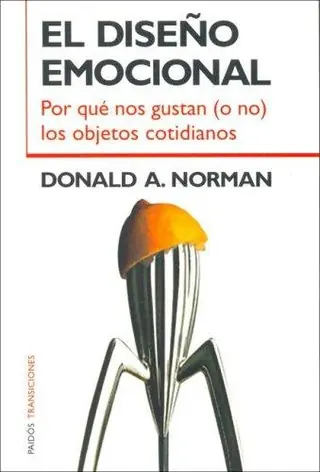
情感化设计
Emotional Design
Donald A. Norman · 初版 2003 年
18人推荐
27位读者提及
39次提及
为什么值得读
- 阐述设计如何超越单纯的功能与效率考量
- 剖析审美与情感反应如何直接影响产品可用性
- 解释优秀产品如何通过情感连接自然融入生活
“你是否曾好奇,为什么廉价的红酒倒在精致的高脚杯里会更好喝?或者为什么把车洗净打蜡后开起来似乎更顺畅?最新研究表明,美观的事物确实更好用。”“在过去十年中,设计界让产品变得更加易用,这在很大程度上归功于 Donald Norman 的 The Design of Everyday Things。但正如他在本书中所阐述的,我们不仅是在使用产品,还会与之产生情感共鸣。Emotional Design 首次揭示了这一看似简单的理念所具有的深远影响。”“Don Norman 借助大量实例和
Hacker News 上怎么说
正在加载完整评论……
……那些走心的细节起到了极大的作用。在产品严重同质化的情况下,人们也愿意花更多的时间/金钱,甚至不嫌麻烦去用你的产品。Dan Norman 在他的《情感化设计》(Emotional Design)一书里花了大篇幅讨论这点。正是这类超越了单纯功能性和最高效解决问题的设计(比如死抠完成某事的最少点击次数,而不是去考虑更广阔的体验,像加入一段沟通……
…those intimate details go a long way. And in commoditized situations people are willing to spend more time/money or go out of their way to use your product. Dan Norman talks a lot about this in his "Emotional Design" book. It's the design stuff that goes beyond merely functionality and most efficient problem solving (ie, obsessing about fewest clicks to do x, instead of the wider experience where adding a communication…
……首先最重要的是好用,其重要性不亚于甚至超过外观。这是成为一名优秀且实用的设计师的第一步。但大家没意识到的是,同一个作者唐·诺曼(Don Norman)还出过一本同样重要的书叫《情感化设计》(Emotional Design)[2],它更深入地探讨了为什么像苹果产品这样的东西不仅好用,而且设计得能天衣无缝地融入我们的生活,它已经不仅仅是一个好用的工具,而是……
…first-and-foremost as much or more as the way it looks. This is the first step in being a good and useful designer. But people don't realize that same author Don Norman released an equally important book called "Emotional Design" [2] which digs deeper into why something like an Apple product is not only easy-to-use but is designed in such that it melds into our life cleanly, it goes beyond just being a useful tool to where it…
……不是同一回事,但这并不意味着它们毫无关联。如果你对一个网站在审美上产生了极大的反感,这会影响你使用该网站的过程。唐·诺曼在他的《情感化设计》一书里探讨过这个问题。我们使用的每一样东西都会引发我们的某种情感反应,而这又会反过来影响我们使用该物品的体验。如果某样东西令人厌恶到根本没人愿意用,那它就谈不上“可用”。在这个案例中,……
…not the same thing, but that doesn't mean they aren't related. If you have a very negative aesthetic reaction to a web site, it will affect your use of the site. Don Norman talks about this in his book Emotional Design. Everything we use elicits some kind of emotional response in us, and that affects our experience with the thing. Something is not "usable" if it's so repulsive that no one will use it. In this case,…
《情感化设计》http://www.amazon.com/Emotional-Design-Love-Everyday-Things/... 《Designing Interactions》http://www.amazon.com/Designing-Interactions-Bill-Moggridge/...
Emotional Design http://www.amazon.com/Emotional-Design-Love-Everyday-Things/... Designing Interactions http://www.amazon.com/Designing-Interactions-Bill-Moggridge/...
……当然,大多数认知心理学/社会学书籍跟 UX 设计的关系其实不大。这里有一份简要书单,供你入门:——唐·诺曼《设计心理学》(Design of Everyday Objects)——唐·诺曼《情感化设计》(Emotional Design)——布伦达·劳雷尔《计算机即剧场》(Computers as Theater)——金·古德温《数字化时代的设计:如何创建以人为本的产品和服务》(Designing for the Digital Age: How to Create Human-Centered Products and Servicesa)——比尔·莫格里奇《交互设计之路》(Designing Interactions)额外推荐:——拉夫·科斯特,……
…Of course, most cognitive psychology/sociology books will only be slightly relevant to UX design. Here's a short selection to get you started: — Don Norman, Design of Everyday Objects — Don Norman, Emotional Design — Brenda Laurel, Computers as Theater — Kim Goodwin, Designing for the Digital Age: How to Create Human-Centered Products and Servicesa — Bill Moggridge, Designing Interactions Bonus: — Raph Koster,…
没错,很多软件开发人员都读过《设计心理学》(The Design of Everyday Things)[0],也明白可用性的价值。但他们没读过唐·诺曼的续作《情感化设计》(Emotional Design)[1],这本书解释了可用性只占答案的 50%——另外 50% 是情感。而情感往往意味着好看,或者至少是一种积极的 UX。[0] http://www.amazon.com/Design-Everyday-Things-Revised-Expande...…
Right, many software devs have read The Design of Everyday Things [0] and understand the value of usability. But they didn't read Don Norman's follow up book Emotional Design [1] which explains that usability is only 50% of the answer - emotion is the other 50%. And emotion often means pretty, or at the minimum a positive UX. [0] http://www.amazon.com/Design-Everyday-Things-Revised-Expande...…