…media and iPhones than we are without them? I think that for the most part, the answer is no. Most use is superficial and procrastination rather than meaningful connection with people. Check out The Progress Paradox by Gregg Easterbrook. He talks about how we've made all of this "progress" in our standard of living, but that it isn't actually making us happier. However, I agree with the central idea that "toys"…
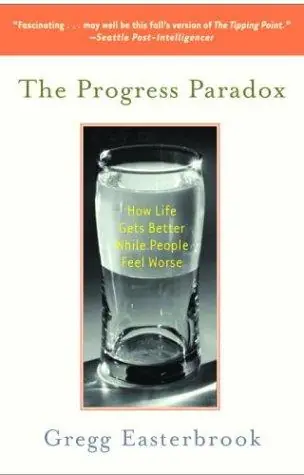
This is just one point of many made in Gregg Easterbrook's The Progress Paradox. It describes ways life continues to get better, but people feel worse despite it.
…different components of life-goodness into one binary value: Yes I'd trade permanently; or No, I prefer my life here-and-now. (This is a variation on Gregg Easterbrook's thought experiment in his book, The Progress Paradox.)
This dovetails with the thesis of writer Gregg Easterbrook's 2003 book, The Progress Paradox. He proposes a thought experiment: Would you permanently trade places with a random person who lived, say, 100 years ago? His view was that your answer would probably be "no." [EDIT: Easterbrook's point…
Gregg Easterbrook proposes a thought experiment in The Progress Paradox, which went approximately like this: Would you agree to permanently trade places with a random person who lived X hundred years ago? Chances are: no you wouldn't. (The book: http://www.amazon.com/Progress-Paradox-Better-While-People/d....…
……有了社交媒体和 iPhone 会比没有它们更幸福吗?我觉得在很大程度上,答案是否定的。大多数使用都是肤浅的打发时间和拖延,而不是与人建立有意义的连接。去看看格雷格·伊斯特布鲁克(Gregg Easterbrook)写的《进步的悖论》(The Progress Paradox)吧。他讲到了我们在生活水平上取得了所有这些“进步”,但实际上并没有让我们更快乐。不过,我赞同其核心观点,即“玩具”……
…media and iPhones than we are without them? I think that for the most part, the answer is no. Most use is superficial and procrastination rather than meaningful connection with people. Check out The Progress Paradox by Gregg Easterbrook. He talks about how we've made all of this "progress" in our standard of living, but that it isn't actually making us happier. However, I agree with the central idea that "toys"…
这只是格雷格·伊斯特布鲁克在《进步的悖论》(The Progress Paradox)中提出的众多观点之一。该书描述了生活在哪些方面持续变得更好,然而人们的感觉却反而更糟。
This is just one point of many made in Gregg Easterbrook's The Progress Paradox. It describes ways life continues to get better, but people feel worse despite it.
……把生活美好的各个不同组成部分压缩成一个二元值:是,我愿意永久交换;或者不,我更喜欢我此时此刻的生活。(这是格雷格·伊斯特布鲁克在其著作《进步的悖论》(The Progress Paradox)中所做思想实验的一个变体。)
…different components of life-goodness into one binary value: Yes I'd trade permanently; or No, I prefer my life here-and-now. (This is a variation on Gregg Easterbrook's thought experiment in his book, The Progress Paradox.)
这与作家格雷格·伊斯特布鲁克在2003年出版的《进步的悖论》(The Progress Paradox)一书的主旨不谋而合。他提出了一个思想实验:你愿意和一个生活在比方说100年前的随机普通人永久互换人生吗?他的观点是,你的答案大概率会是“不”。[编辑:伊斯特布鲁克的论点……
This dovetails with the thesis of writer Gregg Easterbrook's 2003 book, The Progress Paradox. He proposes a thought experiment: Would you permanently trade places with a random person who lived, say, 100 years ago? His view was that your answer would probably be "no." [EDIT: Easterbrook's point…
格雷格·伊斯特布鲁克在《进步的悖论》(The Progress Paradox)中提出了一个思想实验,大概是这样的:你愿意和一个生活在几百年前的随机普通人永久互换人生吗?大概率是:不,你不会同意的。(这本书:http://www.amazon.com/Progress-Paradox-Better-While-People/d....…
Gregg Easterbrook proposes a thought experiment in The Progress Paradox, which went approximately like this: Would you agree to permanently trade places with a random person who lived X hundred years ago? Chances are: no you wouldn't. (The book: http://www.amazon.com/Progress-Paradox-Better-While-People/d....…