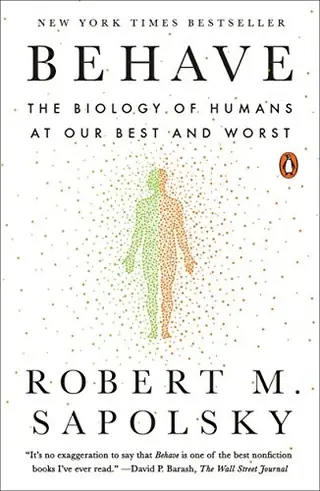
行为
Behave
Robert M. Sapolsky · 初版 2017 年
37人推荐
57位读者提及
84次提及
为什么值得读
- 斯坦福教授撰写且学术积淀深厚
- 打破睾酮与攻击行为关系的常见误解
- 解释人类机能出现故障的生物学机制
我们为何会做出当下的那些行为?耗费逾十年心血,这部开创性的著作是 Robert Sapolsky 尝试从所有可能角度去全面解答该问题的破界之作,或许也只有他能胜任此重任。Sapolsky 的叙事构想精妙生动,同时具备严密强大的内在逻辑:他首先审视在某一行为发生前那一精准瞬间对个体反应产生影响的种种因素,随后由此循序渐进地向历史深处追溯,最终落脚于人类物种的宏大演化史及其基因遗传。因此,第一类解释
Hacker News 上怎么说
正在加载完整评论……
读完《Behave》(行为)之后,我对 Sapolsky 佩服得五体投地。就算他为那个说法提供的证据不够充分,文中那位特级大师在为期 10 天的比赛中平均掉了 15 磅——足足占了他体重的 11%——……
After reading Behave, I hold Sapolsky in high regard. Even if he provides weak evidence for the claim, the grandmaster in the article loses 15 pounds- or a whopping 11% of his body weight- on average during a 10 day tournament…
说到攻击性,人们往往会怀疑大名鼎鼎的睾酮是罪魁祸首之一。但 Robert Sapolsky(原帖分析中引用了他的一篇论文)在《Behave》一书中展现了不同的观点:“虽然睾酮与攻击性密不可分,但它与攻击性的相关度远低于通常的假设。”与其问“个体的睾酮水平会……
Speaking of aggression, people often suspect the famous hormone testosterone as one of the prime causes. But Robert Sapolsky's (one of his papers is cited in OP's analysis) book, Behave shows something different: "While testosterone is inextricably tied to aggression, it is far less relevant to aggression than usually assumed." Instead of asking "What do individual levels of testosterone…
……Antonio Damasio 的《笛卡尔的错误》(Descartes' Error)• Bear、Connors 和 Paradiso 合著的《神经科学:探索脑》(Neuroscience: Exploring the brain)(这是一本插图极其精彩的教科书,讲解透彻,完全对得起我掏的 72 欧元)• Sapolsky 的《Behave》以及《斑马为什么不得胃溃疡》(Why Zebras Don't Get Ulcers)(我在这里写了我推荐《Behave》的理由[1])• Joshua Greene 的《道德部落》(Moral Tribes)• Robert Axelrod 的《合作的进化》(The Evolution of Cooperation)• Frans de…… 的《黑猩猩的政治》(Chimpanzee Politics)
…Error by Antonio Damasio • Neuroscience: Exploring the brain by Bear, Connors, and Paradiso (this is a fantastic illustrated text book with great explanations; fully worth the 72 euros I paid for it) • Behave and Why Zebras Don't Get Ulcers by Sapolsky (I wrote my "why" for Behave here[1]) • Moral Tribes by Joshua Greene • The Evolution of Cooperation by Robert Axelrod • Chimpanzee Politics by Frans de…
就拿第 6 本来说吧:Robert M. Sapolsky 的《Behave》。Sapolsky 博士是斯坦福大学教授,发表了近 300 篇论文 [0],教了多年生物学和神经学。我很好奇,你凭什么觉得这本书是通俗伪科学?……
Take no. 6 for example: Behave by Robert M. Sapolsky. Dr. Sapolsky is a professor at Stanford with nearly 300 publications [0] and has been teaching biology and neurology for years. I'm curious, why do you think this book is pop-pseudoscience?…
如果大伙有兴趣深挖这个 rabbit hole,我强烈推荐 Robert Sapolsky 的《Behave: The Biology of Humans at Our Best and Worst》(行为:人类最好与最坏一面的生物学)。虽然我承认我才读了第一章左右,但这本书开篇就试图让读者相信,人类身上可能出毛病的很多事情……
If you guys are interested in going down that rabbit hole, I highly recommend Robert Sapolsky's Behave: The Biology of Humans at Our Best and Worst. Although I confess I have only read the first chapter or so, the book sets out to convince its readers that many of the things that can go wrong in the human…
有一些证据表明,未来折扣(future discounting,对未来的轻视)存在基因组层面的因素。Robert Sapolsky 的神作《Behave: The Biology of Humans at Our Best and Worst》里有一节专门讲了这个。
There's some evidence of a genomic component to future discounting. There's a section on it in Robert Sapolsky's excellent book, Behave: The Biology of Humans at Our Best and Worst.