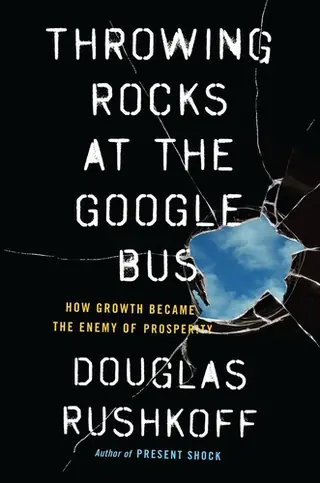
向谷歌班车扔石头
Throwing Rocks at the Google Bus
Douglas Rushkoff · 初版 2016 年
6人推荐
12位读者提及
16次提及
为什么值得读
- 深刻剖析企业盲目追求增长与普遍繁荣的矛盾
- 准确切中雇员与雇主之间的现实利益冲突
- 揭示资本集中导致市场仅反映少数人偏好的现状
Hacker News 上怎么说
正在加载完整评论……
Throwing Rocks at the Google Bus
Douglas Rushkoff · 初版 2016 年
正在加载完整评论……
……公司法?(答案是:如果1%的人口掌控了绝大部分可支配财富,那我们所谓的“市场”反映的就是这帮人认为有用或重要的东西,根本不代表其他人。)”道格拉斯·拉什科夫(Douglas Rushkoff)在《砸向谷歌班车的石头》(Throwing Rocks at the Google Bus)中也表达了完全相同的观点:https://www.amazon.com/Throwing-Rocks-Google-Bus-Prosperity/...
…corporate law? (Answer: if 1% of the population controls most of the disposable wealth, what we call “the market” reflects what they think is useful or important, not anybody else.)" Same idea echoed in Throwing Rocks at the Google Bus by Douglas Rushkoff https://www.amazon.com/Throwing-Rocks-Google-Bus-Prosperity/...
……乌合之众时代的独立思考)和詹姆斯·里卡兹(《货币战争》、《余波》等)的书既有趣又有用。然后还有托马斯·皮凯蒂(《21世纪资本论》)、道格拉斯·拉什科夫(《砸向谷歌班车的石头》)。总之,这几本读起来都不错,不过提个醒:我曾把前两位保守派作者的书借给自由派朋友看,他们并不喜欢,因为这完全超出了他们喜欢呆的舒适圈……
…Independant Thinking in the Era of the Mob) and James Rikards (Currency Wars, Aftermath, etc.) to be interesting and useful. Then there is Thomas Piketty (Capital in the 21st Century), Douglas Rushkoff (Throwing Rocks at the Google Bus). Anyway, these few were enjoyably, but a warning: I have loaned books by the first two conservative authors to liberal friends and they didn’t like them, too far outside the bubble they like to live…
道格拉斯·拉什科夫在新书中也探讨了类似的主题。我还没读完,但就目前来看非常推荐。《砸向谷歌班车的石头:增长如何成了繁荣的死敌》http://www.amazon.com/gp/product/1617230170
Douglas Rushkoff touches on parallel themes in his new book. I haven't finished it yet but recommend it so far. "Throwing Rocks at the Google Bus: How Growth Became the Enemy of Prosperity" http://www.amazon.com/gp/product/1617230170
我很喜欢这篇文章的核心思想,但我认为道格拉斯·拉什科夫在他的书《砸向谷歌班车的石头》中把这些观点阐述得更透彻,他一针见血地指出了劳资问题、企业规模膨胀等问题。话虽如此,这篇文章我也看得很过瘾。
I like the spirit of the article, but I think that Douglas Rushkoff makes these ideas more clear in his book "Throwing Rocks at the Google Bus" in which he nails workers vs. employers issues, growth of corporations, etc. That said, I also enjoyed the article.
关于“生活在好时代”:相比于后来的“启蒙”时期,农奴的辛勤劳动成果被彻底剥离。道格拉斯·拉什科夫在他那本非常棒的书《砸向谷歌班车的石头》里探讨了这一点。《2016大崩盘》的作者也讲到过黑暗时代的农奴生活其实比后来更好。
re: "a great time to be alive": compared to the later "enlightenment" period were serfs were separated from the results of their hard work. Douglas Rushkoff talks about this in his very nice book "Throwing Rocks at the Google Bus." The author of "The Crash of 2016" also talks about how serfs were better off during the Dark Ages.
自从读了《第二次机器革命》之后,这个问题就一直沉重地压在我心头。拉什科夫的《砸向谷歌班车的石头》是我读到的第一本让我看到一线解决希望的书。强烈推荐两本都读读,因为要思考这个问题,需要的视角远不止“机器能自动化什么和不能自动化什么”。
This problem has been weighing heavily on my mind since reading The Second Machine Age. The first thing I've read that gives me some hope for finding a solution is Rushkoff's "Throwing Rocks at the Google Bus" I highly recommend reading both books, because more perspective is needed to think abouy this than just "what machines can and cant automate"