…我引用一下核心部分:“更复杂的是:除了‘N times more/larger than’的用法外,还有‘N times less/lower than’[意思是‘只有原来的 1/N’]的用法。”“【关于这种用法,《韦氏英语用法词典》(Merriam-Webster Dictionary of English Usage)指出】times 在这类句构中的使用已经有大约 300 年历史了,而且没有任何证据表明它曾引起过误解。”
…I'll quote the salent bits: "A further complexity: in addition to the N times more/larger than usage, there is also a N times less/lower than [to mean] '1/Nth as much as' usage" "[About this usage, the Merriam-Webster Dictionary of English Usage reports that] times has now been used in such constructions for about 300 years, and there is no evidence to suggest that it has ever been misunderstood."
…来发现语言的变化。> 而且现在很多人似乎都在不恰当地滥用“which”。你这观察能力简直差得离谱;这种变化早在七百年前就发生了。《韦氏英语用法词典》(Merriam-Webster Dictionary of English Usage)是这么说的:> 根据 McKnight 1928 年的说法,“that”在早期中古英语中非常盛行,“which”在 14 世纪开始被用作关系代词,而“who”和“whom”则是在 15 世纪。> [...] 到了 17 世纪初…
…to spot language change. > And nowadays a lot of people seem to be inappropriately overusing "which" You're doing a remarkably terrible job; this change took place seven hundred years ago. Here's The Merriam-Webster Dictionary of English Usage: > According to McKnight 1928 that was prevalent in early Middle English, which began to be used as a relative pronoun in the 14th century, and who and whom in the 15th. > [...] By the early 17th century,…
…是那些懒得学语法规则的说话者吗?毫无意外,并不是。事实证明,“fewer 用于可数,less 用于不可数”这一整套说法,被《韦氏英语用法词典》(Merriam-Webster Dictionary of English Usage)追溯到了 1770 年。在当时这根本不是什么规则,而只是 Robert Baker 这位作者个人的偏好而已。(倒不是说没人赞同他,只是当时似乎没有其他人把这写成文字印出来罢了。)…
…speakers who can’t be bothered to learn the rules of the grammar? Unsurprisingly, no. As it turns out, this whole notion that fewer is countable and less is uncountable has been traced back to 1770 by the Merriam-Webster Dictionary of English Usage. And it wasn’t a rule back then, but rather a preference of a single author, Robert Baker. (That’s not to say that no one agreed with him, only that no one else seems to have put it in print back then.)…
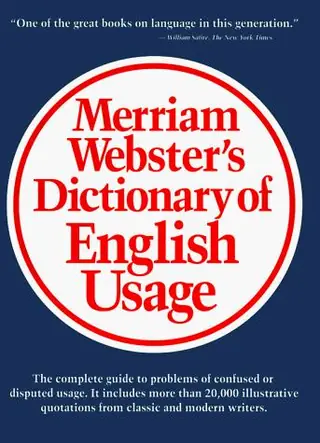
…我引用一下核心部分:“更复杂的是:除了‘N times more/larger than’的用法外,还有‘N times less/lower than’[意思是‘只有原来的 1/N’]的用法。”“【关于这种用法,《韦氏英语用法词典》(Merriam-Webster Dictionary of English Usage)指出】times 在这类句构中的使用已经有大约 300 年历史了,而且没有任何证据表明它曾引起过误解。”
…I'll quote the salent bits: "A further complexity: in addition to the N times more/larger than usage, there is also a N times less/lower than [to mean] '1/Nth as much as' usage" "[About this usage, the Merriam-Webster Dictionary of English Usage reports that] times has now been used in such constructions for about 300 years, and there is no evidence to suggest that it has ever been misunderstood."
…来发现语言的变化。> 而且现在很多人似乎都在不恰当地滥用“which”。你这观察能力简直差得离谱;这种变化早在七百年前就发生了。《韦氏英语用法词典》(Merriam-Webster Dictionary of English Usage)是这么说的:> 根据 McKnight 1928 年的说法,“that”在早期中古英语中非常盛行,“which”在 14 世纪开始被用作关系代词,而“who”和“whom”则是在 15 世纪。> [...] 到了 17 世纪初…
…to spot language change. > And nowadays a lot of people seem to be inappropriately overusing "which" You're doing a remarkably terrible job; this change took place seven hundred years ago. Here's The Merriam-Webster Dictionary of English Usage: > According to McKnight 1928 that was prevalent in early Middle English, which began to be used as a relative pronoun in the 14th century, and who and whom in the 15th. > [...] By the early 17th century,…
…是那些懒得学语法规则的说话者吗?毫无意外,并不是。事实证明,“fewer 用于可数,less 用于不可数”这一整套说法,被《韦氏英语用法词典》(Merriam-Webster Dictionary of English Usage)追溯到了 1770 年。在当时这根本不是什么规则,而只是 Robert Baker 这位作者个人的偏好而已。(倒不是说没人赞同他,只是当时似乎没有其他人把这写成文字印出来罢了。)…
…speakers who can’t be bothered to learn the rules of the grammar? Unsurprisingly, no. As it turns out, this whole notion that fewer is countable and less is uncountable has been traced back to 1770 by the Merriam-Webster Dictionary of English Usage. And it wasn’t a rule back then, but rather a preference of a single author, Robert Baker. (That’s not to say that no one agreed with him, only that no one else seems to have put it in print back then.)…