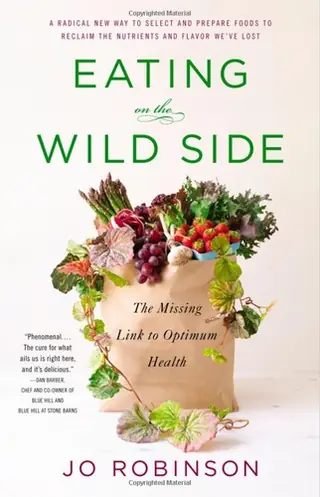
野性饮食
Eating on the Wild Side
Jo Robinson · 初版 2013 年
1人推荐
2位读者提及
2次提及
“大约10,000年前,我们的祖先开始驯化动物作为食物,并选择植物种植在自己的园子里。从那时起,我们关于喂养这些动物以及种植哪些植物的抉择,对我们的饮食产生了深远影响。在《Pasture Perfect》中,Jo解释了食用天然牧草喂养的动物肉类、蛋类和乳制品的好处。在《Eating on the Wild Side》中,Jo指出了我们原生饮食中的野生植物与我们今天食用的蔬菜水果之间巨大的营养差异。例如,某些野生土豆
Hacker News 上怎么说
正在加载完整评论……
……通过为了口感进行人工选育,以及为了方便运输而提早采摘农产品。关于这个话题有一本极好的书,还给出了挑选植物营养素(phytonutrient)含量更高的农产品的建议,叫《野性饮食》(Eating on the Wild Side)[0]。[0] https://www.amazon.com/Eating-Wild-Side-Missing-Optimum/dp/0...
…through selective breeding for taste and early picking of produce for ease of transportation. A fantastic book on this subject, with advice for how to find produce with higher phytonutrient content, is Eating on the Wild Side[0]. [0] https://www.amazon.com/Eating-Wild-Side-Missing-Optimum/dp/0...
……微量营养素含量显然高得惊人,甚至比哈密瓜或白兰瓜还要高。近几年出现的小型无籽西瓜是补充这些成分的最佳来源。(出处:Jo Robinson 写的《野性饮食》(Eating on the Wild Side)http://www.amazon.com/exec/obidos/ASIN/0316227943/donhosek)
…apparently surprisingly high in micronutrients, moreso than cantaloupe or honeydew melons even. The small seedless watermelons that have appeared in recent years are the best source of these. (Source: Eating on the Wild Side by Jo Robinson http://www.amazon.com/exec/obidos/ASIN/0316227943/donhosek)