在我小时候痴迷的《Star Trek The Next Generation Technical Manual》里,作者们(剧组的美工 Rick Sternbach 和 Micheal Okuda)费了很大力气强调关于复制器(replicator)的几个关键点:第一,它们有……
In the Star Trek The Next Generation Technical Manual which I obsessed about as a child, the authors (Rick Sternbach and Micheal Okuda, graphic designers on the show) go to great pains to emphasise grow things about the replicators: first, that they have…
不,这其实(基本)是对的。在 ST:TNG 里,他们重新定义了这个概念,将其定为无限大。这记录在 1991 年出版的《Star Trek: The Next Generation Technical Manual》中,作者是剧集的技术顾问,他们是根据剧集内部的技术设定圣经(technical bibles)编写的[1]。这与最初的 TOS 有明显变化,后者他们……
No, it is actually (mostly) correct. In ST:TNG they redefined the definition such that it is infinite. It was documented in the Star Trek: The Next Generation Technical Manual, which was published in 1991 and was written by the technical advisors for the series, who based it if the internal series technical bibles[1]. This was a distinct change from the original TOS which they…
……最新的设备。我想这种偏好甚至可以追溯到小时候迷上《Star Trek: The Next Generation》的 LCARS(Library Computer Access & Retrieval System)。凭年轻时的记忆,引用 Mike Okuda 和 Rick Sternbach 写的《Star Trek: The Next Generation Technical Manual》里的话,这套系统的“设计初衷就是为了用一种极度简化的方式来管理极其复杂的操作流程”之类的。如果你真想……
…latest devices. I suppose I can trace that preference all the way back to being fascinated with the Star Trek: The Next Generation LCARS (Library Computer Access & Retrieval System), which (to quote the Star Trek: The Next Generation Technical Manual written by Mike Okuda and Rick Sternbach from teenage memory) was “expressly designed to suggest a highly simplified manner of managing vastly complicated processes” or some such. If you really want…
在那条 wiki 词条里:> 《Star Trek: The Next Generation Technical Manual》(第 55 页)指出,曲速层级的实际速度数值取决于星际环境,例如气体密度、银河系不同区域的电磁场以及波动……
On that wiki entry: > Star Trek: The Next Generation Technical Manual (p. 55) states the actual speed values of a warp factor are dependent upon interstellar conditions, for example gas density, electric and magnetic fields in different regions of the galaxy, and fluctuations…
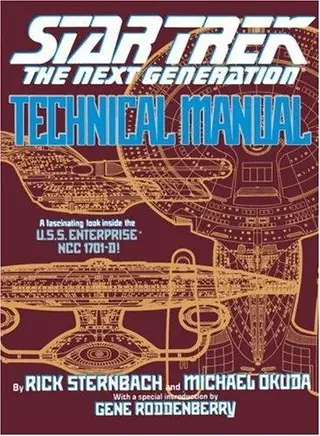
在我小时候痴迷的《Star Trek The Next Generation Technical Manual》里,作者们(剧组的美工 Rick Sternbach 和 Micheal Okuda)费了很大力气强调关于复制器(replicator)的几个关键点:第一,它们有……
In the Star Trek The Next Generation Technical Manual which I obsessed about as a child, the authors (Rick Sternbach and Micheal Okuda, graphic designers on the show) go to great pains to emphasise grow things about the replicators: first, that they have…
不,这其实(基本)是对的。在 ST:TNG 里,他们重新定义了这个概念,将其定为无限大。这记录在 1991 年出版的《Star Trek: The Next Generation Technical Manual》中,作者是剧集的技术顾问,他们是根据剧集内部的技术设定圣经(technical bibles)编写的[1]。这与最初的 TOS 有明显变化,后者他们……
No, it is actually (mostly) correct. In ST:TNG they redefined the definition such that it is infinite. It was documented in the Star Trek: The Next Generation Technical Manual, which was published in 1991 and was written by the technical advisors for the series, who based it if the internal series technical bibles[1]. This was a distinct change from the original TOS which they…
……最新的设备。我想这种偏好甚至可以追溯到小时候迷上《Star Trek: The Next Generation》的 LCARS(Library Computer Access & Retrieval System)。凭年轻时的记忆,引用 Mike Okuda 和 Rick Sternbach 写的《Star Trek: The Next Generation Technical Manual》里的话,这套系统的“设计初衷就是为了用一种极度简化的方式来管理极其复杂的操作流程”之类的。如果你真想……
…latest devices. I suppose I can trace that preference all the way back to being fascinated with the Star Trek: The Next Generation LCARS (Library Computer Access & Retrieval System), which (to quote the Star Trek: The Next Generation Technical Manual written by Mike Okuda and Rick Sternbach from teenage memory) was “expressly designed to suggest a highly simplified manner of managing vastly complicated processes” or some such. If you really want…
在那条 wiki 词条里:> 《Star Trek: The Next Generation Technical Manual》(第 55 页)指出,曲速层级的实际速度数值取决于星际环境,例如气体密度、银河系不同区域的电磁场以及波动……
On that wiki entry: > Star Trek: The Next Generation Technical Manual (p. 55) states the actual speed values of a warp factor are dependent upon interstellar conditions, for example gas density, electric and magnetic fields in different regions of the galaxy, and fluctuations…