“……传统的审美和文学形式以及数学概念,来传达算法的工作原理,并使读者确信其结果是正确的。”——Donald E. Knuth,《Selected Papers on Computer Science》。注意这里用的是“human beings”(人类,复数),所以不仅仅指写代码的那个人。
…traditional aesthetic and literary forms as well as mathematical concepts, to communicate the way that an algorithm works and to convince a reader that the results will be correct.” ― Donald E. Knuth, Selected Papers on Computer Science Notice "human beings", plural; so not just the person who's writing the code.
(1972), reprinted as Chapter 11 of Selected Papers on Computer Science (https://cs.stanford.edu/~knuth/cs.html) [Changes are usually minor but in this case there's an erratum published in 1976, https://doi.org/10.1145/800127.804066 p 108.] Fun fact: Knuth actually learned…
……伴随着文明发展,追随那些提出过重大新“烧脑题”(mind-benders)的先驱们的脚步。多年前我写过一篇文章,探讨“玩具问题有用吗?”(Are toy problems useful?)[重印为《Selected Papers on Computer Science》第 10 章],我在文中较详细地阐述了自己的观点:老师如果能为学生提供精心挑选的趣味智力题,对学生的帮助是最大的。从那以后我一直秉承这一理念,最近……
…footsteps of the pioneers who have come up with significant new “mind-benders” as civilization developed. Many years ago I wrote an essay that asked “Are toy problems useful?” [reprinted as Chapter 10 in Selected Papers on Computer Science] in which I discussed at some length my view that students are best served by teachers who present them with well-chosen recreational problems. And I've carried on in the same vein ever since, most recently…
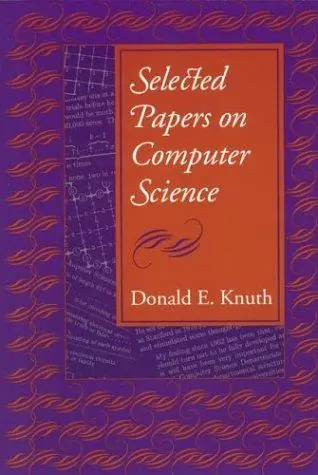
Knuth:《Selected Papers on Computer Science》http://www.amazon.com/Selected-Computer-Science-Language-Inf...
Knuth: Selected Papers on Computer Science http://www.amazon.com/Selected-Computer-Science-Language-Inf...
“……传统的审美和文学形式以及数学概念,来传达算法的工作原理,并使读者确信其结果是正确的。”——Donald E. Knuth,《Selected Papers on Computer Science》。注意这里用的是“human beings”(人类,复数),所以不仅仅指写代码的那个人。
…traditional aesthetic and literary forms as well as mathematical concepts, to communicate the way that an algorithm works and to convince a reader that the results will be correct.” ― Donald E. Knuth, Selected Papers on Computer Science Notice "human beings", plural; so not just the person who's writing the code.
(1972年),重印为《Selected Papers on Computer Science》的第 11 章(https://cs.stanford.edu/~knuth/cs.html)[改动通常很小,但这一篇在 1976 年发过勘误,https://doi.org/10.1145/800127.804066 第 108 页。] 冷知识:Knuth 其实学会了……
(1972), reprinted as Chapter 11 of Selected Papers on Computer Science (https://cs.stanford.edu/~knuth/cs.html) [Changes are usually minor but in this case there's an erratum published in 1976, https://doi.org/10.1145/800127.804066 p 108.] Fun fact: Knuth actually learned…
……伴随着文明发展,追随那些提出过重大新“烧脑题”(mind-benders)的先驱们的脚步。多年前我写过一篇文章,探讨“玩具问题有用吗?”(Are toy problems useful?)[重印为《Selected Papers on Computer Science》第 10 章],我在文中较详细地阐述了自己的观点:老师如果能为学生提供精心挑选的趣味智力题,对学生的帮助是最大的。从那以后我一直秉承这一理念,最近……
…footsteps of the pioneers who have come up with significant new “mind-benders” as civilization developed. Many years ago I wrote an essay that asked “Are toy problems useful?” [reprinted as Chapter 10 in Selected Papers on Computer Science] in which I discussed at some length my view that students are best served by teachers who present them with well-chosen recreational problems. And I've carried on in the same vein ever since, most recently…