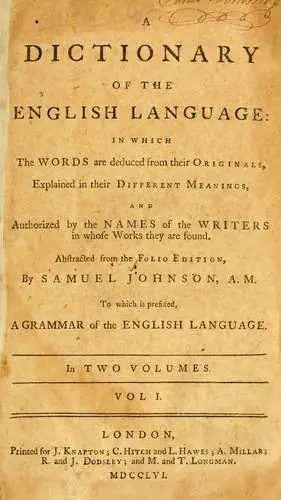
英语词典
A dictionary of the English language
Samuel Johnson · 初版 1747 年
1人推荐
7位读者提及
7次提及
一部收录了超过 40,000 个词条的词典,曾是 18 和 19 世纪学者与作家的主要参考源。
Hacker News 上怎么说
正在加载完整评论……
A dictionary of the English language
Samuel Johnson · 初版 1747 年
一部收录了超过 40,000 个词条的词典,曾是 18 和 19 世纪学者与作家的主要参考源。
正在加载完整评论……
我最喜欢的文学作品之一是塞缪尔·约翰逊(最早的辞书编纂者之一)为《A Dictionary of the English Language》写的序言。也许我之所以这么喜欢它,是因为在争论中我可以用他的文笔把那些规范主义者和讲法语的人怼得哑口无言,但不管出于什么原因,我……
One of my favorite works of literature is the preamble to A Dictionary of the English Language, by one of the first lexicographers, Samuel Johnson. Perhaps I'm so fond of it because I can beat his prose over the head of prescriptivists and Francophones in an argument, but whatever the reason, I…
……劳德民歌索引(Roud Folk Song Index),一个收录了25万首歌曲的数据库,全是由一位前图书管理员在70年代出于纯粹的热爱(我想还有学术奉献精神)独自研究和整理的。接着是塞缪尔·约翰逊的《A Dictionary of the English Language》,一部由一个人独自考证和编写的词典。他本以为只要花三年,结果整整耗费了九年。凭着一股近乎鲁莽的自信,加上勤勉不懈最终大功告成,这愈发令人肃然起敬。那……
…the Roud Folk Song Index, a database of 250,000 songs all researched and compiled by a former librarian in the 70s, as a labor of love (and scholarly dedication, I guess). And then Samuel Johnson's A Dictionary of the English Language, a dictionary researched and written by a single man. He thought it would take three years, ended up taking nine years. All the more impressive for the reckless confidence paid off by diligence. The…
读你发的第二个链接,塞缪尔·约翰逊的《Dictionary of the English Language》:> ORDER. 名词 [源自拉丁语 ordo] 1. 方法;有条理的安排。2. 既定程序。3. 适宜状态。4. 规律性;固定模式。5. 授权;训诫;命令。6. 规则;规章。7. 正规政府。……
Reading from your second link, Samuel Johnson's Dictionary of the English Language: > ORDER. s [ordo, Lat.] 1. Method; regular disposition. 2. Established process. 3. Proper state. 4. Regularity; settled mode. 5. Mandate; precept; command. 6. Rule; regulation. 7. Regular government.…
……莎士比亚是个极端的例子,比该网站上的大多数作品年代都要久远。我更倾向于保留原始拼写,但对于那个年代的作品,改动拼写我也能理解。我会把约翰逊的《A Dictionary of the English Language》(1755年)出版时间(或者再晚几年)作为拼写改动的分界线。
…Shakespeare are an extreme example, being older than most works on the site. I'd prefer the original spelling, but for works of that age I can understand changing it. I'd set the publication of Johnson's "A Dictionary of the English Language" (1755) (or a few years later) as the cut-off point for spelling changes.
而且很早就是这样了。1818 年版的约翰逊《A Dictionary of the English Language》解释为“一笔意外的遗产;任何意料之外的好处”,没有任何负面含义。https://books.google.com/books?id=zsI_AQAAMAAJ&pg=PT1100&dq=... 1755 年的原版里只有“被风吹落的果实(Fruit blown……
And has for a long time. The 1818 version of Johnson's "A Dictionary of the English Language" has "an unexpected legacy; any unexpected advantage", with no negative connotations. https://books.google.com/books?id=zsI_AQAAMAAJ&pg=PT1100&dq=... The original 1755 version only had "Fruit blown…
塞缪尔·约翰逊于 1755 年出版的第一版《英语词典》(Dictionary of the English Language)中对天鹅(swan)的定义是:“天鹅(ſwan)是一种大型水鸟,脖颈修长且挺拔,羽毛极白,唯幼鸟除外 […]”。按照你的逻辑……
Samuel Johnson's first dictionary of the English Language, published in 1755, gave the definition of swan as “The ſwan is a large waterfowl, that has a long and very ſtranght neck, and is very white, excepting when it is young [...]”, Following your logic,…