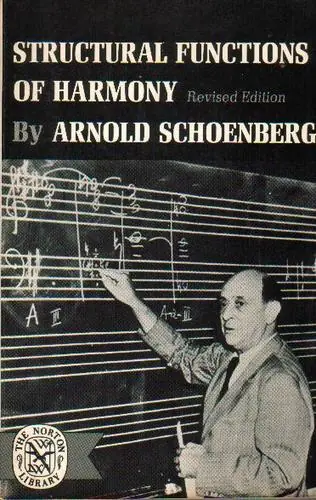
和声的结构功能
Structural functions of harmony
Arnold Schoenberg · 初版 1954 年
2人推荐
2位读者提及
4次提及
本书是 Schoenberg 完成的最后一部理论著作,代表了他对古典与浪漫主义和声课题的最终思考。前几章以简要的形式重述了他在《Theory of Harmony》中阐明的原则,后几章则完全开辟了新领域,因为它们分析了整个乐章结构内的调性关系体系,并确立了“单调性”(monotonality)原则,展示了乐章内的所有转调如何仅仅是对其主调的偏离,而非否定。Schoenberg 的论点得到了谱例的支持,这
Hacker News 上怎么说
正在加载完整评论……
……和声具有确立调性中心、向其靠近或远离、向远关系调建立转调等功能。关于功能和声最好的专业书籍之一是阿诺德·勋伯格(Arnold Schoenberg)写的《和声的结构功能》(Structural Functions of Harmony)[1],这本书比他的《和声学》(Harmonielehre)薄得多,但塞满了关于调性和和弦关系的硬核细节。[1] 没错,就是那个勋伯格,不过这本书讲的不是序列主义(serialism),……
…harmony have the function of establishing key centres, moving towards and away from them, establishing transitions to remote key areas etc. One of the best technical books about functional harmony is "Structural Functions of Harmony" by Arnold Schoenberg[1], which is much shorter than his "Harmonielehre" but really packed with interesting detail about key and chord relationships. [1] Yes that Schoenberg but this isn't about serialism,…
……写仿作对位法时他们想让你遵守的“规则”等等。如果你想深入搞作曲,并且/或者想搞懂晚期浪漫主义和20世纪音乐,建议读读勋伯格的《和声学》(Harmonielehre)和《和声的结构功能》(Structural Functions of Harmony)。这两本合起来绝对是我见过的最好的和声书,极深地剖析了西方古典传统为什么能这么运转。如果你自己写曲子,大概率会……
…“rules” they want you to follow when writing pastiche counterpoint etc. If you want to get big into composition and/or want to understand late romantic and 20th century music, get Harmonielehre and “Structural Functions of Harmony” by Schoenberg. Together they are by far the best harmony books I have ever seen and go super-deep into why the western classical tradition works the way it does. If you compose there’s a decent chance…
阿诺德·勋伯格的《和声的结构功能》(Structural Functions of Harmony)。我甚至都还没摸着门道,但能领略到如此天才而严密的思维,本身就是一种享受。https://archive.org/details/structuralfuncti0000arno/page/n8...
Structural Functions of Harmony by Arnold Schoenberg. I can't even begin to understand it, it's just beautiful to encounter such genius and rigorous thought. https://archive.org/details/structuralfuncti0000arno/page/n8...
从我读《和声理论》(Theory of Harmony)和《和声的结构功能》(Structural Functions of Harmony)来看,我觉得勋伯格压根就没想做个离经叛道的革新者,他极其渴望融入那个伟大的传统,并且认为序列主义(serialism)是调性走向……的必然结果。
From my read of "Theory of Harmony" and "Structural Functions of Harmony", it seems to me Schoenberg definitely wasn't aiming to be a great innovator, he was desperate to be part of the great tradition and saw serialism as an inevitable consequence of the way in which tonality…